Rajendra Khetan sold the beer and bought the payments rails
After an arbitration with Carlsberg set a $744m price on his family's stake, the chairman of one of Nepal's oldest business houses is buying into Laxmi Sunrise Bank and Fonepay, the switch behind most of the country's QR payments.
In August 2005, reporting the soft launch of Mero Mobile, a new private mobile network, Nepali Times noted a detail that is easy to miss today. The licence had first been held by the Khetan group, which sold its stake to a consortium led by Russia-based Nepali businessmen. Mero Mobile was later renamed Ncell, and the fortunes it made went to others (see Upendra Mahato's road from Siraha to Moscow).
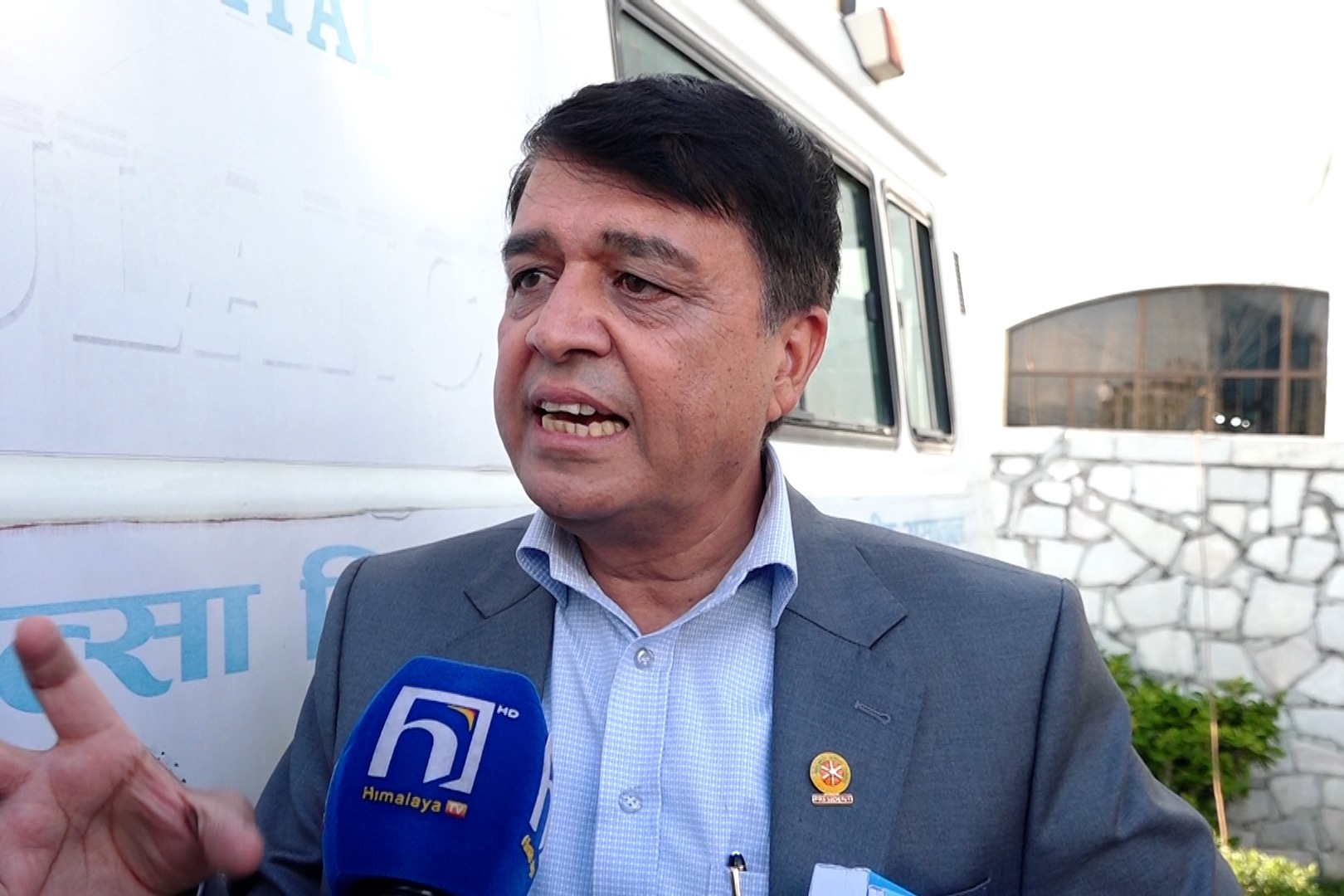
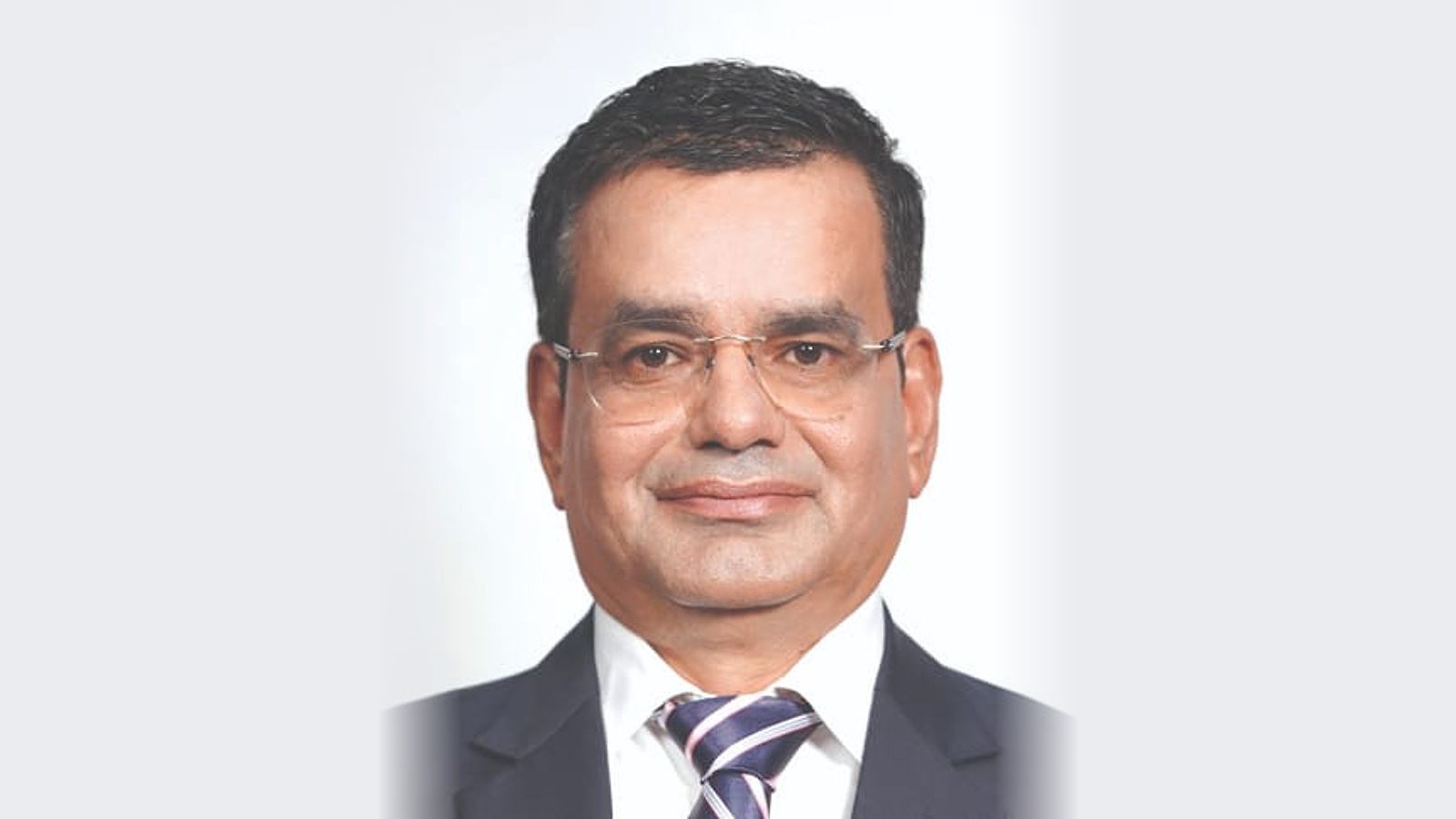
Twenty years later, the Khetans came back to the wiring of Nepal's digital economy, and this time they paid to get in. In September 2025 Rajendra Kumar Khetan, chairman of the Khetan Group, bought 14% of Fonepay, the network that The Kathmandu Post reported processes 92 to 94% of the country's QR-code payments. In between lay years in beer, a bruising arbitration with Denmark's Carlsberg and a $744m exit. It is a rare case of a South Asian family business leaving a multinational partnership at an externally set price, and of where that money goes in a small, tightly regulated economy.
A cash-rich house that turned towards finance early
For most Nepalis the Khetan name meant Gorkha Brewery, the brewer the family ran in partnership with the Danish group. Brauwelt, a German brewing trade journal, reported in 2023 that the brewery held more than 70% of its home market, with volume of 1.9 million hectolitres in 2021. The Khetans were also Carlsberg's partners further up the chain: Just Drinks, a beverage trade publication, reported that the family held a third of Carlsberg South Asia, the holding company for Carlsberg's business in India and its 90% stake in Gorkha Brewery. Brauwelt reported that Carlsberg ranks third in India's beer market with about 17%.
Yet the family's move into finance began well before the break with Carlsberg. In July 2011 the group sold its 22% stake in Bottlers Nepal, the Coca-Cola bottler in Balaju, to Gorkha Brewery for Rs 725.1m, about $4.7m at today's rate, ShareSansar reported. The group had paid Coca-Cola around Rs 300m for the stake, and said it wanted to shift its investments towards the financial sector, including Rs 5bn for the expansion of Laxmi Bank.
Rajendra Khetan was by then chairman of Laxmi Bank. In a 2015 interview with ShareSansar he described the Khetans as a cash-rich house with no liabilities, and committed to lifting the bank's paid-up capital from Rs 3.03bn to Rs 10bn within five years. His explanation of how the family would fund rights issues was blunt: "We can chip in money without taking loan from the bank." ShareSansar also reported his positions in other listed banks, mutual funds and insurers, and his roles as honorary consul of Portugal and president of the Nepal Britain Chamber of Commerce and Industry.
The arbitration that set the price
The partnership with Carlsberg did not end quietly. Just Drinks reported a commercial dispute between the two sides running from 2019 to 2022, which ended with Carlsberg winning an arbitration case. Brauwelt, describing what it called a "nasty boardroom battle", reported that the arbitration took place in Singapore, that the Khetan side had sought about $1.5bn, and that the tribunal gave Carlsberg the right to buy out its partner. An independent valuation put the Khetan third of Carlsberg South Asia at $744m, roughly half of what the family had asked for.
Carlsberg's own announcement, dated 2 August 2024, set out the terms. It agreed to pay $744m, about Rs 115bn, for the remaining 33.33% of Carlsberg South Asia, giving it all of the Indian business and, through the purchase of a further 9.94% of Gorkha Brewery, 99.94% of the Nepali one. Two details stand out. First, $207m of the price was to be retained by Carlsberg and released depending on possible claims under the sale agreement, probably after three to five years, so a large slice of the Khetans' proceeds remains contingent. Second, completion required government approvals in Nepal. Carlsberg's chief executive, Jacob Aarup-Andersen, called it an "amicable agreement with our partner" in the same statement.
By The Kathmandu Post's account in September 2025, the Khetans had divested from Gorkha Brewery and Carlsberg India in order to redirect capital into fintech and banking, alongside existing interests in insurance, mutual funds and venture capital. Measured against Nepal's economy, $744m is a very large private transaction. The public record shows where some of it has gone, and it also shows how much is not visible. The two disclosed purchases described below, a bank stake bought for about Rs 1.26bn and a share of a Rs 1.49bn Fonepay deal, add up to less than 3% of the Carlsberg price. That is not unusual for a private family group, which has no obligation to publish its portfolio, but it means the second act is still largely unwritten in public.
A bigger bank and a bigger stake
The first destination was Laxmi Bank. It merged with Sunrise Bank in July 2023 on a one-for-one share swap to form Laxmi Sunrise Bank, with combined paid-up capital of Rs 21.67bn, about $140m, Republica reported; the deal cut the number of Nepal's commercial banks from 21 to 20. Approvals came from Nepal Rastra Bank, the central bank and banking regulator, and from the Securities Board of Nepal (SEBON), which oversees listed companies. The merger was part of a wider consolidation that this publication has tracked (the bank merger wave). It also arrived in a market where, as this publication has reported, Nepali banks hold plenty of cash but find few borrowers (banks flush, nobody borrowing), so a larger shareholding buys a claim on a business whose growth depends on credit demand recovering.
In 2025 Rajendra Khetan bought promoter shares, the class held by a bank's founding shareholders, from the Goyal and Guragain families, ShareSansar reported. He paid Rs 100 a share, above the market price, for a total of about Rs 1.26bn, roughly $8.1m, on condition that he receive the full dividend for the previous fiscal year. His personal stake rose from 2.35% to about 7.5%. ShareSansar reported that his wife, Sarika Khetan, held 4.17% and his daughter, Sneha Khetan, 3.91% of a bank whose shares trade on NEPSE, the Nepal Stock Exchange. His larger stake was assembled by buying out other founding families rather than by subscribing to new shares, and at a price above the market.
Buying into the payments switch
The second destination is newer. In September 2025 The Kathmandu Post reported that ten investors had bought 22.23% of Fonepay for about Rs 1.49bn, valuing the company at Rs 6.67bn, about $43m. Rajendra Khetan took 14% and an affiliated company, Rapid Investment, another 1%. The sellers were F1Soft, the fintech group that also owns the eSewa wallet, which sold 14.37%, and the IT entrepreneur Asgar Ali, who sold 8%. Khetan told the Post that digital banking is "the future of financial inclusion".
Fonepay matters because of its reach. The Post reported that it handled about 1.8 million transactions a day worth Rs 18bn, roughly $116m, and connected 19 commercial banks, 14 development banks, 14 finance companies and nine wallets. By April 2026, ShareSansar reported, the company said it had more than two million merchants and over 2.5 million daily transactions, and it was planning a public share offering during the year. On the Post's market-share figure, almost every QR payment made in the country passes through Fonepay's switch, which makes it a piece of national infrastructure rather than an ordinary start-up (see this publication's report on QR payments). A listing would also give the stake bought by the Khetans and their fellow investors a public market price for the first time, set by retail investors rather than negotiated between insiders.
The Khetans therefore end up with significant positions in a commercial bank and in the switch through which most QR payments pass, two businesses supervised by the same central bank. The path from 2005 to 2025 has a symmetry of its own. A family that sold its interest in a mobile licence before the network was built has now paid in rupees for a share of the payment rails that run over those same phones, while, under the 2024 terms, $207m of the beer money was to be held back for three to five years against possible claims.
Right of reply: this article draws on published reporting, and The Nepal Standard did not contact the people named for it. Anyone named may send a response to [email protected]; we will publish relevant replies in full or in fair summary, normally within three working days. An arrest, investigation or charge is not a finding of guilt.
How this story was made: researched and written by The Standard’s desk with AI assistance, from the published reporting and official data credited below, and checked against those sources. Our standards.
The long view The Nepal Stock Exchange