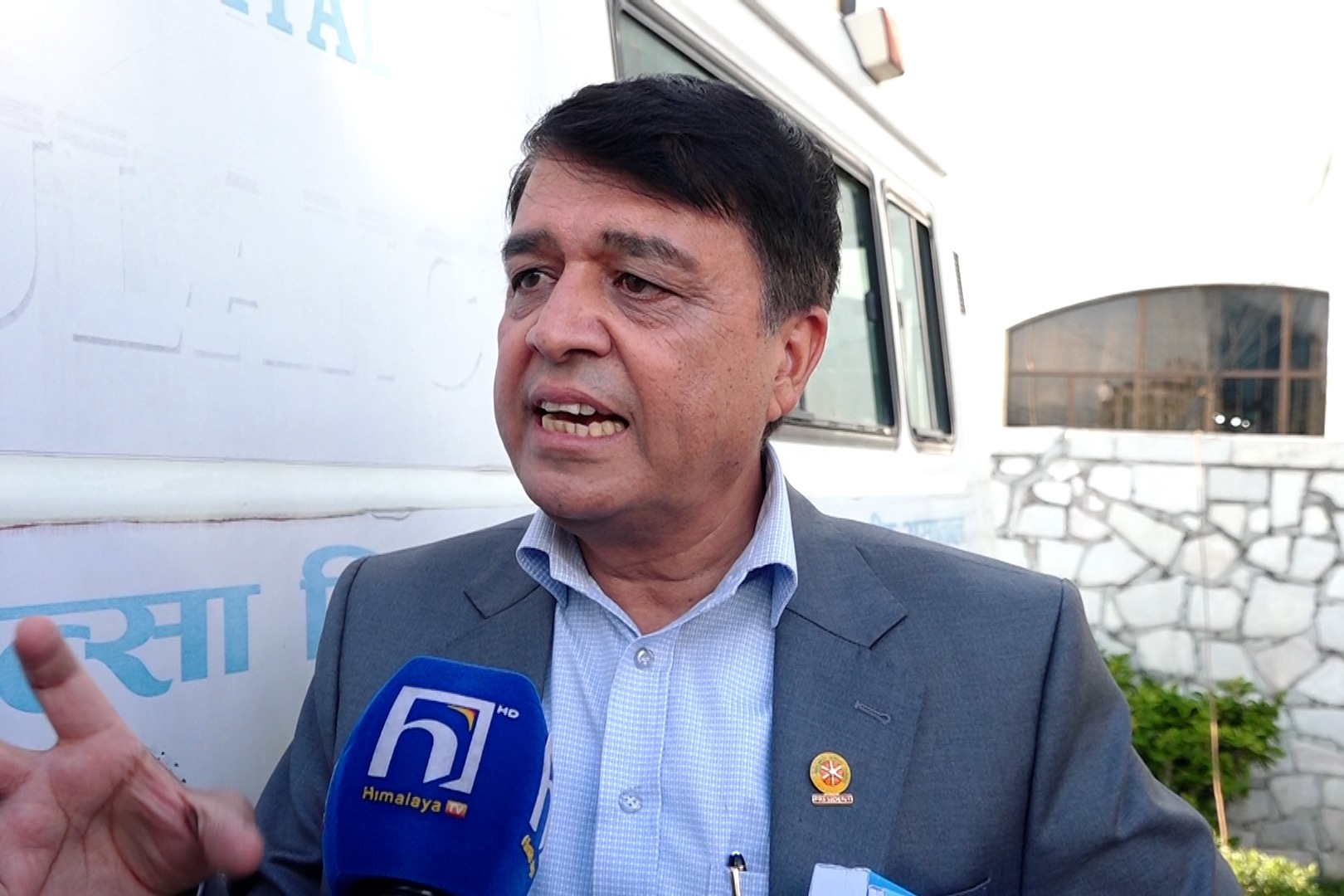
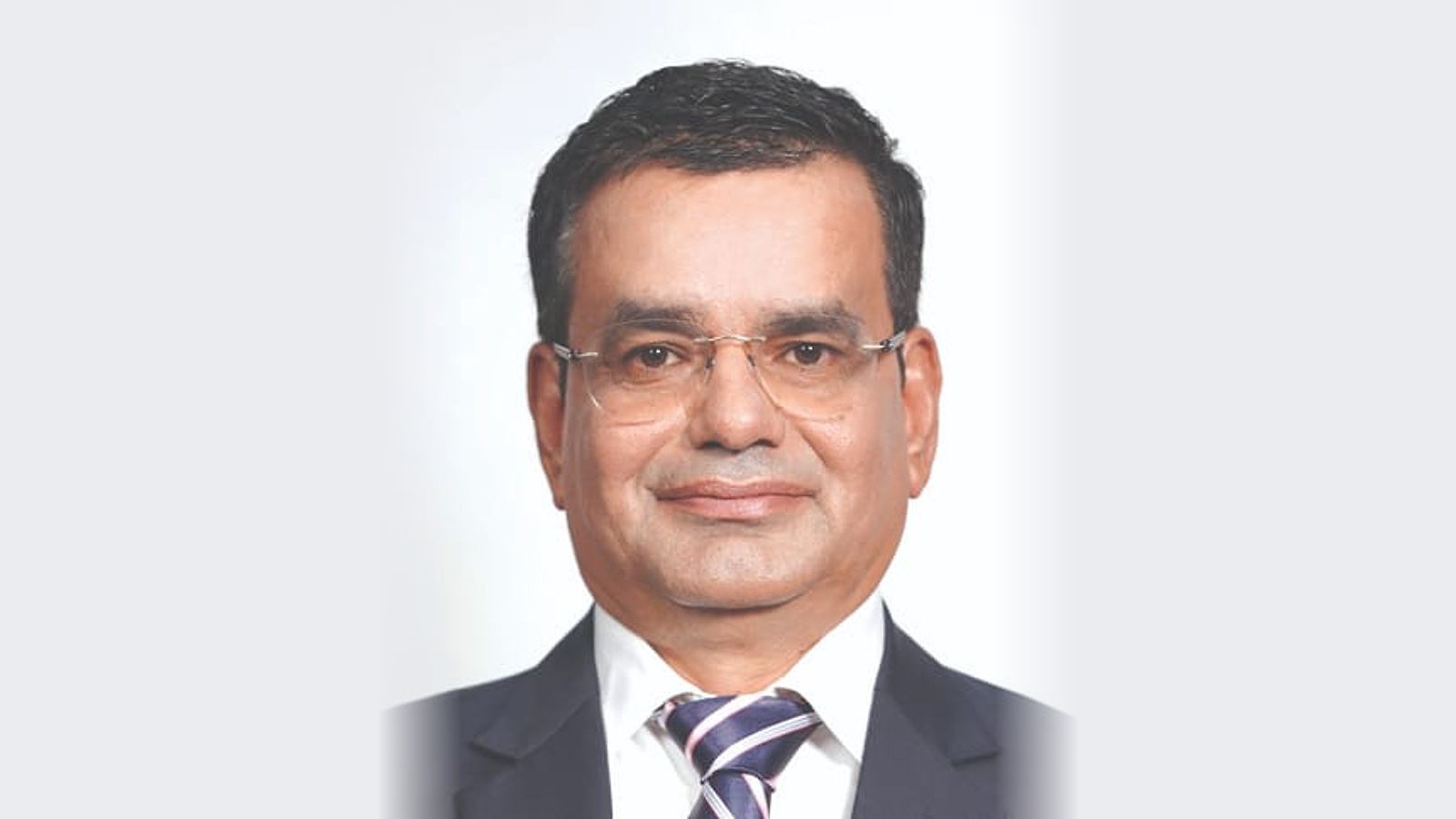
Gyanendra Dhungana, the banker who ran Nabil and chased the governorship
He rebuilt Nepal Bangladesh Bank, led the bank lobby, then took charge of Nabil after the merger. In 2025 he gave it up to seek the central bank's top job. Now he sits on boards in Colombo and Kathmandu.
A month into his new job in February 2012, Gyanendra Prasad Dhungana gave an interview listing the problems at the bank he had just taken over. Nepal Bangladesh Bank's capital adequacy ratio stood at 10.02%, a whisker above the 10% legal floor, and bad loans had only just been brought down to 14% of the book from 19%. A merger with a loss-making finance company, Nepal Sri Lanka Merchant Bank, had drained its capital, and institutional depositors were wary, he said in the same interview. His plan fitted in one line: "My main focus is on loan recovery," he told ShareSansar.
A decade later that bank was absorbed into Nabil Bank, and Dhungana was put in charge of the combined lender, which Nepali Times described as the country's largest financial institution. Less than three years after that, he gave the job up with 14 months left on his contract, in pursuit of a post he did not get. The arc says a good deal about how careers are made in Nepali banking, and how they can stall.
From the central bank to the private side
Dhungana trained as an accountant. He holds a commerce degree from Nepal Commerce Campus at Tribhuvan University, a chartered accountancy qualification from the Institute of Chartered Accountants of India and a master's in financial analysis from the University of New South Wales. He also holds an Australian CPA qualification.
He spent the decade from 2001 to 2011 at Nepal Rastra Bank, the central bank, in a series of senior posts, the same Colombo filing states. His biography on the website of NRN Infrastructure and Development says his directorial roles there covered microfinance, banking operations and supervision. He then crossed to commercial banking as general manager of Nepal Credit and Commerce Bank, a stint of about a year.
That background as a supervisor shaped how others read him. Bizshala, a business news portal, described him in March 2025 as a central bank cadre with a reputation for measured decisions and good relations across political parties.
A decade rebuilding Nepal Bangladesh Bank
Nepal Bangladesh Bank, which the central bank had taken over and run for two years after a 2006 depositor run, appointed him chief executive in early January 2012. In that first interview he set targets that would test any turnaround: capital adequacy above 12% by the end of the year, bad loans below 5%, and more than Rs 1bn in net profit, much of it from recoveries and write-backs. He also said the bank's Bangladeshi promoter, IFIC, was waiting for Nepal Rastra Bank approval to buy out the Nepali promoters and take a 51% stake.
He stayed for ten years, a long run for a chief executive in a sector where bosses often serve one or two terms. The record of that decade is less well documented in English-language sources than its start and its end, and this profile does not attempt to reconstruct year-by-year results it could not verify.
He retired as chief executive of Nepal Bangladesh Bank at the end of December 2021. Less than two weeks later, on 13 January 2022, the bank signed an agreement to be acquired by Nabil. The deal carried a condition that made him the most interesting figure in it: under the final acquisition scheme, he was to become Nabil's chief executive.
The voice of the banks
In parallel, Dhungana rose through the Nepal Bankers' Association, the lobby for commercial banks. He was elected its vice-president in November 2016, and was set to take over as president in January 2018 as the only nominee. The Colombo filing gives his presidency as running from 2018 to 2020.
His term coincided with a fierce fight for deposits. In June 2018 the association's members agreed to cap fixed deposit rates at 11% for individuals and savings rates at 7%, with the backing of Nepal Rastra Bank. Dhungana had already defended the approach in an April 2018 interview, arguing that runaway competition for deposits raised lending costs, fed bad loans and created risk across the system. He acknowledged in the same interview that the association had drawn heavy criticism for this, but played it down. In the same interview he said 28 commercial banks might be more than the economy needed and predicted consolidation through mergers.
That forecast reads in hindsight like a description of his own next move. His view of banking as a tightly linked system, in which one lender's recklessness becomes everyone's problem, is the clearest thread running through his public statements.
Running Nepal's biggest bank
Nabil's board chose him at a meeting on 30 June 2022 and he took office on 1 July 2022, succeeding Anil Keshary Shah. The integration was not smooth. Before the deal was signed, Dhungana had agreed on behalf of Nepal Bangladesh Bank staff that some would be demoted in the merged bank; employees objected and took the matter to Nepal Rastra Bank, which ruled that none should be demoted, Republica reported. Nabil staff protested in turn, and the same report said Nabil's board appeared reluctant at that stage to appoint him. He was appointed nonetheless, and the acquisition was completed in July 2022. The two banks' investment banking arms merged later that year and began joint operations in December 2022.
The first full year showed the scale of the combination. Net profit for 2022/23 rose 76.86% to Rs 7.53bn and deposits grew 21.65% to Rs 396.84bn. The non-performing loan ratio also roughly doubled, to 3.20% from 1.62%. Much of the jump in profit reflects the larger balance sheet after the acquisition rather than organic growth alone, which is worth bearing in mind when the numbers are credited to any one executive. In 2023/24 Nabil earned Rs 7.06bn, the highest profit among the 20 commercial banks whose results Republica compiled.
Source: ShareSansar; Republica
Recognition followed. President Ramchandra Paudel presented him with the Prabal Jana Sewa Shree medal for his long contribution to banking. Nabil's board reappointed him for a second two-year term in May 2024. When Nepal Rastra Bank loosened its monetary policy in July 2024, he welcomed it as the policy bankers and the private sector had sought, saying it would ease pressure on capital and loan classification. He had also publicly objected to central bank limits on share-backed lending and to tighter risk weights.
The governorship that got away
By early 2025 Dhungana was openly in the race to succeed Maha Prasad Adhikari as governor of Nepal Rastra Bank. He resigned from Nabil in March 2025 with 14 months of his term remaining, and the board accepted the resignation and named Manoj Kumar Gyawali acting chief executive. Bizshala reported that he had been on leave while campaigning and resigned so that he could campaign openly once it appeared the post would go to the Nepali Congress quota.
For a while he looked like the favourite. Bizshala reported in late March 2025 that a recommendation committee had nearly settled on a shortlist that included him, and that investors expected a more accommodating central bank if he were chosen. The appointment then became tangled in a months-long dispute between the coalition partners. On 20 May 2025 the cabinet appointed the economist Biswo Nath Poudel; the final shortlist named Poudel, Neelam Dhungana Timilsina and Dinesh Bhattarai, and did not include him.
The episode illustrates a familiar hazard. The governorship in Nepal is filled through a political bargain, and a banker who leaves a secure chief executive post to compete for it carries the full cost if the bargain shifts.
- Begins a decade in senior roles at Nepal Rastra Bank
- Appointed chief executive of Nepal Bangladesh Bank
- Elected vice-president of the Nepal Bankers' Association
- Becomes president of the Nepal Bankers' Association
- Retires as chief executive of Nepal Bangladesh Bank
- Takes office as chief executive of Nabil Bank after the acquisition
- Receives the Prabal Jana Sewa Shree medal
- Reappointed for a second two-year term
- Resigns from Nabil to seek the central bank governorship
- Joins the board of Union Bank of Colombo
- Named chairman of NRN Infrastructure and Development
Source: ShareSansar; The Himalayan Times; Republica; Kantipur; Daily FT; ICT Frame
What he is doing now
Dhungana has since moved into board roles. In September 2025 Union Bank of Colombo appointed him a non-independent non-executive director. The Sri Lankan lender is about 71% controlled by Binod Chaudhary's CG Corp, which is also Nabil's largest shareholder. The shared ownership links his old employer and his new board.
At home, he became chairman of NRN Infrastructure and Development Limited, a listed company set up to channel diaspora capital into hydropower, transport and urban projects, in late March 2026. He had previously served as an independent director of the company. The company reported a net loss of Rs 74.07m in its third-quarter results for 2082/83.
More than 30 years into his career, Dhungana now holds the kind of non-executive roles senior bankers often take between executive jobs. Whether infrastructure is a new direction or a waiting room is not yet clear. His record suggests he is at his most effective when handed a balance sheet that needs repair, and NRN Infrastructure's losses offer one.
Right of reply: this profile draws on published reporting and public records, and The Nepal Standard did not interview the people named for it. Anyone named may send a correction or response to [email protected]; we will publish relevant replies in full or in fair summary, normally within three working days.
How this story was made: researched and written by The Standard’s desk with AI assistance, from the published reporting and official data credited below, and checked against those sources. Our standards.