Nepal's banks have record deposits and the cheapest loans in years, but borrowers are holding back
Lending rates have roughly halved since 2023 and deposits are growing twice as fast as credit. The central bank is betting on 11% loan growth as the World Bank cuts its forecast after the Rasuwa flood.
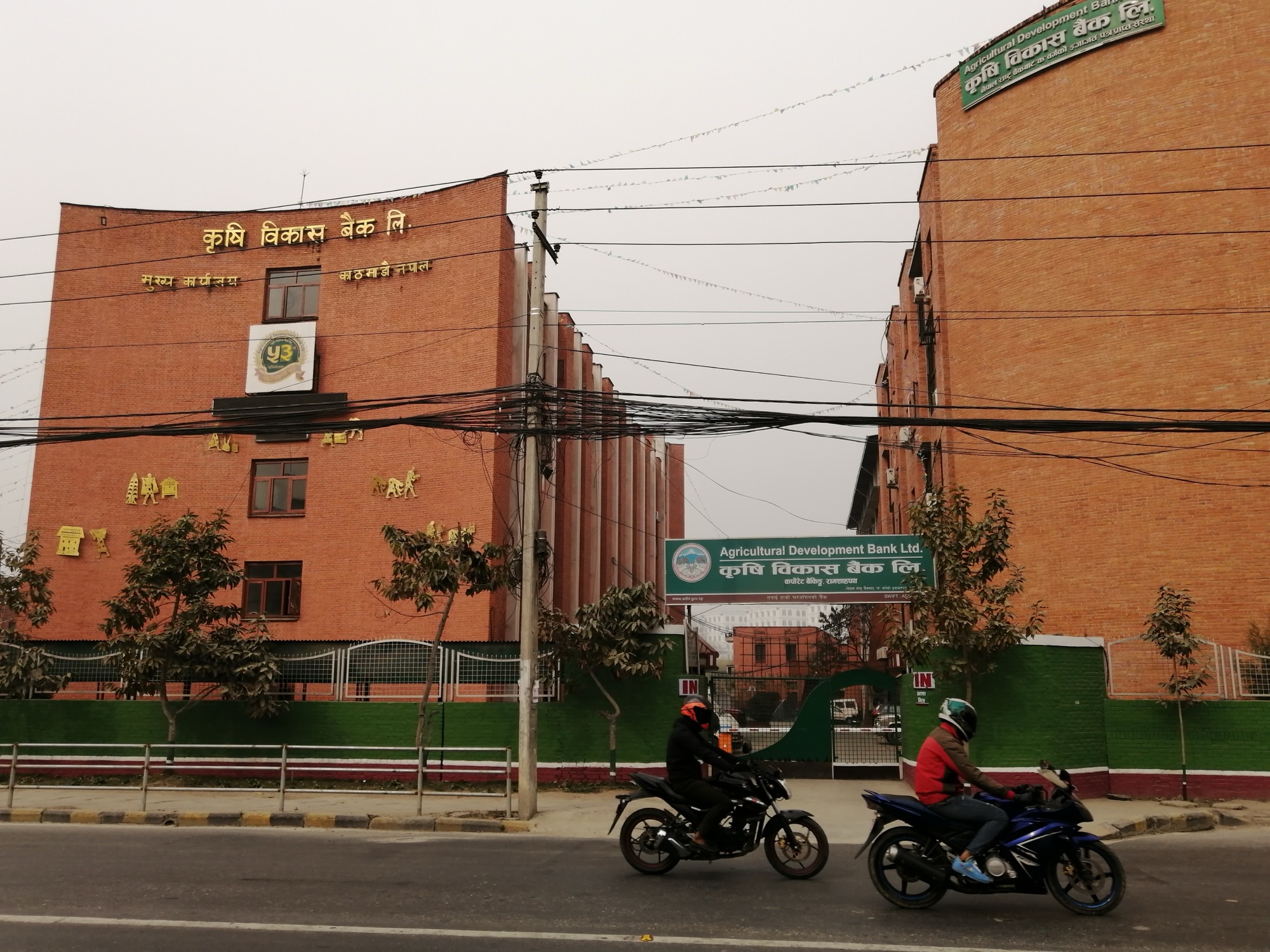
In early 2023 the average loan from a Nepali bank carried an interest rate of 13.03%. By this April it had fallen to 6.90%, Kantipur reported, citing data from Nepal Rastra Bank (NRB), the country's central bank and banking regulator. Kantipur had already reported last year that lending rates were at their lowest since the NRB began publishing averages in 2012/13. Money in Nepal has rarely been this cheap. Businesses are still borrowing very little of it.
Private-sector credit has grown by only about 6% a year for three years, The Kathmandu Post reported in September, against an NRB target of roughly 12%. In the first month of the 2026/27 fiscal year, which began in mid-July, it rose by 0.4%, or about Rs 23.5bn, according to NRB figures summarised by ShareSansar. The gap matters now because the government wants 7% growth this year, while the World Bank, after a destructive flood in August, has cut its own forecast to 3.7%. Closing that distance requires businesses to invest, and in Nepal, where banks finance most private investment, investing usually means borrowing.
The cheapest money on record
The banks are not short of funds. NRB data reported by ShareSansar show deposits at banks and financial institutions of Rs 8,256bn, about $53bn, in mid-August, 14.5% higher than a year earlier. Loans to the private sector stood at Rs 5,881bn, about $38bn, up 7.0% over the same twelve months. Deposits are growing about twice as fast as lending. The Kathmandu Post put the banks' credit-to-deposit ratio at about 65%.
Much of the money comes from abroad. Remittances reached Rs 215bn in the first month of the fiscal year, 21.2% more than a year earlier, or $1.40bn in dollar terms, according to the same NRB summary reported by ShareSansar. The Kathmandu Post reported that inflows have been setting records month after month and that foreign-exchange reserves now cover 18.8 months of imports of goods and services, compared with about six months during the post-Covid squeeze. Our report on remittances traces how those flows came to rival the state's own budget.
The surplus has pushed down every price of money. NepseTrading, citing NRB data, reported in May that commercial banks' average lending rate had fallen to 6.77% by mid-April from 8.22% a year earlier, and that the interbank rate, at which banks lend to one another, had slipped to 2.75%. The average base rate, the floor from which Nepali banks price their loans, was 4.72% at commercial banks in mid-August, ShareSansar reported. Savers sit on the other side of the trade. The average individual fixed-deposit rate across 20 commercial banks fell to 4.09% for the month from mid-September, ShareSansar reported, below the 5.96% consumer inflation the NRB recorded for mid-August. We have looked separately at what that means for savers.
A central bank betting on 11%
The NRB has kept money loose regardless. Its monetary policy for 2026/27, announced in early July, left the policy rate, the bank rate and the standing deposit facility rate unchanged, The Kathmandu Post reported, and described the stance as cautiously flexible. The Himalayan Times reported that the central bank plans for bank lending to expand by Rs 652bn, about $4.2bn, during the year, on top of almost Rs 6 trillion already outstanding, in support of the government's 7% growth target. My Republica reported that the NRB projects private-sector credit growth of 11%.
That projection follows repeated misses. My Republica noted that credit grew by about 6% in 2025/26 against a 12% target, and listed the obstacles cited around the policy: weak private-sector confidence, non-performing loans, a poor investment climate, and borrowers shut out after being blacklisted over bounced cheques. Governor Bishwo Nath Poudel, whom we profiled in July, said the stance was meant to support expansion while maintaining stability, The Himalayan Times reported. The NRB projected average inflation of about 5.5% for the year, The Kathmandu Post reported, below the government's 6% ceiling.
Prices have already moved above that projection. Consumer inflation reached 5.96% year on year in mid-August, up from 1.68% a year earlier, and wholesale inflation was above 8%, according to The Kathmandu Post. If prices keep rising, the central bank will have less room to keep money cheap, and that could happen before borrowing recovers.
Why the money stays in the vault
Officials acknowledge the puzzle. Satyendra Timilsina, head of research at the NRB, told The Kathmandu Post that liquidity was high and rates low, "yet the economy has not picked up". Economists quoted in the same report blamed confidence rather than cost. Dilli Raj Khanal said the government had failed to build confidence in the economy, while Min Bahadur Shrestha, a former vice-chair of the National Planning Commission, said he was disappointed that the investment climate had not improved under new political leadership.
There are structural reasons too. Nearly two million people have left Nepal in the past three years, The Kathmandu Post reported, thinning out both the workforce businesses would hire and the home market they would sell to. The remittances that fill bank balance sheets are, in part, the other face of that departure. Public investment, which in Nepal often sets the pace for contractors and suppliers, started the year slowly: capital spending in the first month was Rs 7.66bn, about $49m, against Rs 6.35bn a year earlier, The Kathmandu Post reported. Foreign direct investment in equity came to Rs 1.01bn, about $6.5m, over the same month.
Then came the flood. The World Bank's Nepal Development Update, published on 6 October and reported by ShareSansar, projected growth of 3.7% for 2026/27 after the Rasuwa flood damaged hydropower plants, solar installations, transmission lines and roads. The World Bank expects industry to be the main drag, as damaged power and transport links limit production and the movement of goods, and projects a recovery to 5.2% in 2027/28. Our report on the forecast cuts sets out the detail. Nara Bahadur Thapa, a former NRB executive director, told The Kathmandu Post he expects reconstruction to lift growth to between 7% and 8%. If he is right, rebuilding will be the first real test of whether demand for loans returns.
What to watch
The next NRB report on the economy, covering the first two months of the fiscal year, will show whether private credit kept rising after its 0.4% start, and whether deposits resumed their climb after slipping 0.3% in the first month, as ShareSansar reported. The second signal is inflation: a sustained move above the NRB's 5.5% projection would narrow the case for cheap money. The third is reconstruction lending after the Rasuwa flood, which would show up first in loans to construction and hydropower.
The listed banks themselves, whose results depend on how much of that Rs 8,256bn they can put to work, can be followed on our banks page. For three years the pattern has held: Nepal's banks have taken in money faster than they could lend it out.
How this story was made: researched and written by The Standard’s desk with AI assistance, from the published reporting and official data credited below, and checked against those sources. Our standards.
The long view Nepal's remittance economy



