How Chandra Dhakal built a bank on the money Nepalis send home
In 2001 most of Nepal's remittances moved through informal hundi brokers. The IME founder bet that migrant workers would trust a licensed company instead, and turned that bet into the country's largest bank.
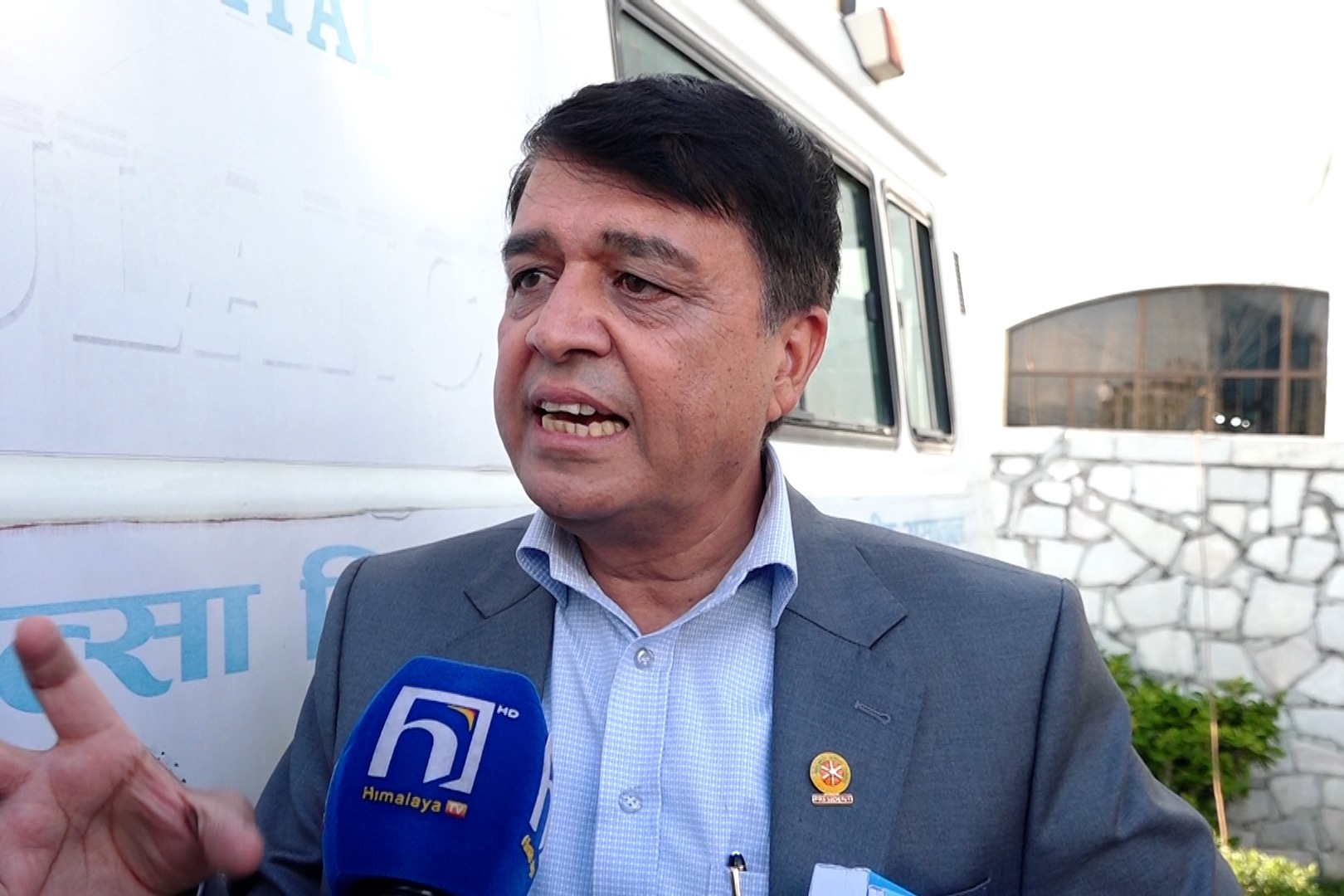
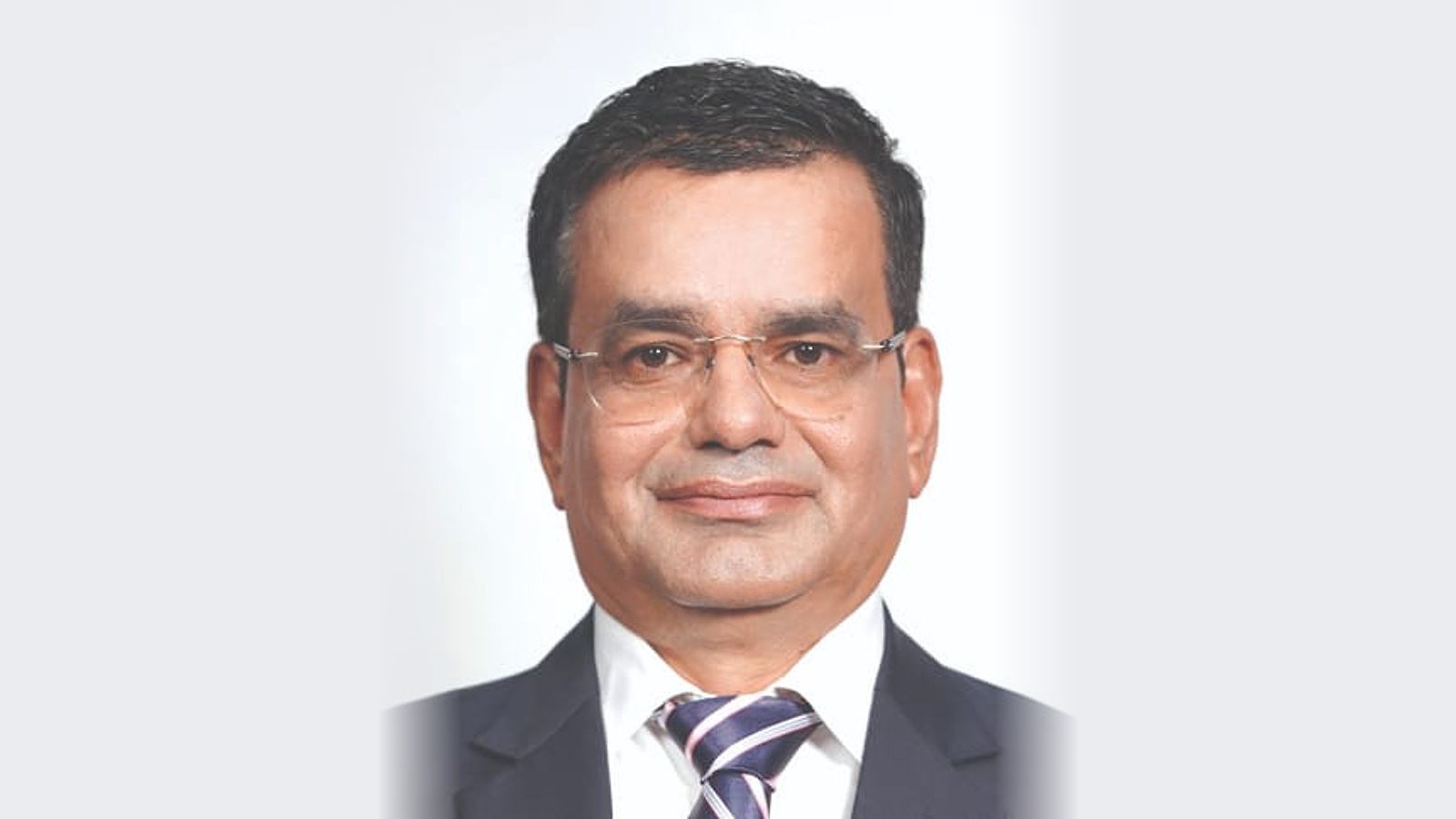
In 2001, when Nepal first opened Malaysia to its workers, a former assistant accountant at a state bank took a proposal to Nepal Rastra Bank, the country's central bank and banking regulator. Chandra Prasad Dhakal wanted permission for his small firm, IME, to carry migrants' wages home through a licensed channel. According to a 2019 profile by Onlinekhabar English, he had started the business with about Rs 50,000, roughly $320 at today's exchange rate, and once he secured a permit from Malaysia's central bank, no other company obtained one for the next five years.
A quarter of a century later, the scale of what he was chasing is plain. Nepalis working abroad sent home Rs 2.36 trillion, about $16.2bn, in the fiscal year that ended in mid-July 2026, Onlinekhabar English reported, citing central bank data. That was more than the Rs 1.964 trillion, about $12.7bn, that the government spent under its budget in the same year, a comparison this publication examined in remittances outran the budget. IME says it now handles roughly half of that flow, B360 reported in 2024. And the bank that grew out of the remittance business, Global IME Bank, held Rs 700.44bn in deposits, about $4.5bn, at the end of the last fiscal year, according to The Himalayan Times.
For readers outside Nepal, the story matters for a reason that reaches well beyond Kathmandu. In February 2025 the Financial Action Task Force, the global anti-money-laundering watchdog, put Nepal on its grey list for the first time since 2014 and cited the country's heavy reliance on hundi, Global Press Journal reported. How Nepali migrants in the Gulf, Malaysia and East Asia move their pay is now a question for international regulators and correspondent banks. Dhakal's company has been at the centre of that answer for 25 years.
An accountant who wanted to beat the brokers
Dhakal's route to finance was not a smooth one. Onlinekhabar English reported that he grew up in Amalachaur, in the hill district of Baglung, in a lower-middle-class family, and that his father died when he was 16. He failed his school-leaving examination at the first attempt and passed later. In Kathmandu he studied while working for a Pepsi distributor, then spent four years as an assistant accountant at Rastriya Banijya Bank, one of the state-owned lenders.
His first ventures were modest. With his brother he set up a cold store in the early 1990s, and he later tried to expand a cargo business, only to be refused a bank loan, according to the same profile. He also spent ten months working for a publication in Japan.
What drew him to remittance, Onlinekhabar English reported, was the treatment of migrant workers by illegal hundi operators. Hundi works through middlemen who collect cash from workers abroad and arrange for an equivalent sum to be handed to their families at home. It is cheap and fast, but it leaves the worker without legal protection and the state without a record. Global Press Journal reported that some families are even paid interest by hundi agents, which helps explain why the informal system has proved so durable.
When IME began, only about one remittance rupee in five came home through formal channels; today the figure is close to four in five, according to the company's own account as reported by B360. Those are IME's figures rather than an independent estimate, but the direction of travel is not in dispute. The Malaysian corridor gave Dhakal his start, and by 2019, Onlinekhabar English reported, IME was operating in every country that hosted Nepali workers.
From a money counter to the country's largest bank
Remittance gave Dhakal three things a banker needs: a stream of deposits, information about millions of households, and a name known in villages across the hills and the plains. He used them to build a bank. According to Onlinekhabar English, he first set up a finance company and later merged it with a commercial bank. Global IME Bank was founded in 2007 as a commercial bank with paid-up capital of Rs 1bn, The Himalayan Times reported.
What followed was a long run of acquisitions. By the FNCCI's account, in its profile of him as president, Dhakal led the merger or acquisition of five commercial banks, ten development banks and six finance companies. The largest came last. In November 2022 Global IME signed its final merger deal with Bank of Kathmandu on a one-for-one share swap, which ShareSansar, the market news site, reported would make it the largest bank in the country and bring the number of institutions folded into it to 21.
The latest results show the scale of the combined lender. For the 2025/26 fiscal year, Global IME reported net profit of Rs 6.04bn, about $39m, up 15.9%, according to The Himalayan Times. Deposits rose 21.8%, while loans grew only 8.2%, to Rs 476.84bn, about $3.1bn. Deposits, in other words, grew more than twice as fast as lending. The bank proposed a 10% dividend, split between cash and bonus shares.
Its physical reach is wide rather than dense. The Himalayan Times reported in October 2025 that the bank had 352 branches across all 77 districts, alongside 384 cash machines, 155 branchless banking units and 68 extension counters.
Source: The Himalayan Times
Around the bank sits the wider IME Group. The FNCCI describes it as more than two dozen enterprises spanning remittance, banking, insurance, energy, tourism, cars, information technology and entertainment, and credits it with more than 20,000 jobs, directly and indirectly. The same profile says IME received a largest-taxpayer award four years in a row, that Dhakal has served as Indonesia's honorary consul in Kathmandu since 2010, and that he sits on the board of the Social Security Fund.
The remittance business itself is still consolidating. In August 2024 IME Remit and GME Remittance began integrated operations, the first merger carried out under the central bank's policy for remittance companies, B360 reported. Market-share claims should be read with that in mind. In 2019 Onlinekhabar English put IME's share at 25 to 30%. The figure of about half, reported by B360, was given after the GME deal.
A seat at the table, in a new political order
Dhakal's reach has extended into the business establishment as well as the market. Until May 2026 he was president of the Federation of Nepalese Chambers of Commerce and Industry (FNCCI), the country's main business federation, handing the post to Anjan Shrestha at the federation's annual meeting that month, according to ShareSansar.
By then Nepal had a new government, formed after the youth-led uprising of September 2025, under Prime Minister Balendra Shah. Dhakal has not been kept at a distance by it. On 11 September 2026 he was one of four business leaders, alongside Binod Chaudhary, Pawan Golyan and Umesh Shrestha, who met Shah at his office to discuss the economy, investment and jobs, ShareSansar reported. The meeting fits a broader pattern this publication has described in Balen Shah's courtship of business.
Built on departures
The foundation of all this is a flow of money that exists because Nepal sends its young people abroad to work. The latest numbers point in two directions at once. First-time foreign employment approvals fell to 406,519 in the last fiscal year from 505,957 the year before, Onlinekhabar English reported, while renewal approvals for workers returning to existing jobs rose to 385,783 from 333,309. Remittances rose 37.1% in rupee terms and 28.1% in dollar terms over the same period, according to the same report.
For IME, that means the money is still growing even as fewer Nepalis leave for the first time. The grey listing adds pressure on the other side: every rupee that shifts from hundi to a licensed channel is, in principle, business for a firm like Dhakal's, and a step towards what the international watchdog wants to see.
The longer question sits in the agenda of that September meeting with the prime minister, which ShareSansar reported covered ways to boost employment. A group whose first and largest business rests on Nepalis working abroad would feel it if a country creating more work at home sent fewer of them. Dhakal has already turned remittance into banking, insurance, energy and tourism. Whether those businesses can stand on their own, if the flow of departures slows for good, is the test the group has yet to face.
Right of reply: this article draws on published reporting, and The Nepal Standard did not contact the people named for it. Anyone named may send a response to [email protected]; we will publish relevant replies in full or in fair summary, normally within three working days. An arrest, investigation or charge is not a finding of guilt.
How this story was made: researched and written by The Standard’s desk with AI assistance, from the published reporting and official data credited below, and checked against those sources. Our standards.
The long view Nepal's remittance economy