Huawei tells Nepal's internet providers to sell AI computing, not just bandwidth
At a gathering for internet service providers in Kathmandu, the Chinese telecoms giant pitched GPU rental, AI models and home security services as the next source of revenue, and pointed to Nepal's electricity costs as an advantage.
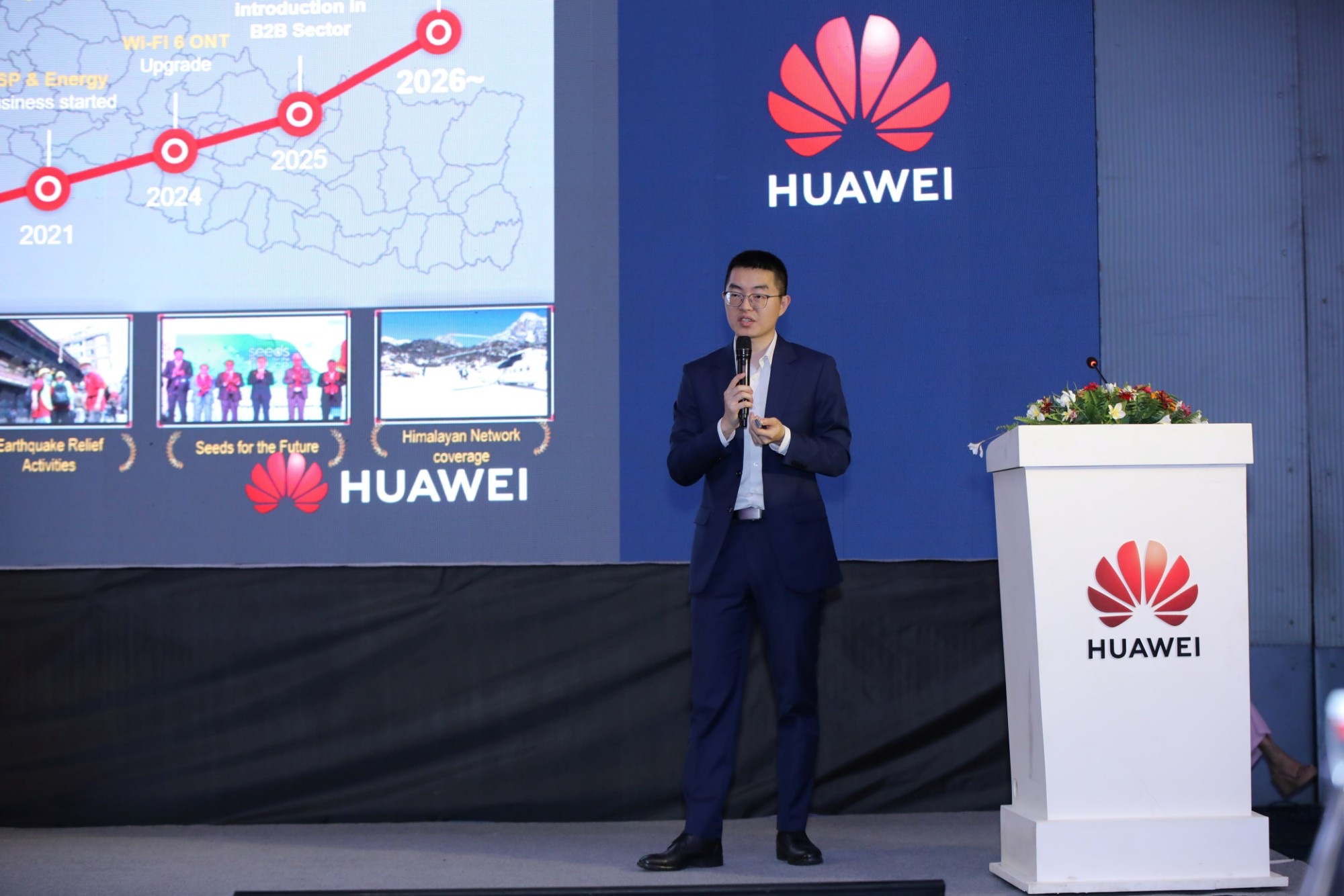
For most of their history, Nepal's internet service providers have sold one thing: a connection. Fibre to the home, a router on the shelf, a monthly bill. At a gathering in Kathmandu this week, Huawei told them that business is no longer enough, and laid out what it thinks should come next.
The company's Nepal ISP Event 2026, held under the theme "Accelerate F5G, Boost Intelligence", brought together internet service providers, technology companies and others from the industry. F5G refers to the fifth generation of fixed broadband, the fibre networks that carry most home and office internet. The message across the day was that those networks should now carry artificial intelligence services too, and that Nepal's providers can sell them.
"Beyond traditional connectivity"
Chester Chen, chief executive of Huawei Nepal, opened the event by arguing that the country's internet market has reached a turning point.
"Nepal's digital ecosystem is entering a new phase where connectivity is becoming the foundation for economic growth, innovation, and digital inclusion," Chen said. "As user expectations continue to evolve, ISPs need to move beyond traditional connectivity and embrace intelligent networks, AI-driven operations, and new business models."
He said Huawei would support that shift with technology, global experience and industry practice.
Cheap power, new business
The most striking pitch came from Lawrence Wu, chief operating officer of Huawei's overseas ISP business unit. He said AI is reshaping the industry by driving demand for high-performance networks, computing power and new digital services. He pointed to Nepal's competitive electricity costs as a reason the country's providers could expand into AI services beyond selling connections.
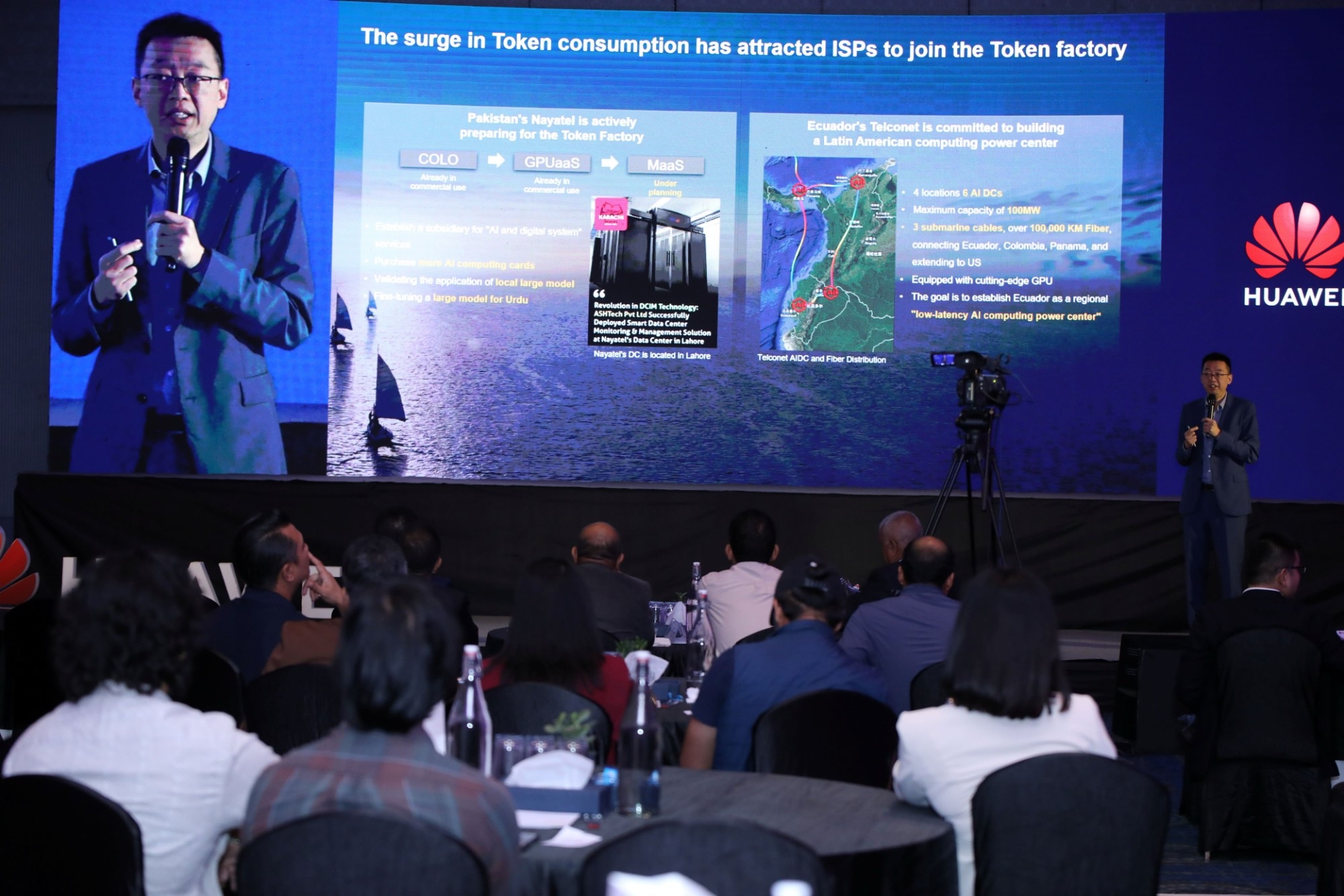
David Hu, Huawei's chief technology officer for ISPs in Asia-Pacific, went further. He described a shift from internet provider to managed service provider, in which ISPs sell AI token services, Model as a Service and GPU as a Service, renting out computing power and AI models to businesses, and upgrade their storage and network infrastructure to support them.
Slides shown at the event made the case with foreign examples. One, headlined "The surge in Token consumption has attracted ISPs to join the Token factory", described Pakistan's Nayatel moving from colocation to GPU rental, with a model service under planning, and Ecuador's Telconet building what it calls a regional low-latency AI computing centre, with six AI data centres across four locations and a maximum capacity of 100 megawatts.
The home as a product
For providers not ready to run data centres, Andy Wu, Huawei's optical director for Asia-Pacific, offered a nearer-term path. His Home Network + X strategy treats the home connection as a base on which to sell extra services, naming Video Surveillance as a Service and Wi-Fi as a Service as growth opportunities for Nepali providers. Premium home connectivity and value-added services, he said, can improve customer experience while creating steadier revenue.
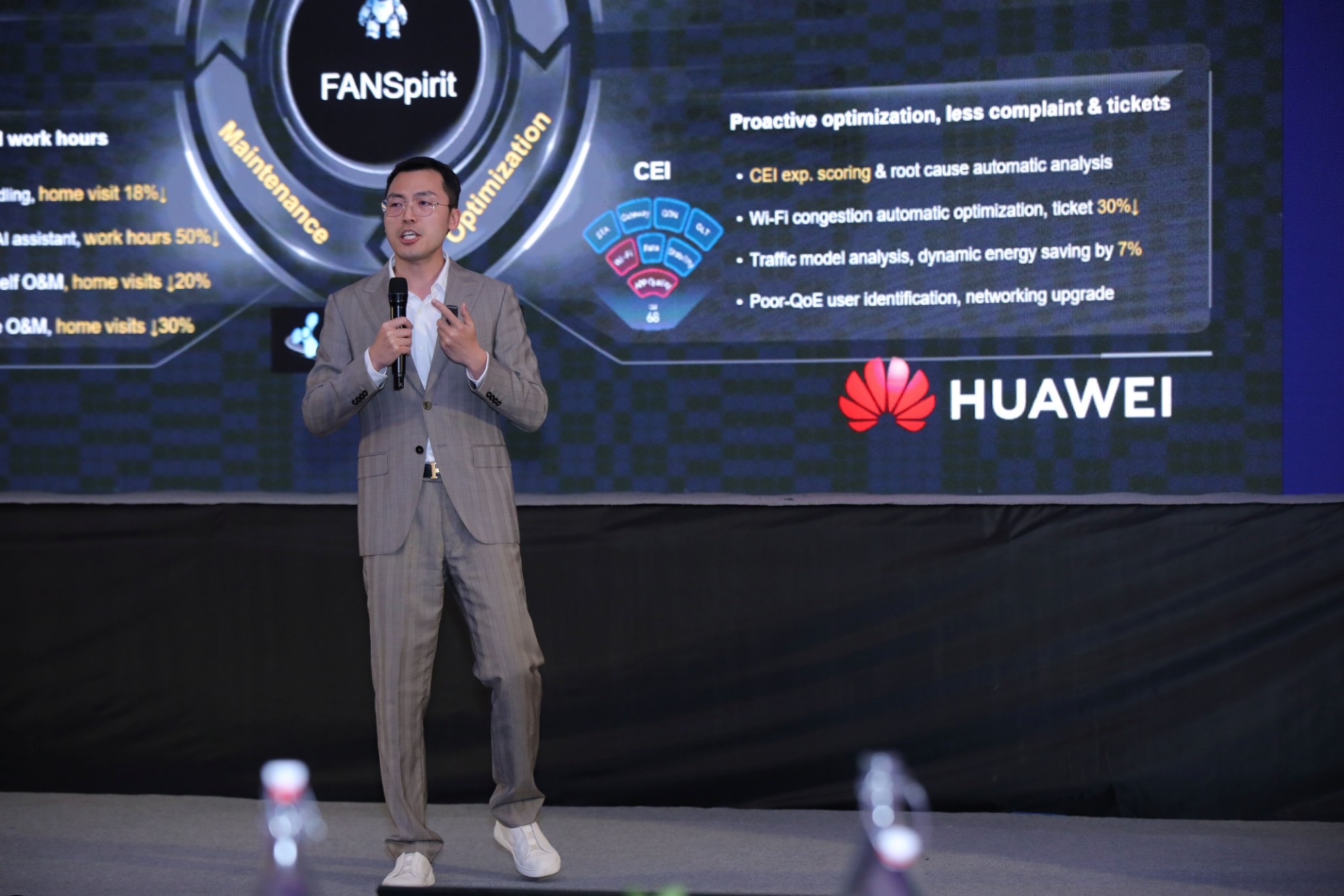
Another session showed Huawei's FANSpirit network management system, which the company says uses AI to cut home visits by technicians and reduce complaint tickets.
Twenty-seven years in Nepal
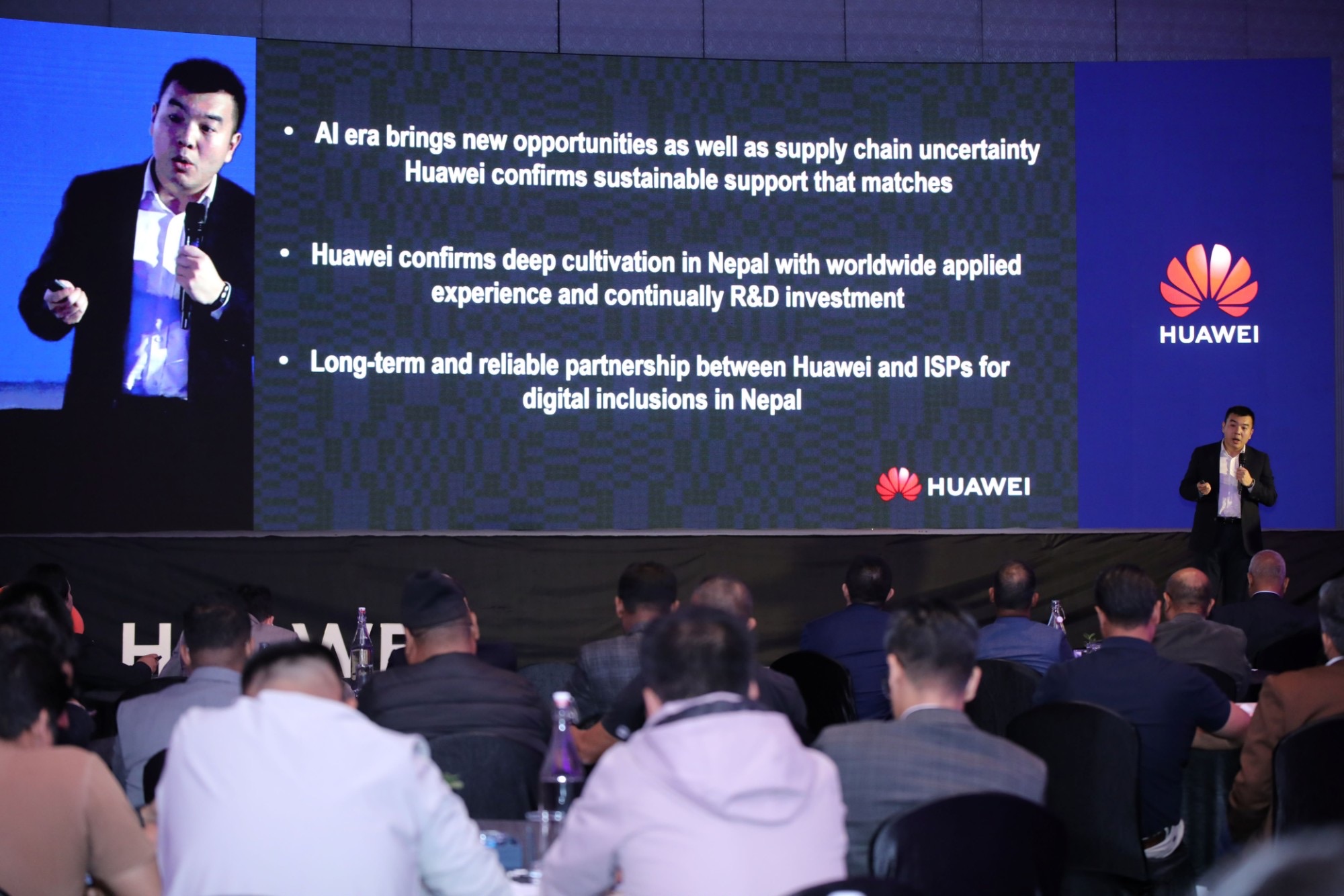
Huawei Nepal was established in 1999, and the company used the event to restate its commitment to working with local partners, internet providers and others to improve network quality, operational efficiency and digital services. One slide acknowledged that the AI era brings "supply chain uncertainty" as well as opportunity, and promised continued support and long-term partnership with Nepal's ISPs.
Huawei says it serves more than 8 million people in Nepal every day.
Whether Nepal's providers take up the invitation is another matter. Selling GPU time and AI models requires capital, data centre capacity and business customers willing to pay for local computing, a long way from the fibre and router business most of them run today. What the event made clear is where Huawei wants them to go.
How this story was made: researched and written by The Standard’s desk with AI assistance, from the published reporting and official data credited below, and checked against those sources. Our standards.
The long view Nepal's hydropower, from load-shedding to exports



