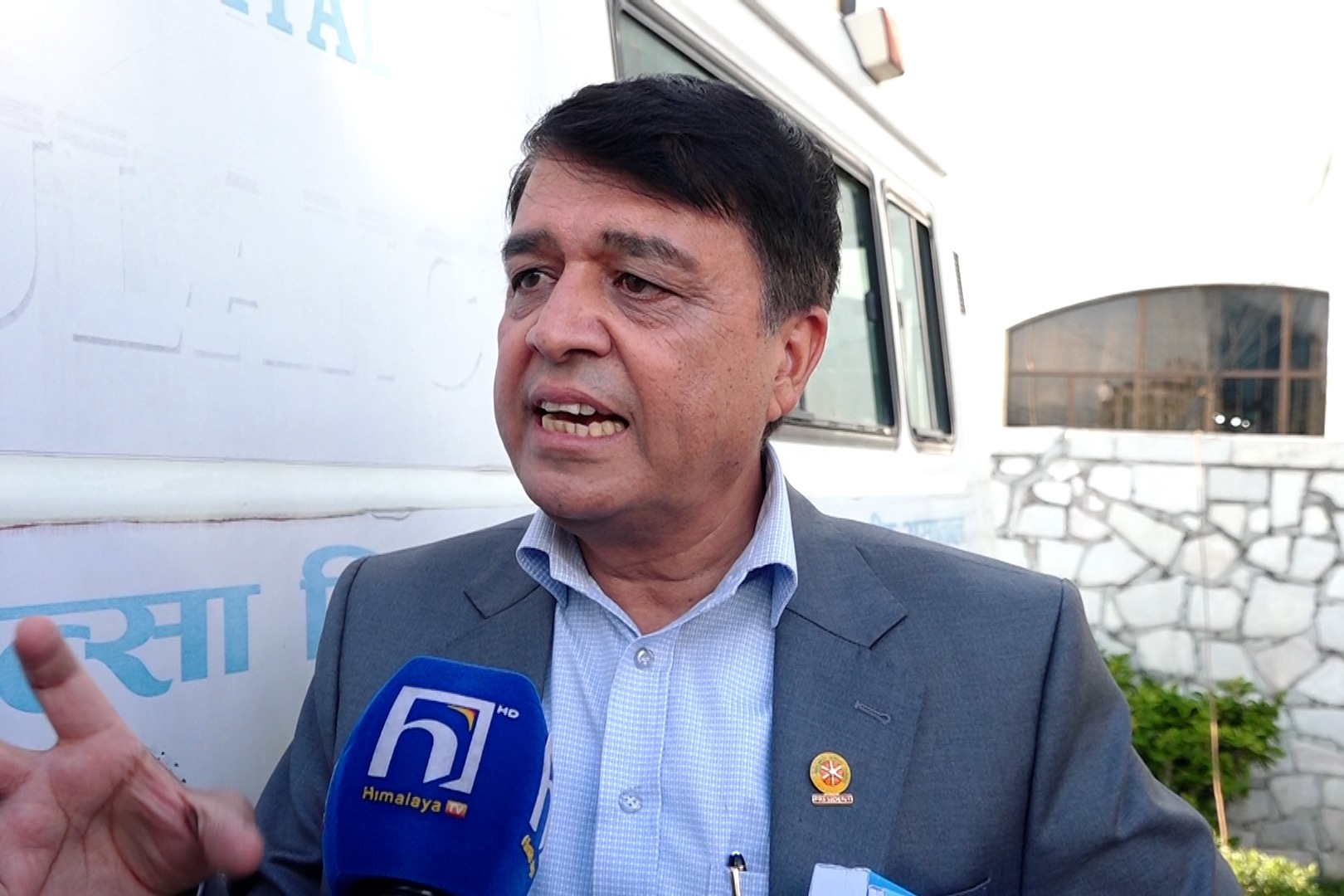
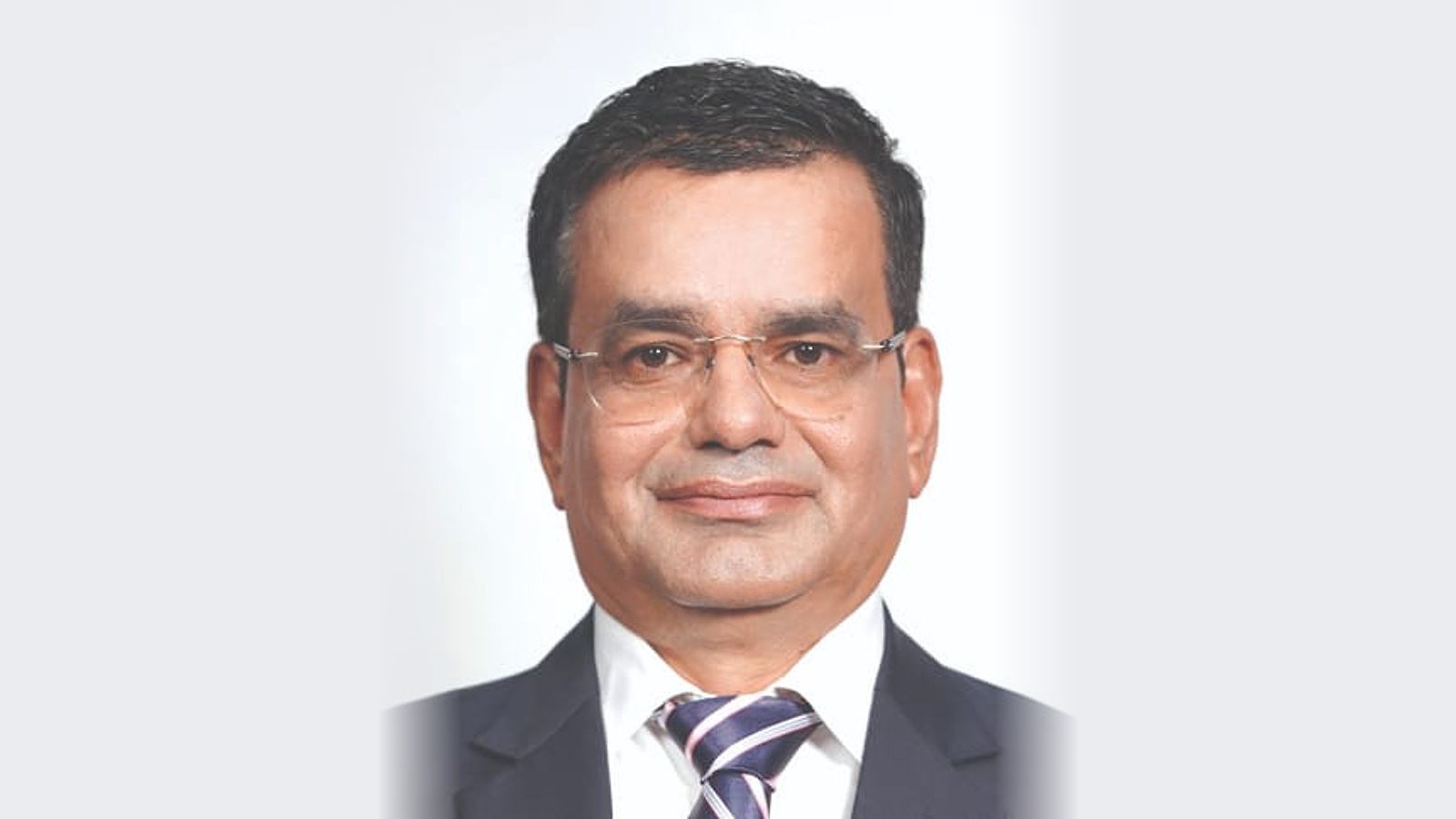
Anil Keshary Shah: the banker who keeps coming back to Nabil
A career chief executive whose 2018 return to Nabil was held up by a new central-bank rule, and who then joined the party that went on to win Nepal's 2026 election, is back on the board of one of the country's largest banks.

In late February 2018 four of Nepal's commercial banks were operating without a permanent chief executive, ShareSansar reported: Nabil, Mega, Century Commercial and Machhapuchchhre. One man sat near the centre of the tangle. Anil Keshary Shah had just completed two terms running Mega Bank, had walked away from an agreement to lead Century, and was working at Nabil, the bank that had first made him a chief executive, in every role except the top one. A rule the central bank had introduced weeks earlier meant he could not hold that title for six months.
The episode says a good deal about Shah, and more about Nepali banking. He is neither a founder nor an heir in an industry where board seats often follow family shareholdings; his capital has been his reputation as a manager. In January 2026 that reputation carried him back to Nabil once more, this time as a director elected for the promoter shareholders. He returns to a bank far larger than the one he left, at a time when the rules on who may sit in Nepal's bank boardrooms are being argued over again. For an investor in London or Singapore, his career is a compact guide to how a small banking market rations its executive talent, and how its regulators try to police the traffic.
A manager in a market of owners
Shah is the son of Bindeshwari Shah, Nepal's first woman ambassador, Himal Press reported. He began his career at Grindlays Bank, the British lender later absorbed into Standard Chartered, and moved to Nabil as general manager, becoming chief executive within a year, according to the same outlet. ShareSansar has reported that he holds an MBA from Delhi University, studied at Harvard's John F Kennedy School of Government and served five years in that first spell as Nabil's chief executive.
He then left to run Mega Bank Nepal, and stayed for eight years. ShareSansar noted that under the Banks and Financial Institutions Act (BAFIA), the law that governs Nepal's lenders, a chief executive cannot serve more than two terms at the same institution. His second term at Mega ended on 25 December 2017, the outlet reported. Himal Press, summing up his career in 2023, counted 31 years in banking, 17 of them as a chief executive.
That combination of long tenure and easy movement between banks is what made his next step so awkward. When one of a small number of experienced chief executives changes employer, more than one boardroom is affected.
The rule that held him at the door
The move from Mega was meant to be to Century Commercial Bank. It fell apart. ShareSansar reported in January 2018 that Shah had broken a four-year contract with Century after a disagreement over pay, and that a better offer from Nabil was also a factor. Nabil appointed him chief executive on the same day, 28 December 2017 (Poush 13, 2074 in the Nepali calendar), that a new directive from Nepal Rastra Bank (NRB), the central bank and banking regulator, took effect, according to ShareSansar.
The directive barred anyone who had been chief executive of one bank from taking the same post at another for six months. A separate NRB rule forbids a bank from leaving the chief executive's office vacant for more than three months. Caught between the two, Nabil cancelled the appointment, ShareSansar reported on 31 January 2018, and the restriction on Shah ran until early June that year.
What followed was an arrangement that kept within the letter of the rules. ShareSansar's February 2018 survey of the vacancies described Shah working as Nabil's deputy chief executive and in practice running the bank, unable to take the title until the cooling-off period expired. Mega was being run by an acting chief, and Century's acting chief had by then served more than five months, beyond the three-month limit, the outlet reported. On 22 June 2018 Nabil's board made Shah permanent chief executive, ShareSansar reported, after he had served as acting chief since February.
The cooling-off rule did not target Shah, but his case showed why the regulator wanted it. One executive's career move was entangled with vacancies at three banks. In a market this thin, senior bankers are scarce, and a regulator that worries about poaching and continuity has few tools other than time limits.
The deal, the exit and the detour
Shah's second spell at Nabil ended just before the bank's largest transaction. In June 2022 Nabil informed the Securities Board of Nepal (SEBON), the market regulator, and the Nepal Stock Exchange (NEPSE), that his tenure as chief executive had ended, ShareSansar reported. His deputy, Sujit Kumar Shakya, became acting chief executive from 7 June. The notice gave no reason, according to the outlet. Weeks later Nabil completed its acquisition of Nepal Bangladesh Bank, a deal that Nepali Times reported in July 2022 made it the largest financial institution in the country, an early move in a consolidation that has continued since (see the bank merger wave).
A year later Shah made a move few senior Nepali bankers have made in public. On 22 June 2023 he joined the Rastriya Swatantra Party (RSP) at a ceremony marking its first anniversary, where the party's chairman, Rabi Lamichhane, welcomed him and gave him charge of its training department, Himal Press reported. For a party then barely a year old, a former head of the bankers' establishment was a recognisable recruit.
The RSP has since moved from the margins to the centre. In the March 2026 general election, the first since the youth-led uprising of September 2025, the party won 117 of the 165 directly elected seats in early results and was heading for a landslide, the Associated Press reported, with the former Kathmandu mayor Balendra Shah as its candidate for prime minister (see Balen Shah's courtship of business). The Nepal Standard could not establish from public reporting what role, if any, Shah now holds in the party.
Back in the boardroom, under shifting rules
On 13 January 2026, two months before that election, Nabil's 41st annual general meeting elected Shah to the board as a representative of the promoter shareholders, ShareSansar reported. The same meeting approved a 12.5% cash dividend and chose Nirvana Kumar Chaudhary as chairman, with his assumption of office subject to an oath before the central bank. It also approved the issue of Rs 5bn (about $32m) of 8% irredeemable preference shares, and marked the end of two terms for the outgoing chairman, Upendra Prasad Paudel, ShareSansar reported. Promoter shareholders in Nepali banks are the founding and strategic investors who hold a separate block of shares from the public, and their seats on the board are where control is exercised.
The bank he rejoins has grown well beyond the one he left. At the end of the third quarter of the 2025/26 fiscal year Nabil reported total assets of Rs 718.42bn (about $4.6bn) and deposits of Rs 588.85bn (about $3.8bn), The Himalayan Times reported in July 2026 and said it served 2.6 million customers. Its chief executive is Manoj Kumar Gyawali. Like the rest of the sector, Nabil holds more deposits than borrowers want to take (see banks flush, nobody borrowing).
The boundary between Nepal's banks and its politics has been contested before. BAFIA already bars members of the national parliament from bank boards, and in 2017 the NRB issued a directive extending that bar to elected local and provincial representatives, The Himalayan Times reported. A parliamentary committee questioned the directive's legal basis at the time and suggested the law itself be amended instead, according to the same report. As described in that coverage, the rules turn on holding elected office rather than on party membership. There is no allegation of wrongdoing against Shah.
For Nabil's shareholders, the practical questions are narrower than the politics. A director with 17 years as a chief executive brings operating knowledge few board members in Nepal can match, and his 2018 episode shows how closely the NRB watches senior appointments. What remains to be seen is whether he takes on a board committee role, and whether the next round of rule-making on directors' eligibility reaches people with party affiliations as well as elected office holders. His career so far has been shaped twice by rules written for the whole industry: the term limit that ended his time at Mega and the cooling-off period that delayed his return to Nabil.
Right of reply: this article draws on published reporting, and The Nepal Standard did not contact the people named for it. Anyone named may send a response to [email protected]; we will publish relevant replies in full or in fair summary, normally within three working days. An arrest, investigation or charge is not a finding of guilt.
How this story was made: researched and written by The Standard’s desk with AI assistance, from the published reporting and official data credited below, and checked against those sources. Our standards.
The long view The Nepal Stock Exchange