Nepal's nominees for India and China pitch an economic agenda to lawmakers
At their parliamentary hearings, Pandey and Sharma put investment, power trade, tourism and transit at the centre of their plans. Investors should weigh what was promised and what remains open.
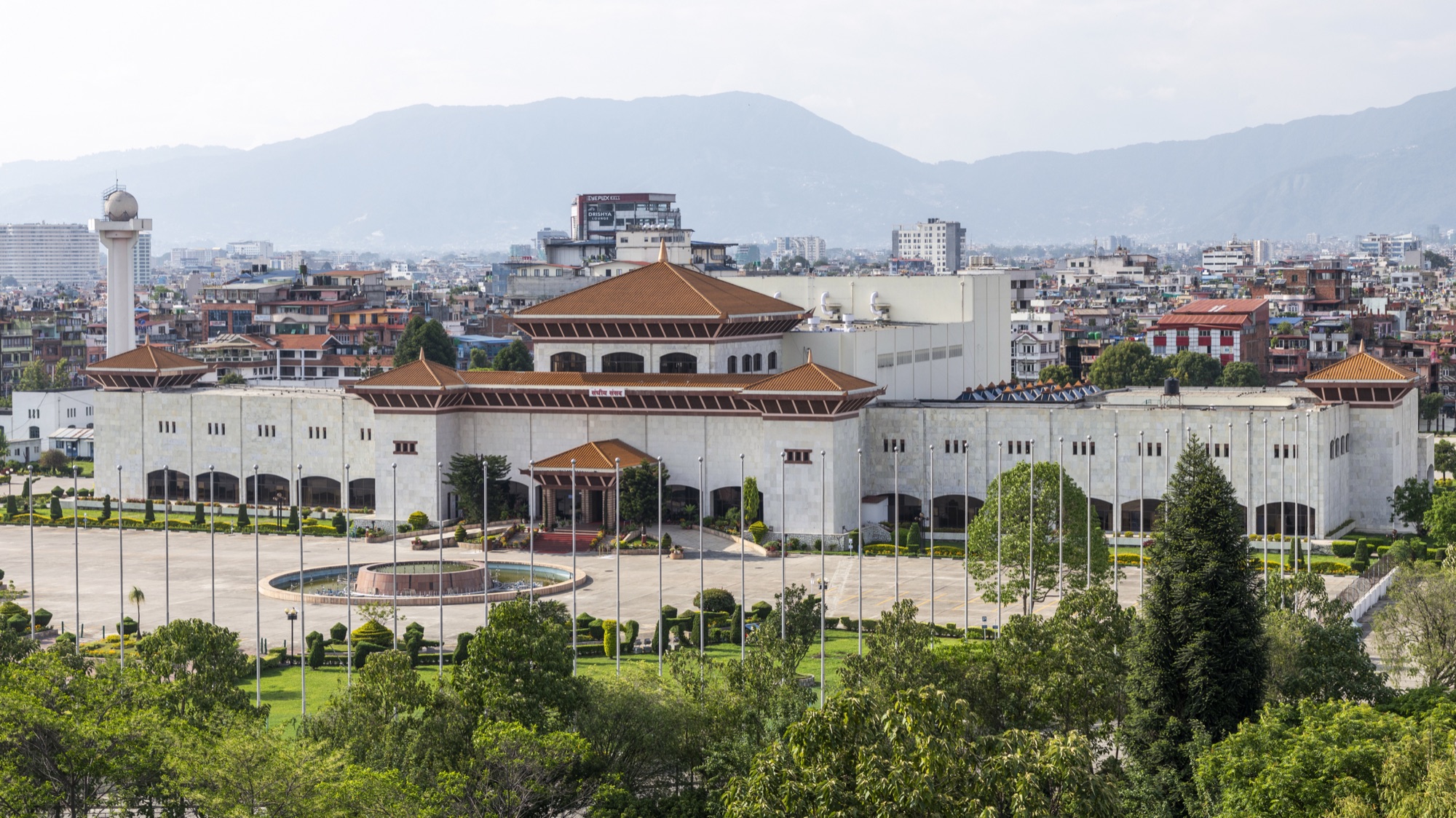
On a single day in Kathmandu, two men nominated for the capitals of the world's two most populous nations sat before Nepali lawmakers. One talked about drones on the border, Indian civil servants as tourists and a regular flight to Kolkata. The other talked about Chinese ports that Nepal is entitled to use but cannot yet reach in practice.
The hearings were for Nischal Nath Pandey, nominated as Nepal's ambassador to India, and Kalyan Raj Sharma, nominated for China, Himal Press reported. Both appeared before the Parliamentary Hearing Committee, the body that vets senior public appointments.
The common thread was commerce. Pandey said he would move relations with New Delhi away from traditional diplomacy and towards economic diplomacy, with Indian investment and technology as the focus, according to Himal Press. Sharma said his main aim in Beijing would be to preserve political trust and to ensure that Nepal and its people gain concretely from working with China, the same publication reported.
The question is whether this marks a real change in how a landlocked country of modest means handles its two giant neighbours, or a script recited for a committee. On the evidence of the hearings, the agenda is commercially specific, but several hard questions remain open.
Delhi: electricity, tourists and a smarter border
Pandey's most commercially significant remarks concerned power. He described electricity exports as a key tool for narrowing Nepal's trade deficit with India and pledged to help power flow smoothly in both directions, Himal Press reported. For a country whose rivers are its most obvious export asset, power trade looks like the lever most able to shift the trade balance at scale; hydropower developers have reason to follow the nominee for New Delhi closely.
He was frank about tourism. Far fewer Indians visit Nepal than travel to other countries, Pandey told the committee, and he called for special programmes aimed at Indian government employees. He noted that Nepal already has direct flights to Indian cities including New Delhi, Varanasi, Bengaluru and Mumbai, and argued that service to Kolkata should become regular, according to Himal Press.
On security, he proposed wider use of technology, including drones and a smart border system running at all hours, the outlet reported. That has a business dimension as well as a security one: better monitoring of the frontier could affect how goods move across it.
Pandey said he would help bring Indian capital and know-how into Nepal, provided that work fitted the priorities Kathmandu sets, and that his role would rest on the government's policies and directives, Himal Press reported. The emphasis is a reminder that an envoy can open doors but cannot rewrite the rules investors face once inside.
Beijing: ports, markets and the BRI question
Sharma's agenda was more structural. Beyond political trust, he listed his priorities as seeing through deals Nepal has already signed with Beijing, opening China wider to Nepali goods and to Nepal as a destination, and attracting Chinese capital into productive sectors, Himal Press reported.
The clearest example is transit. Under its transit transport accord with China, Nepal may use four Chinese seaports and three land ports, and Sharma pledged to push for the roads leading to them to be brought into service sooner, according to Himal Press. A working northern route would, in principle, widen the options available to Nepali exporters and importers.
Source: Himal Press
He also spoke of firmer arrangements at the border and for transit, joint work on preparing for disasters and better help for Nepalis who need consular support. He grounded the relationship in sovereign equality, mutual respect, peaceful coexistence, non-interference and Nepal's commitment to the "One China" principle, Himal Press reported.
The committee's questions ranged beyond Sharma's own presentation. Rajiv Khatri wanted to know how Nepal would shrink its trade gap with China and what could be done to give Pokhara and Bhairahawa airports a steady schedule of international flights, Nepal News reported. Prem Dangal raised the investment modality for the Belt and Road Initiative (BRI), China's global infrastructure programme, and Nepal's stance on the China-India agreement concerning Kalapani, Lipulekh and Limpiyadhura, according to the news site.
Padma Kumari Aryal pressed the nominee on conditions at the Rasuwa and Tatopani crossings on the northern border, and on how Kathmandu might put Chinese funds already on offer to fuller use. She also raised the hardship faced by some Nepali women who marry and settle in China, and urged him to draw up a plan in response, Nepal News reported. Madhukumar Chaulagain sought ideas for selling products such as Buddha Chitta beads abroad, for wellness tourism and for the Namo Buddha site, and asked how the nominee would reconcile Nepal's interests with Beijing's security worries, while Barshaman Pun wanted a plan to draw more Chinese investors and tourists, the site reported.
In reply, Sharma promised to put Nepal's national interest first and to let state policy guide his conduct, according to Nepal News. Neither report recorded a specific answer on the BRI investment modality.
What foreign capital should read into it
Three points stand out for investors.
First, both nominees framed their jobs in terms a fund manager would recognise: investment, technology, market access, logistics. That language signals what Kathmandu wants its embassies to deliver, and may give foreign companies a clearer route for raising practical problems through diplomatic channels.
Second, the lawmakers' questions point to where the friction lies: the trade deficit with China, the regularity of international flights at Pokhara and Bhairahawa, conditions at the northern border crossings and the BRI investment modality. Several of these turn on domestic decisions as much as on diplomacy.
Third, both men tied their work to state policy. That is proper, but it suggests the pace of change will depend less on the envoys than on choices made in Kathmandu on energy trade, transit arrangements and investment approvals. An ambassador can sell Nepal; he cannot make the sale easier to close.
The balance between the two postings also matters. Pandey's agenda leans on flows that already exist, such as electricity and tourism. Sharma's leans on agreements already signed and on transit routes not yet in operation. Investors weighing exposure to either corridor may want to factor in that difference in tempo.
What to watch
Whether the hearing committee endorses both nominees, and how quickly they take up their posts. Any concrete step on cross-border electricity trade with India, which Pandey identified as a way to narrow the deficit. Progress on the routes to China's ports and on the Rasuwa and Tatopani crossings. And whether Kathmandu sets out a clear BRI investment modality, a question lawmakers raised and to which no answer was reported.
How this story was made: researched and written by The Standard’s desk with AI assistance, from the published reporting and official data credited below, and checked against those sources. Our standards.
The long view Nepal's hydropower, from load-shedding to exports
The long view Nepal's LDC graduation