Nepal Bangladesh Bank: the run, the NRB takeover and the Nabil merger
A 1994 joint venture with two Bangladeshi lenders suffered a run in November 2006, was taken over by Nepal Rastra Bank, recovered under its management and was absorbed by Nabil Bank in 2022.

Depositors began queuing outside Nepal Bangladesh Bank before dawn in November 2006, some from 5am, and in less than an hour more than a billion rupees left the bank, the lawyer Bharat Upreti wrote in a comment piece for Nepali Times. By the end of that week roughly Rs 2bn had been withdrawn over three days, and the central bank had taken the keys, The Himalayan Times reported.
The bank's story ran from a joint venture with two Bangladeshi lenders in 1994 to its absorption into Nabil Bank in 2022. In between came a takeover by Nepal Rastra Bank (NRB), the central bank, a recovery under its management and a police case involving its former promoter group.
- Founded as a joint venture with IFIC Bank and Bank Asia of Bangladesh
- Court stays the central bank's action; depositors queue
- Nepal Rastra Bank takes over management
- Rs 700.3m recovered in two months
- IFIC Bank cleared to buy 32.4%
- Bad loans down to 3.57%
- Final approval for Nabil Bank to absorb it
Source: The Himalayan Times, ShareSansar
A cross-border bank in a liberalising market
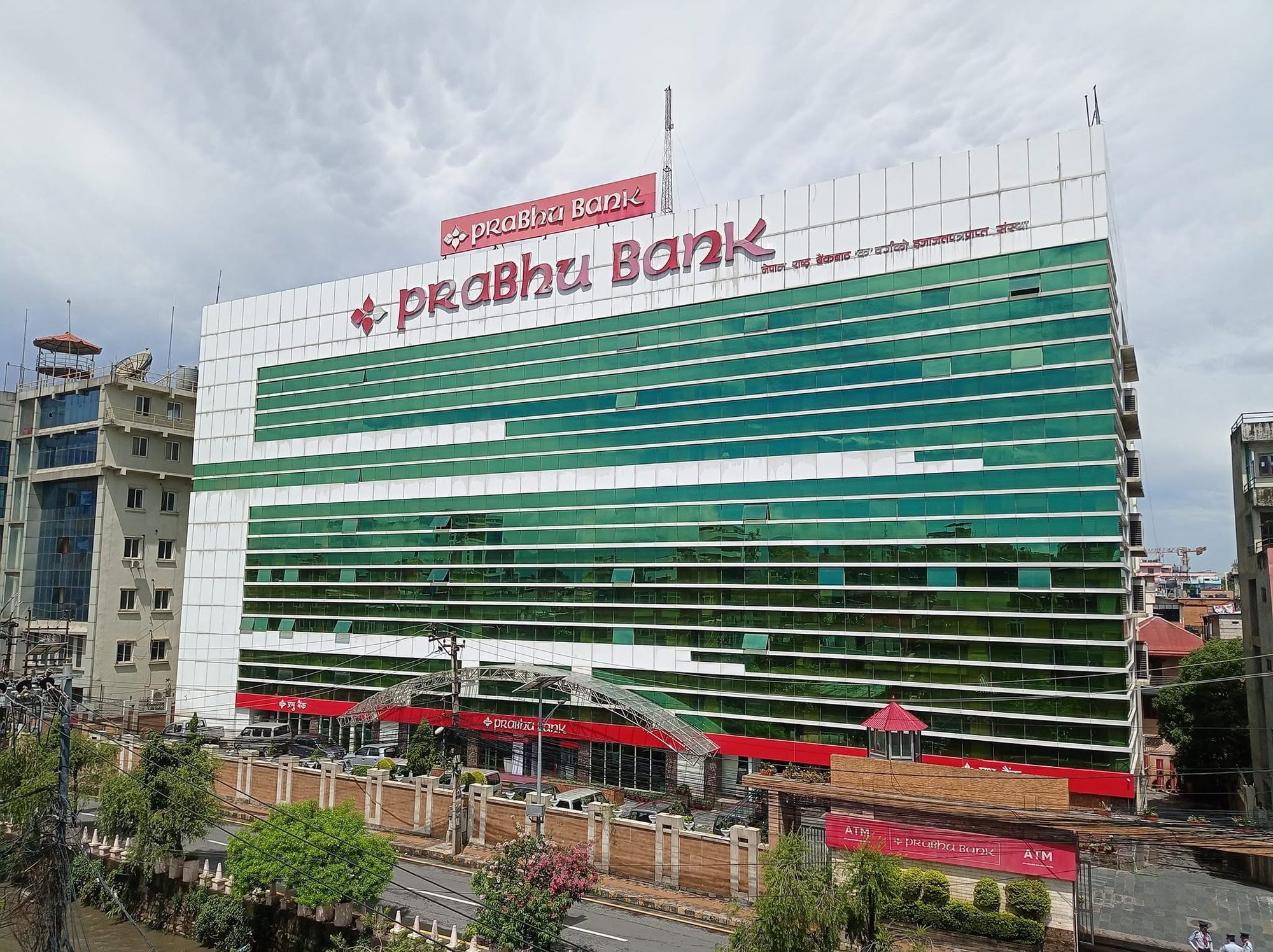
Nepal Bangladesh Bank was established in June 1994 as a joint venture with IFIC Bank and Bank Asia, both of Bangladesh, ShareSansar reported in a profile of the bank. It started with authorised capital of Rs 240m and paid-up capital of Rs 60m, according to the same profile, and set up its head office in New Baneshwor, Kathmandu.
The Nepali partner was the NB Group, a business house whose interests came to stretch well beyond one bank. In November 2006 The Himalayan Times described the bank as a joint venture between the NB Group and IFIC Bank, and reported that Nepal Credit and Commerce Bank was also an NB Group member. Upreti wrote in Nepali Times that the bank's investors owned four banks and finance companies, despite an NRB ceiling on how much one family or business group could invest in such institutions.
By late 2006 depositors had about Rs 13bn at stake in the bank, The Himalayan Times reported.
The turn: a stay order and a run
The trouble had been visible to the regulator for years. NRB executive director Rabindra Prasad Pandey said the bank had repeatedly failed to comply with banking norms despite four years of monitoring and directives, and that large loans to promoters remained unpaid, The Himalayan Times reported. "Poor governance is the major problem behind this failure," Pandey told the newspaper.
When NRB moved to act, the bank went to court. On 8 November 2006 The Himalayan Times reported that a single-judge bench of the Patan Appellate Court had ordered the central bank not to take action against Nepal Bangladesh Bank, on a petition filed by its managing director, Narendra Bhattarai. The judge noted that the Bank and Financial Institutions Ordinance 2005 had expired and gave the governor 15 days to explain in writing the planned action against the NB Group, the newspaper reported.
The order did not calm anyone. Upreti argued in Nepali Times that the run happened because the takeover plan had leaked in advance and the court had then halted the central bank, rather than because of NRB's assessment of the bank itself. Depositors, he wrote, heard of the court's decision and started queuing.
The order was also short-lived. Members of the Judicial Council, the body that oversees judges, recommended an inquiry into how the order was issued, and the bank withdrew its case from the Patan Appellate Court, The Himalayan Times reported in mid-November 2006. No outcome of any inquiry into the judge has been found in the sources reviewed for this article.
The fall: the central bank takes over
On Saturday 11 November 2006 the bank's board members resigned en masse, and on Sunday 12 November NRB formally took over the bank's management, The Himalayan Times reported. NRB acted under Section 54 (1), (2) and (3) of the Nepal Rastra Bank Act, ShareSansar reported, and removed the chairman, Jeet Bahadur Shrestha, the other board members, the managing director, Bhattarai, and some employees.
The numbers the central bank faced were grim. Non-performing loans, those on which borrowers had stopped paying, were estimated at 25% and the bank's net worth was reported to be almost negative, The Himalayan Times reported. The newspaper reported that the bank's management had itself approached the central bank on the Saturday as withdrawals threatened its solvency.
NRB put in a four-member team led by Maha Prasad Adhikari, then a director in its bank supervision department, with Bhisma Raj Dhungana, Keshav Bahadur KC and Sachin Jung Rayamajhi, The Himalayan Times reported. Adhikari promised that "customers can withdraw all their money if they so desire," and pledged to restructure the bank and recover its loans, the newspaper reported. He went on to become the 17th governor of Nepal Rastra Bank in April 2020, The Kathmandu Post reported.
Recovery under the regulator
The early results were quick. In its first two months the NRB-led team recovered Rs 700.3m, of which Rs 463.3m came from loans and Rs 237m from the NB Group, The Himalayan Times reported in January 2007. Non-performing assets fell to 34% from 41%, Adhikari told the newspaper.
After about two years under NRB management, control was handed back to the bank's shareholders, ShareSansar reported. In 2011 it merged with Nepal Sri Lanka Merchant Bank and Finance, according to ShareSansar.
The merger brought fresh scrutiny. In August 2012 NRB asked the bank to explain in writing why management had written back about Rs 400m of loans to directors, among other governance failures, ShareSansar reported. A central bank spokesperson said action would follow only if the explanation was insufficient, with possible fines of Rs 500,000 per board member, according to the same report.
Months later police filed a case at the Patan Appellate Court against 18 people, among them an NB Group promoter, over loans from Nepal Sri Lanka Merchant Bank and Finance, ShareSansar reported in November 2012, republishing The Kathmandu Post. The charge said Rs 350m had been lent to connected parties before the finance company merged into Nepal Bangladesh Bank, according to the report. These are charges, not findings, and no verdict has been reported in the sources reviewed for this article.
The ownership changed in the same period. NRB approved IFIC Bank to buy a 32.4% stake in the bank, while the NB Group kept 14.5%, ShareSansar reported. IFIC took over stakes from the NB Group to settle debts totalling Rs 600m, according to ShareSansar's profile.
The clean-up showed in the accounts. By the second quarter of 2012/13 non-performing loans had fallen to 3.57% from 18.58% a year earlier, net profit was Rs 171.7m and deposits exceeded Rs 15bn across 20 branches, ShareSansar reported in February 2013.
Absorption into Nabil
The bank survived, but not as an independent name. When Nepal's regulators pushed lenders to consolidate (see our report on the bank merger wave that cut thirty lenders to twenty), Nabil Bank agreed to acquire it. NRB gave final approval on 30 June 2022, with NBB shareholders receiving 43 Nabil shares for every 100 NBB shares, ShareSansar reported. At that point Nepal Bangladesh Bank had paid-up capital of Rs 10.09bn, against Rs 18.5bn at Nabil, according to the same report.
What it left behind
The episode set a template. It showed that the central bank could and would remove a board and run a commercial bank, and that it could recover money, including from the promoter group, once it was inside, The Himalayan Times reported. It also showed how a court order can turn a regulatory problem into a liquidity crisis within hours, if the Nepali Times account of the queues is right.
The deeper lesson concerns ownership. The regulator's own executive director blamed governance, and the bank's recovery came only after NRB management and a change in the shareholding that reduced the founding group's stake, according to The Himalayan Times and ShareSansar. Related-party lending, loans to people connected to a bank's owners, sat at the centre of both the 2006 crisis and the 2012 questions, by the regulator's and police's own accounts.
Those questions have not gone away. Nepal's later troubles with savings cooperatives (see our explainer on the cooperative crisis and shadow banking) repeat several features of the Nepal Bangladesh Bank story: concentrated ownership, insider loans and depositors who learn of problems only when a queue forms. More cases are logged in our Ledger.
Right of reply: this article draws on published reporting, and The Nepal Standard did not contact the people named for it. Anyone named may send a response to [email protected]; we will publish relevant replies in full or in fair summary, normally within three working days. An arrest, investigation or charge is not a finding of guilt.
How this story was made: researched and written by The Standard’s desk with AI assistance, from the published reporting and official data credited below, and checked against those sources. Our standards.
The long view Nepal's cooperative crisis