Akshay Golyan takes the chair at one of Nepal's biggest exporters
The 37-year-old heir now runs a group behind close to a tenth of Nepal's exports, a freshly listed yarn maker priced at 141 times earnings and a 700 MW hydropower ambition.
At the end of the fiscal year in mid-July, shares in Reliance Spinning Mills closed at Rs 2,970, according to ShareSansar. Seven months earlier the public had queued to buy them at Rs 820.80. The price had more than tripled for a yarn maker whose net profit had just fallen by 16%, leaving the stock at about 141 times earnings, ShareSansar calculated.
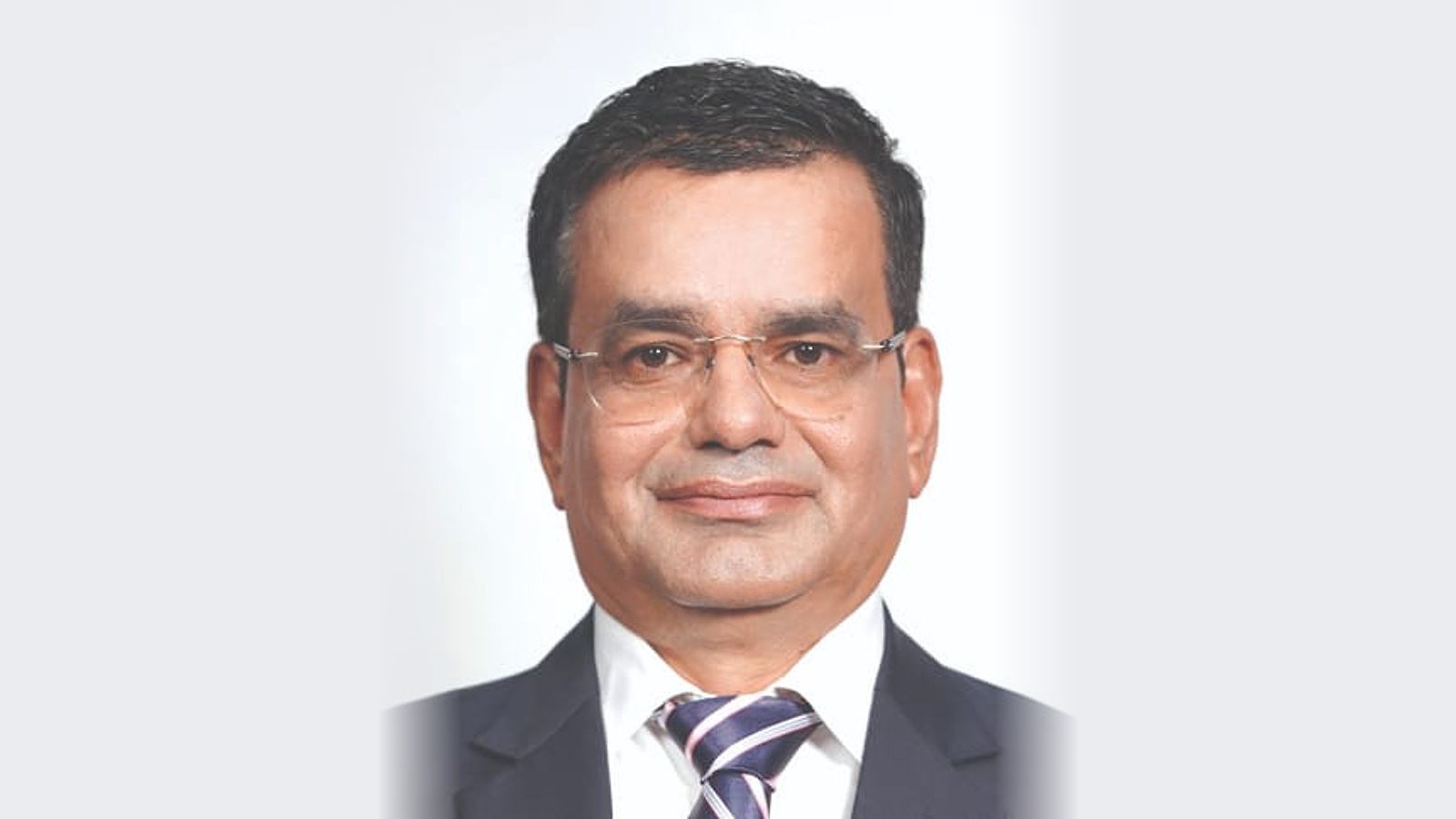
The man who took that company to the market now runs the group that owns it. In December 2025 Pawan Golyan stepped aside as chairman of Golyan Group and handed the post to his son Akshay, then 37, ShareSansar reported; the father became chairman emeritus. The group, which The Kathmandu Post says carries some 60 years of history, employs close to 10,000 people, sells into more than 60 countries and accounts for close to a tenth of Nepal's exports, according to the Post. ShareSansar put its annual revenue at more than $400m.
For a reader in London or Singapore, those numbers need scale. Nepal exported goods worth Rs 277bn, about $1.8bn, in the 2024/25 fiscal year, according to ShareSansar, against imports more than six times larger. In an economy that buys far more than it sells, a single family group responsible for a meaningful slice of what the country earns abroad is a national asset, and a change at the top is more than a family matter. How the new chairman runs it will shape one of the country's largest private exporters.
An apprenticeship on the factory floor
Akshay Golyan did not arrive in the chair from a corner office. He took an MBA at Esade in Barcelona in 2014, and had planned a career in luxury hospitality in Spain, The Kathmandu Post reported in a January profile. He came home in 2017 and, by his own account to the Post, spent months living at the factory learning how raw fibre becomes yarn. He took personal charge of Turkey, then an early export market, travelling there five or six times a year to settle pricing and logistics, the paper said. ShareSansar reported that he served nine years as managing director before becoming chairman.
Not everything worked. In 2017 he launched Bottle Ups, an app for booking restaurant tables with discounts, and shut it after a year of pilots in Kathmandu cafés, according to the Post. He told the paper that closing something down is not always a loss.
The lesson he says he carries from the family business is about distance. Founders who treat a company as their child, he told the Post, let their reasoning become personal rather than commercial. He also said he wanted the organisation to work independently of him.
He has run parts of the business for years. When a group company, Pure Energy, signed a power purchase agreement with the Nepal Electricity Authority for a 20 MW solar project in Banke district in January 2022, it was Akshay Golyan who signed as its chairman, The Himalayan Times reported. That paper put the group's workforce at the time at more than 5,000, which suggests headcount has roughly doubled in four years if the Post's figure of nearly 10,000 is compared like for like.
From yarn to the stock market
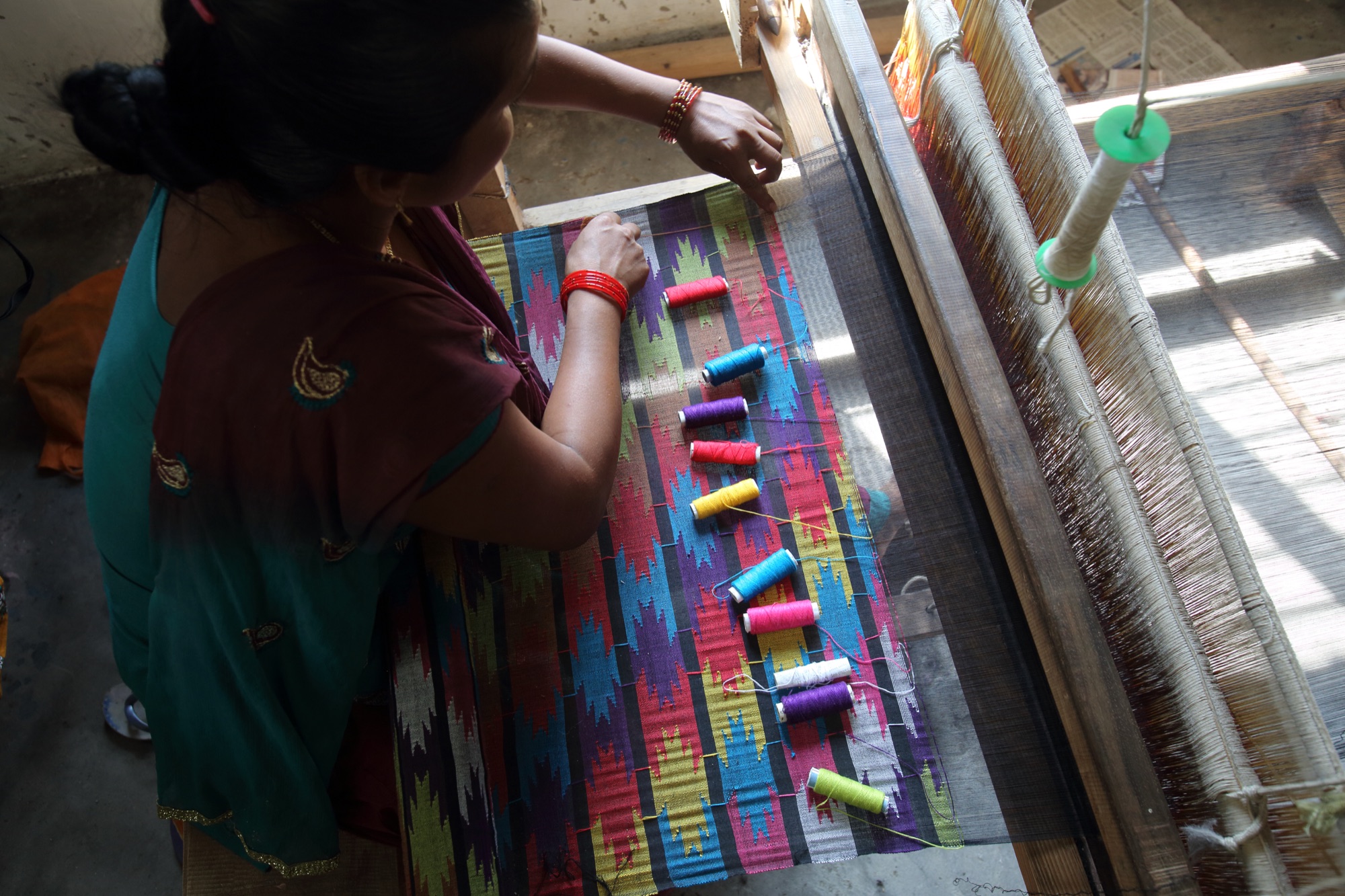
The group's industrial core is Reliance Spinning Mills, which ShareSansar describes as having two factories in Khanar and Duhabi in Sunsari district, in Nepal's south-east, with capacity of 40,680 tonnes of polyester, viscose and acrylic yarn a year and more than 4,300 employees. It sells at home and to India and Turkey, ShareSansar reported in 2025.
Its listing on NEPSE, the Nepal Stock Exchange, was a long process. Institutional investors bid for shares in a book-building round in early 2024 that set a cut-off price of Rs 912, according to ShareSansar. The public issue followed only in December 2025, at Rs 820.80, a 10% discount. It was oversubscribed 29.42 times, ShareSansar reported, with more than 530,000 applications for some 925,000 shares; just 18,513 applicants won an allotment by lottery. CARE Ratings Nepal held the company's issuer rating at A-, signalling adequate safety, according to the same report. The Kathmandu Post gave the price as Rs 820.20; the exchange data reported by ShareSansar is used here.
The road to that listing was not smooth. The issue drew allegations that the company had inflated its earnings and withheld liabilities, and several regulatory inquiries followed, according to The Kathmandu Post. The Post also reported that legal challenges were decided in the company's favour, and an inquiry is not a finding of wrongdoing. Golyan told the paper that the group had answered every department in writing, and argued that the oversubscription was the public's verdict.
The first full year as a listed company tells a more mixed story. For the fiscal year ending mid-July 2026, Reliance reported unaudited revenue of Rs 10.46bn, about $67m, up 2%, according to ShareSansar. Net profit fell 16% to Rs 399m, about $2.6m, as operating profit dropped by almost 29% and administrative costs rose by 42%. Earnings per share slid from Rs 27.87 to Rs 21. The market, at Rs 2,970 a share, is paying for something other than this year's profits; how the new chairman turns that expectation into earnings is the clearest test of his tenure.
Betting on rivers, and on youth
The group's second leg is electricity. The Kathmandu Post lists a hydropower portfolio of more than 320 MW across projects in operation and under development: Balephi (36 MW) in Sindhupalchok, Upper Balephi (46 MW, in development), KBNR Isuwa (97.2 MW) in the eastern hills, Mizu Energy (54 MW) in Dolakha and Apollo Energy (89.7 MW). Republica reported that Upper Balephi, a run-of-river scheme about 126 km north-east of Kathmandu, has signed its power purchase agreement with the state utility.
Not all of it is water. The Pure Energy solar plants in Khajura, Banke, two 10 MW units costing Rs 2.04bn, about $13m, were designed to generate some 40 million kWh a year, The Himalayan Times reported when the agreement was signed. The paper quoted the case for it: solar delivers steady output through the year, a useful hedge for a portfolio otherwise tied to river flows.
The ambition has been trimmed. In 2022 the group said it planned to contribute 900 MW of renewable power within a decade, according to The Himalayan Times and Republica. The Kathmandu Post now reports a target of 700 MW from 14 projects by 2030.
Hydropower in the Himalaya carries physical risk, as the industry was reminded on 26 August, when a flood down the Bhotekoshi in Rasuwa cut 431 MW from the national grid. None of the group's plants appear on the list of 11 hydropower projects and one solar farm affected, as reported by B360.
The group has also reached out to the generation behind last year's street protests. In October 2025 it committed full scholarships for 32 children of people killed in the September Gen Z protests, The Kathmandu Post reported. Reliance has run a day-care centre at its factory for three years, with nursing rooms and play areas for workers' children, according to the same paper. Those gestures matter in a country where, as this publication has reported, businesses are still counting the cost of that uprising.
The test of a second founder
Golyan has framed his job in the language of institutions rather than inheritance. On taking the chair he spoke of modernising the legacy and of institutional governance, ShareSansar reported. An interview published by Kantipur in January listed the group's priorities as energy, agriculture, export-oriented manufacturing and hospitality, and put its share of national exports at seven to eight per cent, a little lower than the Post's figure.
Some of what he wants lies outside business altogether. He told the Post he is interested in wildlife conservation and tourism inside Nepal's national parks, and that he has no wish to enter politics.
The questions in front of him are concrete. A newly listed flagship must justify a share price far ahead of its earnings. A hydropower pipeline has to be financed and built in some of the world's most unstable terrain. And a group whose workforce has grown quickly has to keep exporting from a country with a trade deficit of Rs 1.53 trillion, about $9.9bn, according to ShareSansar. Golyan's claim, made plainly to the Post, is that he has earned the right to try.
Right of reply: this article draws on published reporting, and The Nepal Standard did not contact the people named for it. Anyone named may send a response to [email protected]; we will publish relevant replies in full or in fair summary, normally within three working days. An arrest, investigation or charge is not a finding of guilt.
How this story was made: researched and written by The Standard’s desk with AI assistance, from the published reporting and official data credited below, and checked against those sources. Our standards.
The long view Nepal's hydropower, from load-shedding to exports
The long view Nepal's LDC graduation