The Rasuwa flood that switched off a tenth of Nepal's power
A surge from Tibet wrecked hydropower plants, cut the main China trade route and cost Nepal a growth forecast.
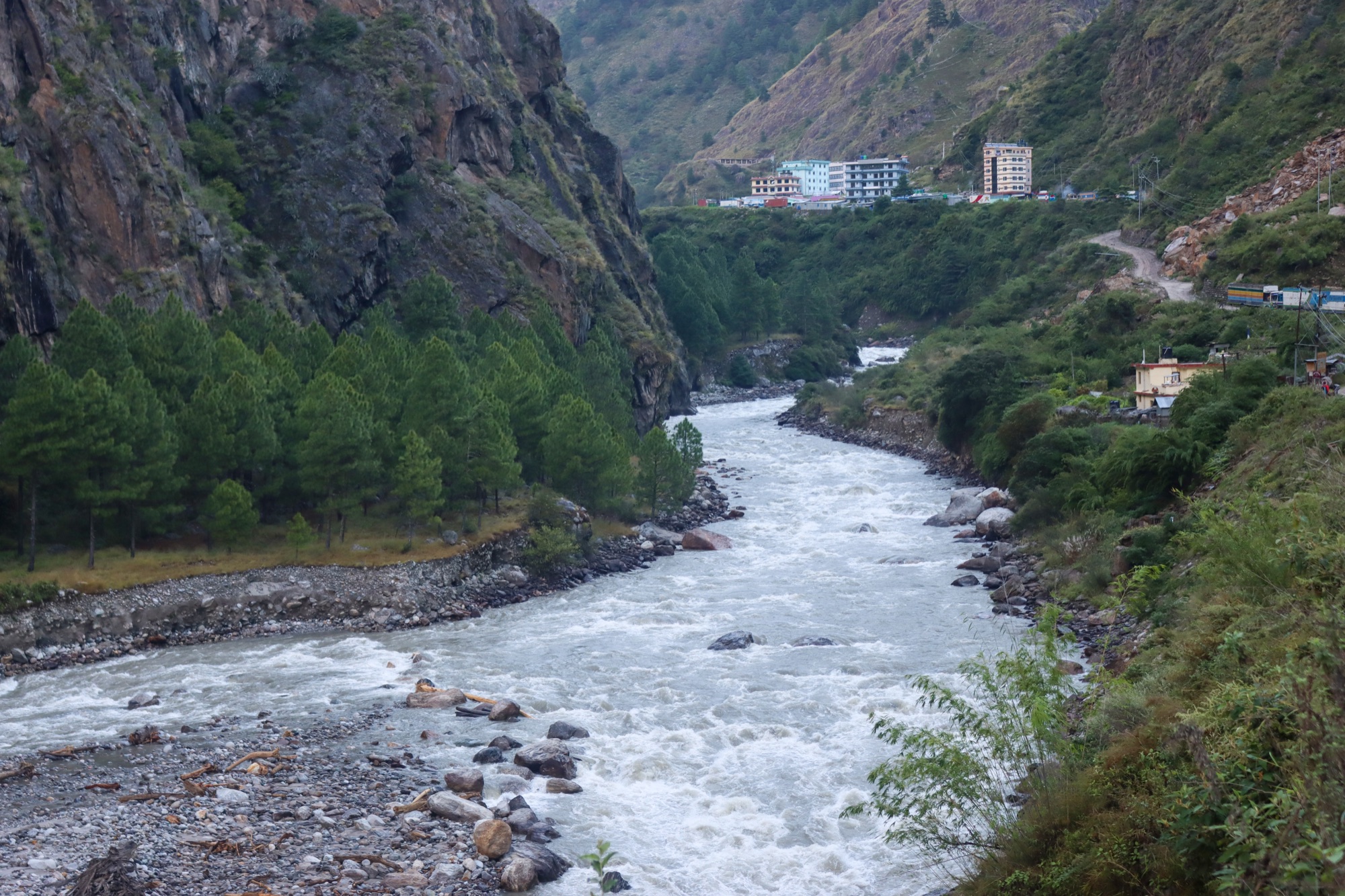
Early on 26 August a surge of water and debris came down the Bhotekoshi from Tibet into Rasuwa district. A month later its scale was clear. By 26 September 1,453 people had been confirmed dead, 5,285 were missing and 13,795 had been rescued, the Kathmandu Post reported. On 10 September the foreign ministry said about 600 of the missing were foreigners from 35 countries. Bodies were recovered as far downstream as Chitwan and Nawalparasi, according to Kantipur.
Local rain was light: the Department of Hydrology and Meteorology recorded no heavy rainfall in Rasuwa on the day or the day before, the Post reported. Scientists think a mass of glacier ice and bedrock broke away at about 5,200 metres and fell into the Lhende Khola, a tributary, blocking it until the temporary dam burst. Mohd Farooq Azam of the International Centre for Integrated Mountain Development (ICIMOD) told the Post the collapse was 100 to 200 million cubic metres in size. The department described a combination of an ice avalanche, permafrost movement and a rockslide. It was the second large flood on the river in 13 months, after one on 8 July 2025.
The power and the road
The Nepal Electricity Authority said 11 hydropower plants and a 25 MW solar plant were cut off from the national grid, removing 431.1 MW, B360 reported. They include Rasuwagadhi (111 MW), the Sanjen projects, Chilime, Langtang, Upper Trishuli 3A, Mailung and Devighat. The World Bank, as reported by the Post, puts the affected capacity at 430.7 MW, or 10.6% of Nepal's installed capacity, across seven operating projects and five under construction, including about 60 MW of export-oriented generation. On 18 September rescuers recovered six bodies from a tunnel at the Upper Trishuli-1 project, the Post reported.
Listed companies with directly affected projects include Rasuwagadhi Hydropower, Chilime Hydropower, Mailung Khola Hydropower and Trishuli 3B Hydropower; about six of the 111 listed hydropower companies were directly hit, the Post reported on 7 September. Bharat Ranabhat, a former president of the Stock Brokers Association, told the paper that "the damage to a few projects does not mean the entire hydropower sector is at risk."
The flood also wrecked the road to China. More than 55 km of the 82 km Galchhi-Rasuwagadhi corridor was damaged and 40 km washed away, according to the World Bank figures reported by the Post. More than 200 hotels and restaurants were damaged, in an area that includes the Langtang and Gosaikunda trekking routes.
The bill
The World Bank estimates direct damage to physical assets at $1.66bn, 83% of it to infrastructure. The government's preliminary assessment puts physical damage at $1.81bn, total effects at $2.7bn and recovery needs at $4.8bn, the Post reported. The bank expects growth of 3.7% in the fiscal year ending mid-July 2027, recovering to 5.2% the following year as reconstruction gets under way. Industry, hit through damage to hydropower, solar and transmission, is the main drag, according to The Himalayan Times, which quoted David Sislen, a World Bank division director, on the flood's "devastating human and economic losses".
What to watch
For investors, the questions are how much insurers pay, how long the damaged plants stay offline and whether repairs take months or years, analysts told the Post. For the wider economy, the test is how quickly reconstruction money is spent; Nara Bahadur Thapa, a former executive director of Nepal Rastra Bank, told the Post that reconstruction could produce growth of 7 to 8%. The reopening of the Rasuwagadhi road matters for trade with China; see our report on the trade gap and the road to China and our report on power exports after the flood.
How this story was made: researched and written by The Standard’s desk with AI assistance, from the published reporting and official data credited below, and checked against those sources. Our standards.
The long view Nepal's hydropower, from load-shedding to exports
The long view Nepal's LDC graduation



