A decade in, Nepal's Fast Track expressway is half built and still has no agreed starting point
The army-built road meant to bring the Terai within an hour of Kathmandu now has a 2030 deadline, a cost of about Rs 212bn and the same unresolved question over where it begins that it faced in 2018.
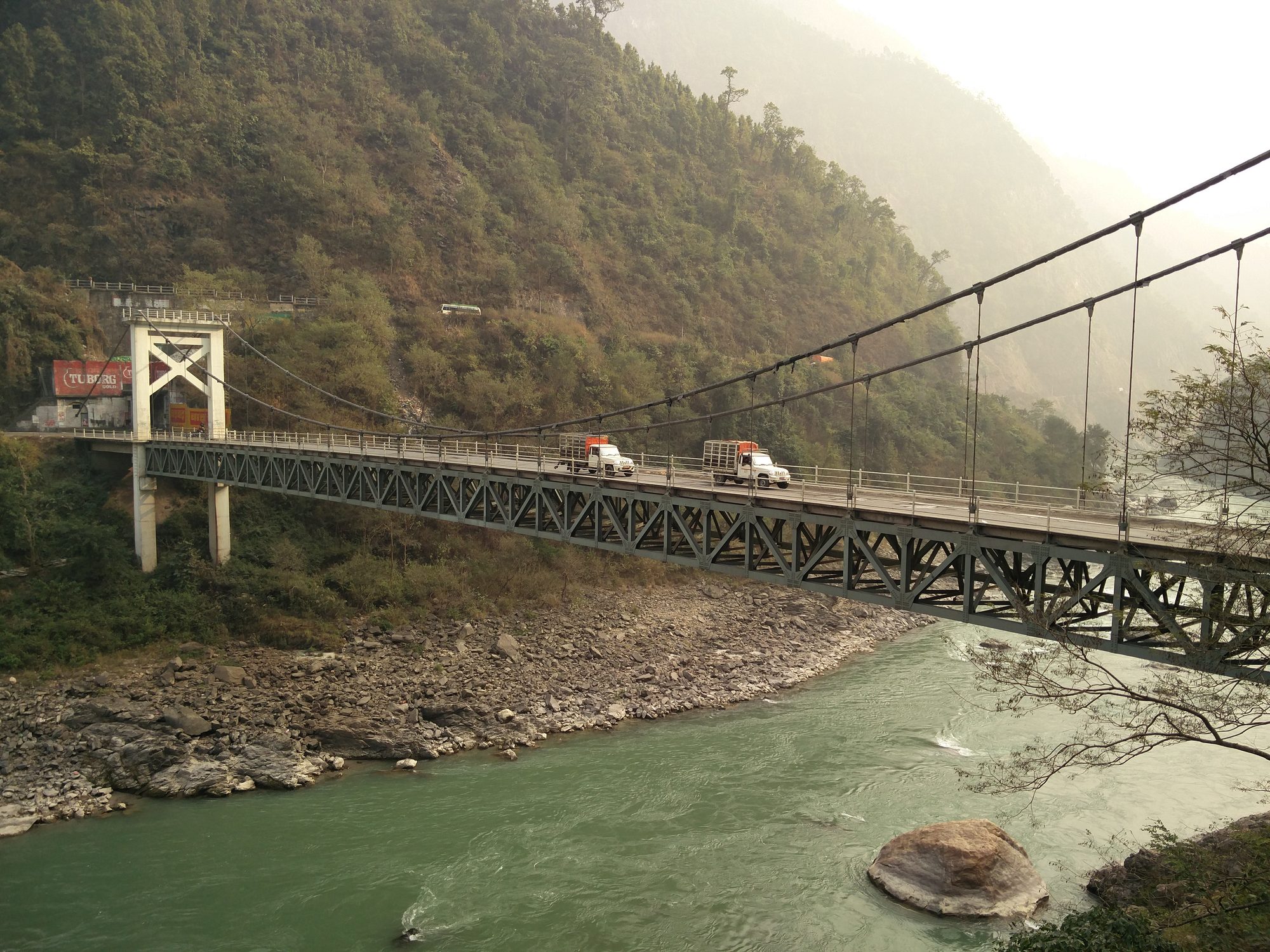
In June 2018, a year after the Nepali Army was put in charge of the Kathmandu-Terai expressway, The Himalayan Times reported that one decision was holding up three contractors: whether the road should begin at Khokana, a settlement with historic monuments on the southern rim of the Kathmandu Valley, or shift to nearby Farsidol. More than eight years later the question is still open. Ratopati reported on 8 October that procurement for Package 11, the Khokana-Bungmati section at the expressway's northern end, has not begun.
Elsewhere along the route the work has moved, though slowly. Ratopati put physical progress at 50.02% and financial progress at 51.47%, with Rs 94.22bn (about $608m) spent so far. Republica reported that the deadline has been extended for a third time, to mid-April 2030, citing Arjun Jung Thapa, a member of the National Planning Commission, the government body that sets national development plans. The road, known in Nepal simply as the Fast Track, is the state's most ambitious attempt to shorten the link between the capital and the southern plains that border India.
A road promised many times
The idea predates the army's involvement by years. The Kathmandu Post reported in 2017 that an Indian consortium led by Infrastructure Leasing and Financial Services (IL&FS) had prepared the original detailed project report, and that an earlier government had offered it a minimum revenue guarantee of up to Rs 15bn a year, an arrangement that was never implemented. The Supreme Court issued an interim order against the agreement in October 2015, the government scrapped it that December, and in February 2017 a high-level committee of the planning commission recommended that the state build the road itself.
On 4 May 2017, according to Republica, the Nepali Army was handed the project and given four years to finish it. The Himalayan Times noted in 2018 that it was the first time the army had undertaken full construction of a project of this scale. The promise was striking: a four-lane road of about 72km that would cut the trip from Kathmandu to Nijgadh in Bara district to roughly an hour, against the eight to ten hours the newspaper said the journey then took. The alignment is now put at 70.977km.
The calendar has slipped three times. Meroauto reported that the original target was August 2021, which became mid-December 2024 and then mid-April 2027. The cost has moved with it. Ratopati reports an initial estimate of Rs 116bn and a revised figure of Rs 211.93bn (about $1.37bn); Republica puts the original estimate lower, at about Rs 85bn, the current one at Rs 213bn, and projects a further rise of around Rs 20bn ($129m). On either newspaper's starting figure, the price has roughly doubled or more.
The official line has shifted as well. As recently as October 2025, the project director, Dharmendra Kumar Jha, told The Himalayan Times that the road would be finished by mid-April 2027 without exceeding its estimated cost. Physical progress then stood at 43.6%.
Tunnels, bridges and a missing first kilometre
The engineering explains part of the delay. Ratopati counts seven tunnels totalling 11.2km. Three are well advanced: both bores are through at Dhadre and at Len Danda, and at Mahadevtar, the longest, the left bore of 3,486 metres has broken through while 205 metres of the 3,422-metre right bore remain. The other four have barely started. At Chandram Bhir 780 metres of 2,250 have been dug; at Devichaur, 123 metres of 1,087; at Sisoutar, 53 metres of 520. Mauri Bhir, at 583 metres, is still at the portal stage.
Bridges tell a similar story. Of 89 required, Ratopati reports, contracts have been awarded for 85 and procurement is pending for four. Foundations are complete at 57, sub-structures at 38 and super-structures at only 16. Nepal News reported that the work is spread over 12 packages with domestic and international contractors.
The starting point is not an engineering problem, and it remains unsolved. In February, Kantipur reported that the then prime minister, Karki, had directed that a toll plaza be built at Farsidol, 3.3km from Khokana, and that the project report be amended accordingly; a month later the same paper reported that no decision had been taken. Meroauto listed Dukuchhap, Bungmati, the Sikali Ghat area and Chobhar as alternatives under discussion in July. Republica said in September that officials were considering moving the start to Chobhar and widening the Chobhar-Bhaktapur road to four lanes. Yet Nepal News's economic brief of 8 October said the government had indicated it would settle on Khokana. Ratopati reports that the government is prepared to spend an extra Rs 2bn to Rs 3bn on protecting cultural heritage in the area.
Why it slipped
Ratopati lists the causes officials cite: the covid-19 pandemic, floods and landslides, disputes over compensation and land acquisition, concerns about cultural heritage, and interference by middlemen. On the last point Thapa, the planning commissioner, said in remarks reported by Ratopati on 5 October that brokers had exploited the army's inexperience with procurement by writing specifications that named a single supplier, which he said breached procurement law.
The consequences reach the contractors. Thapa also said that procurement problems and slow design approvals had left firms facing liquidated damages and cash-flow strain. Ratopati reports that a "reward and punishment" policy is being prepared under which contractors past 50% completion would have fines waived if they finish within a year.
Not everyone in government expects 2030 to hold. Republica reported that officials at the physical infrastructure ministry were not confident the remaining work could be completed within the extended deadline. The arithmetic shows why. Progress rose from 43.6% in October 2025, by the project director's figure, to 48.72% in mid-July 2026, according to Meroauto, and 50.02% by October, according to Ratopati: about six and a half percentage points in a year. Finishing the other half by mid-April 2030 would need roughly 14 points a year, more than twice the recent pace.
What is at stake, and what to watch
The trade figures show why the corridor matters. Department of Customs data reported by Himal Press show that Nepal imported goods worth Rs 2,096.37bn (about $13.5bn) in 2025/26 and exported Rs 315.29bn, or Rs 6.65 of imports for every rupee of exports. Imports from India alone were Rs 1,210.60bn. The Himalayan Times has described the expressway as the shortest connection between the Kathmandu Valley and the central Terai, the plains along the Indian border.
The project also sits within a wider pattern of slow public works, set out in our explainer on capital spending in the 2026/27 budget, and in our report on the Nagdhunga tunnel.
Three markers will show whether the new deadline is realistic. The first is a final decision on the zero point and the start of procurement for Package 11, without which the expressway has no confirmed entrance to the valley. The second is tunnelling at Chandram Bhir and Devichaur, where most of the excavation remains. The third is the quarterly progress figure: on the arithmetic above, the army needs to add about three and a half percentage points every quarter from now until 2030. Recent quarters have delivered about half that or less.
How this story was made: researched and written by The Standard’s desk with AI assistance, from the published reporting and official data credited below, and checked against those sources. Our standards.
The long view Nepal's LDC graduation