Nepal GDP grew 4% in Q4 2025/26, but Bhote Koshi floods cloud 2026/27
Electricity led growth in the last quarter of 2025/26. The Bhote Koshi floods have since disrupted power output, a border crossing and the state's budget.
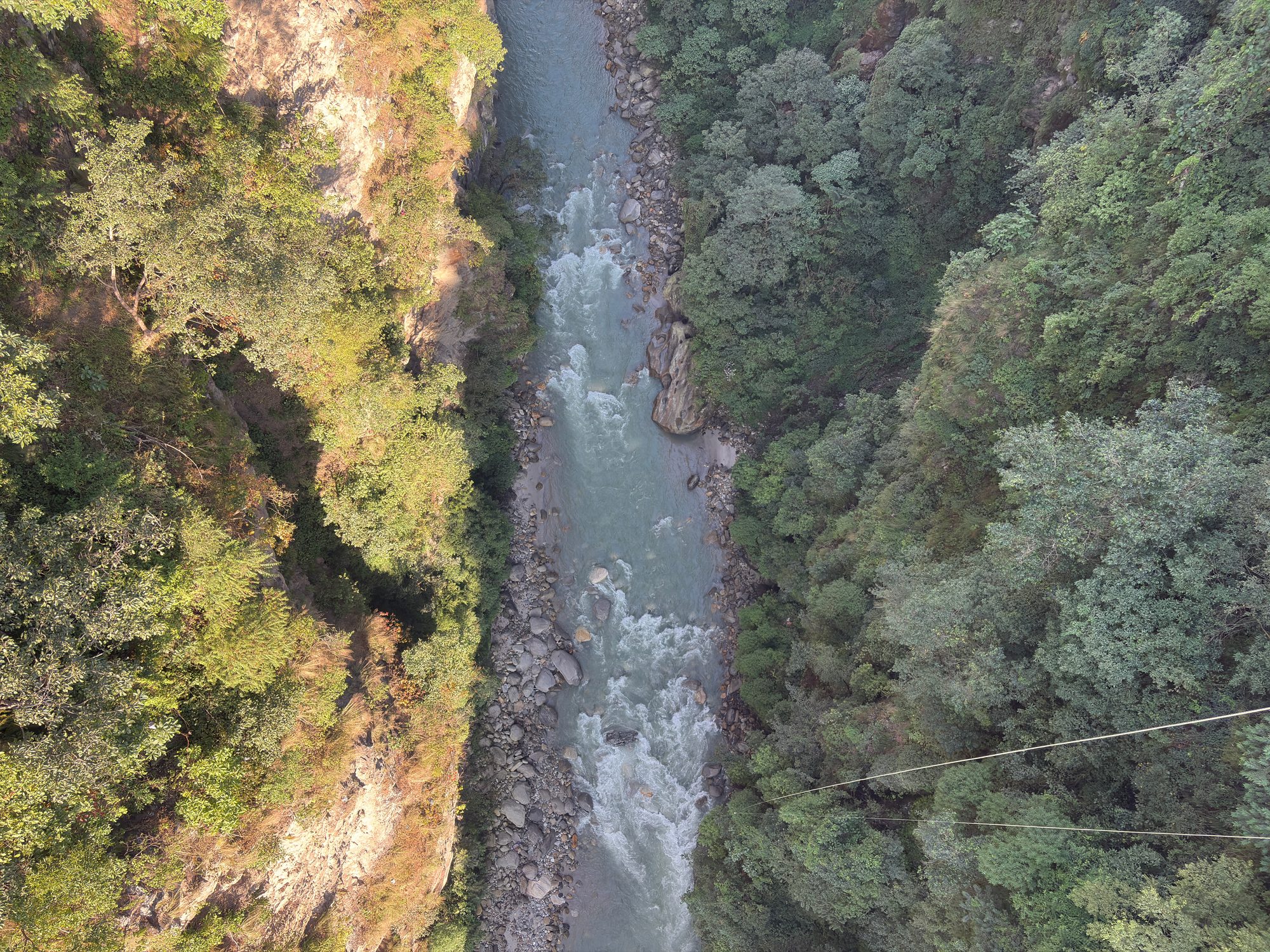
The fastest-growing part of Nepal's economy in the final quarter of 2025/26 was electricity, up 24.36% on a year earlier. Then, on 26 August 2026, floods on the Bhote Koshi River disrupted 431 megawatts of generation, around 10% of installed capacity.
The two facts frame Nepal's position in October 2026. The figures for the year just ended are respectable. The outlook for 2026/27 is being revised.
A quarter of broad, modest growth
The National Statistics Office (NSO) estimates that gross domestic product at basic prices grew 4% in the fourth quarter of 2025/26 compared with the same quarter a year before. Of the 18 industrial sectors it tracks, 17 expanded. Only public administration and defence shrank, by 0.12%.
Behind electricity came financial and insurance activities at 9.07%, accommodation and food services at 7.84%, and information and communication at 7.66%.
The two largest sectors tell a more sober story. Agriculture, forestry and fishing, the biggest part of the economy, grew an estimated 1.35%. Wholesale and retail trade, the second largest, grew 5.97%, which the NSO links to higher domestic production and imports of trade goods.
The NSO called the overall rate moderate compared with the fourth quarter of 2024/25, pointing to lower government spending and only modest gains in domestic industrial and farm output. On a seasonally adjusted basis, GDP rose 1.54% on the previous quarter, but manufacturing contracted 0.48% in that comparison.
For the full year, the NSO had earlier estimated growth of 3.85% in 2025/26.
The flood arrives after the measurement
The quarterly figures say nothing about the floods. That falls to the Finance Ministry, whose annual economic bulletin for 2025/26 sets out the bill.
The ministry says three things will press on public finances in 2026/27: the closure of the Rasuwa-Tatopani border crossing, tax exemptions, and higher spending on relief and reconstruction. It expects relief and reconstruction costs to exceed one-third of the budget allocated for those purposes.
The ministry gives no revenue figure for the closure, and none should be inferred. But the direction it describes is clear: less coming in, more going out.
Source: Finance Ministry annual economic bulletin
A target that no longer fits
The government had set a growth target of 7% for 2026/27. The ministry now puts growth at 3.5% to 4% and says the original goal is unlikely to be met. The World Bank projects 3.7% and the Asian Development Bank 4.1%, so the ministry's range sits among outside forecasts.
Source: Finance Ministry, World Bank, Asian Development Bank
When the official forecaster and two lenders land in roughly the same place, a 4% economy looks like a shared expectation rather than a forecasting dispute. It is also close to the 3.85% estimated for 2025/26 as a whole, which suggests growth holding near its recent pace rather than accelerating.
The reconstruction need is the larger number. At Rs 723bn, or about $4.7bn at the central bank's rate of Rs 152.55 to the dollar, it is tied by the ministry to damage to tourism and infrastructure. A sum of that size is hard to meet from one year's budget, so how it is financed, and over what period, will shape the fiscal picture beyond 2026/27.
Why the power sector is the one to watch
Electricity is where the two stories meet. The sector with the strongest growth is also the one whose output was disrupted, though the sources do not say how long the disruption will last.
If generation stays curtailed for long, headline growth would lose some support, and added relief and reconstruction obligations would press on the budget at the same time. Financial services, hospitality and telecommunications grew strongly in the last quarter and may cushion the effect, though they are smaller than agriculture and trade.
The ministry expects inflation to stay within the government's target range. That removes one worry but not the fiscal squeeze.
What to watch
- Revenue data. Monthly collection figures for 2026/27 will show how far the border closure and tax exemptions weigh on receipts.
- Rasuwa-Tatopani. The date the crossing reopens will matter for public finances.
- Generation restoration. How quickly the disrupted output returns will show whether power keeps leading growth.
- Financing the rebuild. Whether borrowing, donor money or reallocation meets the need will signal pressure on other budget lines.
- Forecast revisions. The World Bank and Asian Development Bank estimates may move as damage assessments firm up.
How this story was made: researched and written by The Standard’s desk with AI assistance, from the published reporting and official data credited below, and checked against those sources. Our standards.
The long view Nepal's hydropower, from load-shedding to exports
The long view Nepal's LDC graduation