Janakpur Cigarette Factory: how Nepal's state cigarette monopoly fell
A Soviet-aided factory once ran Nepal's cigarette market. Private competition, losses and politics shut it in 2011. Its land is now worth more than the business, and it houses Madhesh Province's government.
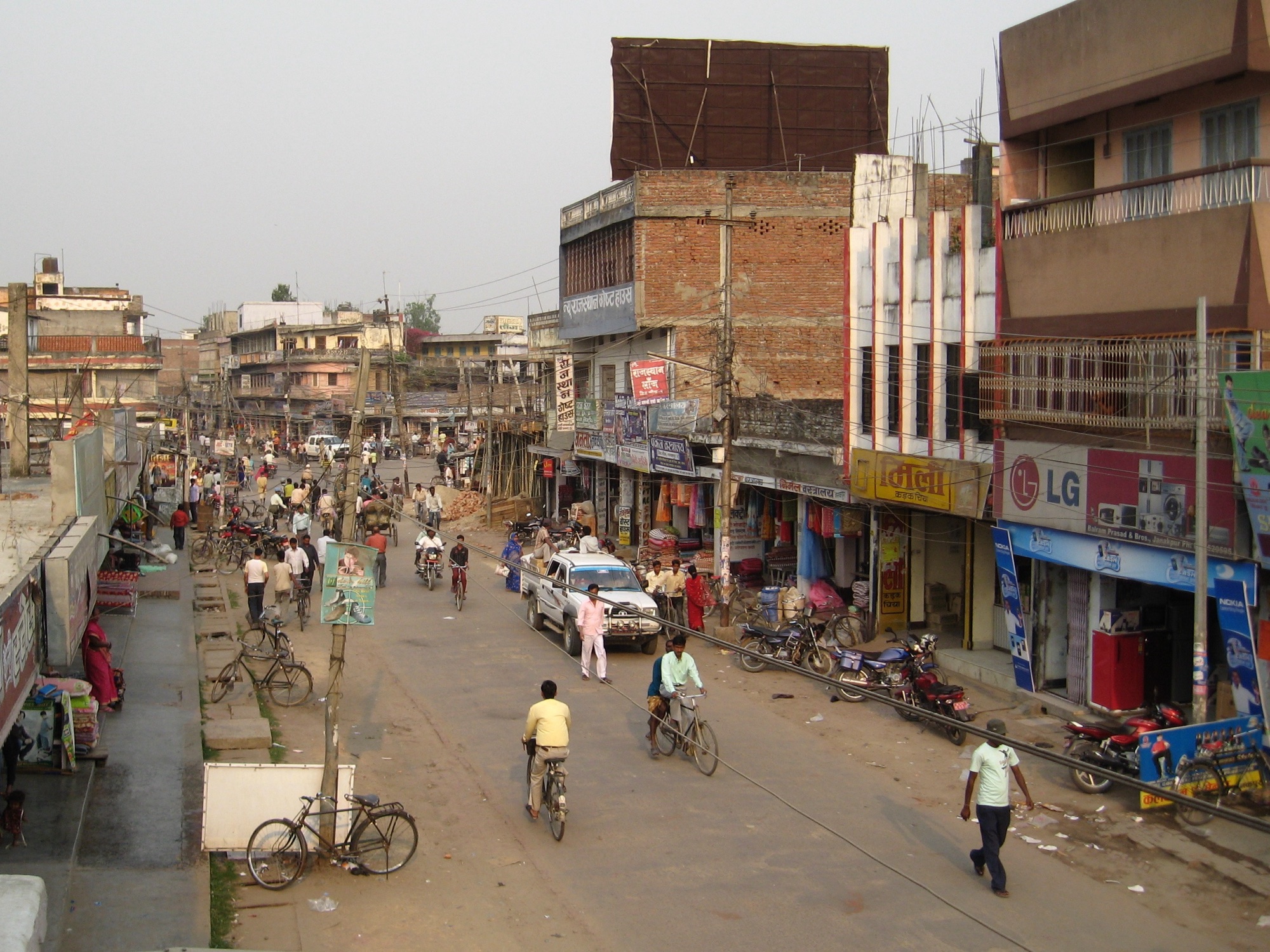
Seven people are still employed at the Janakpur Cigarette Factory, and all of them guard the premises, The Rising Nepal reported in June 2026. Some of its buildings were damaged during the Gen Z protests of 8 and 9 September 2025, but the main machinery, much of it imported from Russia, remains intact, the factory's security in-charge told the paper. The factory has not made a cigarette since March 2011, according to The Kathmandu Post.
It held Nepal's cigarette market as a government monopoly until a private rival arrived in 1987, Himal reported. Its decline traces the arc of the country's state enterprises: built with foreign aid, protected as a monopoly, overtaken by private competition after liberalisation, and then left in a long limbo where the land became worth more than the business.
- Opens in Janakpur as a gift from the Soviet Union
- Surya Tobacco ends the state monopoly
- Net worth negative Rs 705.5m
- Production stops
- Government decides not to revive it
- Compound houses Madhesh provincial offices; seven guards remain
Source: The Kathmandu Post, Himal, Republica, The Rising Nepal
A gift from Moscow
The factory opened in Janakpur, in the southern plains known as the Tarai, in the mid-1960s as a gift from the Soviet Union, The Kathmandu Post reported. Sources differ on the year: the Post has given both 1964 and 1965, while Republica reported that Russia helped establish the factory in January 1965. It was set up on the initiative of King Mahendra with Soviet financial and technical support, The Rising Nepal reported.
Its brands included Yak, Gaida and Deurali, Republica reported, along with Laliguras, Lahure and Singha, according to The Rising Nepal. At its peak the factory ranked among the country's highest revenue-generating industries and directly or indirectly supported more than 5,000 jobs, The Rising Nepal reported.
The monopoly meets a rival
That rival was Surya Tobacco Company, which entered the previously protected market in 1987, Himal reported in 1992. By 1992 its advertising and marketing had made Surya the country's leading cigarette producer, "far outstripping the former Government monopoly" of the Janakpur factory, Himal reported.
The political change of 1990 sharpened the squeeze. The Nepali Congress government of the early 1990s favoured private enterprise and the privatisation of state companies, Kantipur recalled in a 2025 archive feature. In an interview the paper published at the time, the factory's then chairman described a business that was becoming hard to run, Kantipur's archive recorded. The machines were ageing and needed replacing, the workforce was larger than the work required, and the factory owed banks about Rs 110m, according to the archive. As a state enterprise it was also obliged to buy all the tobacco Nepali farmers grew, whatever its quality, while private buyers could choose their leaf, Kantipur's archive recorded.
Weak management, rising competition and shifting market conditions wore the factory down in the years after 1990, The Rising Nepal reported.
Losses, a land sale and a shutdown
By fiscal year 2009/10 the factory's net worth was negative Rs 705.5m and its accumulated losses were about Rs 800m, The Kathmandu Post reported. It sold its plot at Naya Baneshwor in Kathmandu to Citizens Investment Trust for Rs 722m, the Post reported, but even that sum did not keep the machines running. The factory closed for lack of raw materials and because its machinery was obsolete, Republica reported. Production stopped in March 2011, The Kathmandu Post reported.
Idle, it still cost money. It lost Rs 218m in 2010/11 and Rs 381m in 2011/12, The Kathmandu Post reported. In October 2012 the Public Enterprise Board valued its fixed assets at Rs 10bn, including land in 18 places from Biratnagar in the east to Mahendranagar in the west, the Post reported. The largest parcel was 33.5 bighas in Janakpur, the Post reported; a bigha is a plains land measure of roughly two-thirds of a hectare.
Against those assets sat liabilities of Rs 2.5bn, The Kathmandu Post reported. Of that, Rs 1.39bn was owed to employees in salaries, gratuities, medical allowances, provident fund and retirement benefits, with further sums owed to banks, to Indian tobacco suppliers, to the state insurer Rastriya Beema Sansthan and to the government, the Post reported. By May 2013 the state was spending about Rs 1m a day on salaries and other costs at a factory that produced nothing, the Post reported.
Source: Public Enterprise Board valuation, via The Kathmandu Post
The decision not to revive
Revival was tried on paper first. In 2012 the industry ministry sought Rs 2.24bn, Rs 1.76bn from the government and Rs 480m as a grant from Russia, Republica reported. The plan would have retired 550 employees, 55% of the workforce, and projected annual revenue of Rs 3.54bn, Republica reported. Finance ministry officials doubted that the factory could reclaim the market share it had lost to Surya Nepal, Republica reported.
On 21 May 2013 the government decided not to revive the factory, choosing instead to compensate its 833 employees and clear its debts before seeking private investors, The Kathmandu Post reported. Paying off the staff was expected to cost Rs 1.5bn to Rs 2bn, the Post reported. In early July 2013 the cabinet approved a payoff for 758 employees costing more than Rs 2bn, and formed a committee led by a joint secretary to recommend whether to hand the factory to the private sector or choose another option, The Kathmandu Post reported. "The government is most unlikely to run the factory," a ministry secretary told the Post.
From factory to provincial capital
No buyer followed. In 2017 an industry minister announced that the factory would restart, Onlinekhabar reported. By August 2022 it had been shut for more than a decade, its property housed the chief minister's residence, and a later industry minister had visited and spoken of reviving it, Onlinekhabar reported. A government study team on dormant state factories suggested that the state nationalise their land and buildings and sell the machinery, according to Onlinekhabar.
Under Nepal's federal system the compound has taken on a new role. It now holds offices of the Madhesh provincial government and residences for the provincial chief, the chief minister and ministers, The Rising Nepal reported in June 2026. The factory owns 33 bighas and six katthas in Janakpurdham, a kattha being one-twentieth of a bigha, and assets in 22 other locations, the paper reported. The Ministry of Industry, Commerce and Supplies is studying the factory's assets, liabilities, machinery and equipment, and the factory has received no allocation in the federal budget, The Rising Nepal reported.
Other aid-built plants show what a revival can look like. Hetauda Textile Industry, built with Chinese assistance, began commercial production in November 1978 and shut on 13 February 2000, The Kathmandu Post reported; Onlinekhabar has dated the closure to 1999. In July 2026 the government gave the Nepali Army a feasibility study and an initial Rs 3.3m for cleaning, machinery inspection and trial production, the Post reported. For Janakpur, the ministry's study was still under way in June 2026, The Rising Nepal reported.
What it left behind
The first lesson is about protection. The factory's dominance rested on the absence of competitors rather than on cost or quality, and it lasted only until a better-marketed private rival arrived in 1987, as Himal's reporting shows. Firms entering a market opened by policy, from cement to telecoms, still face that test once protection ends, a theme of our report on factories running below capacity.
The second is about obligations. A state firm required to buy every farmer's tobacco and to carry a payroll set by politics could not compete on price, its own chairman's complaints to Kantipur suggest. A former industry secretary told Onlinekhabar in 2022 that hiring on political connections would, in the long run, kill government factories.
The third is about land. By 2012 the factory's property was worth about four times its liabilities on the Public Enterprise Board's valuation, according to The Kathmandu Post's figures, yet neither the federal government nor the province has settled who should use it or how. More than 13 years after the decision not to revive it, the question of what to do with the factory remains open. The case sits in our Ledger of Nepali businesses that rose and fell.
Right of reply: this article draws on published reporting, and The Nepal Standard did not contact the people named for it. Anyone named may send a response to [email protected]; we will publish relevant replies in full or in fair summary, normally within three working days. An arrest, investigation or charge is not a finding of guilt.
How this story was made: researched and written by The Standard’s desk with AI assistance, from the published reporting and official data credited below, and checked against those sources. Our standards.