Nearly three years on, Nepal has yet to recognise the sale of Ncell
Axiata sold its 80% stake for a fixed $50m in 2023. Nepal's telecoms regulator has still not ruled on the sale, and the inquiry report on it is under a Supreme Court order.

In 2016 Axiata Group of Malaysia paid $1.365bn for its controlling stake in Ncell, the private Nepali mobile operator, according to Axiata. Seven years later it sold the same stake for a fixed $50m. Nearly three years after that sale, the Nepal Telecommunications Authority (NTA), the sector regulator, has still not formally recognised the new owner, Khabarhub reported in July 2026, and a company serving more than 14 million mobile subscribers, according to Nepali Telecom, runs under an ownership the state has neither accepted nor rejected.
The matter has moved quickly since the summer. In August the government released a long-withheld inquiry report on the sale, and the Supreme Court then ordered it not to be made public, Himal Press reported. In the same week prosecutors filed a separate criminal case over the auction of a defunct operator's assets that names Ncell's chairman among 22 defendants, Nepali Telecom reported. On 1 October the regulator told Ncell to prepare a plan for transferring its assets when its licence ends, Ratopati reported. How these threads are resolved will show foreign investors how an exit from Nepal works in practice.
A licence, a network and a long clock
Ncell sells mobile voice and data services over a national network, under a licence that the state prices at each renewal and can eventually reclaim. Axiata held about 80% of the company through Reynolds Holdings; the remaining 20% is held domestically, Nepali Telecom reported in August 2026.
The business has been lucrative for its owners. The government inquiry found that Ncell had declared Rs 93.5bn (about $603m) in dividends, of which more than Rs 66.95bn (about $432m) went abroad, and that its operating margin was higher than those of peers in Indonesia, Bangladesh and Sri Lanka, Nepali Telecom reported.
Its clock, though, is fixed. Ncell's 25-year mobile licence expires in 2029, according to Axiata and Ratopati. The NTA renewed it in 2024, a step Ncell says showed the regulator was satisfied with its new shareholder, Nepali Telecom reported. Under regulations adopted in 2022, the state is entitled to take control of the infrastructure and assets of an operator whose licence has been revoked, Republica reported, and on 1 October 2026 the NTA instructed Ncell to submit, in good time, an action plan for transferring its assets at the end of its licence, Ratopati reported. Axiata itself listed the licence expiry, along with what it called a risk of expropriation, among its reasons for leaving. For the operator's earlier history, see our profile of Upendra Mahato.
The sale and the tax quarrel
On 1 December 2023 Axiata announced that Spectrlite UK had bought Reynolds Holdings. The fixed price was $50m: $5m within six months of completion and $45m after 48 months, according to Axiata's statement. Axiata was also to receive a share of Ncell's future distributions until 2029 and of any windfall gains, and the buyer agreed to indemnify it against existing and future Nepali tax claims, the statement said. Spectrlite UK is owned by Satish Lal Acharya, a Nepali entrepreneur, and the sale made Ncell a wholly Nepali-origin company, Ncell said in December 2023, Nepali Telecom reported.
Axiata blamed tax and regulation. It said Rs 47bn in tax had been paid on the 2016 transaction, accepted by the Large Taxpayers Office in April 2020 as the full and final liability, before receiving a further assessment of Rs 57.9bn (about $433.6m) for the same transaction in January 2021, according to its statement. It described the combination as unfair taxation and regulatory uncertainty that it could not sustain.
Ncell defended the deal. It said the sale followed competitive bidding between a willing buyer and a willing seller, that the total value would reach about $400m once profit-sharing to 2029 was included, and that it had met all its tax obligations as verified by the tax office, Nepali Telecom reported.
What the inquiry said, and what the courts have done
The government appointed a committee led by Tanka Mani Sharma Dangal, a former auditor general, which submitted its report on 29 January 2024, Himal Press and Nepali Telecom reported. The committee concluded that the share purchase was "not an arm's-length commercial transaction", that the declared $400m value did not match the purchase agreement and financial statements, and that more than Rs 85bn (about $550m) in tax and other claims remained pending before courts and authorities, The Rising Nepal reported. It recommended rejecting the agreement unless the buyer's technical, financial and managerial capacity, sources of funds and directors were examined, the paper reported. Its findings are the view of a government committee and have not been tested in court.
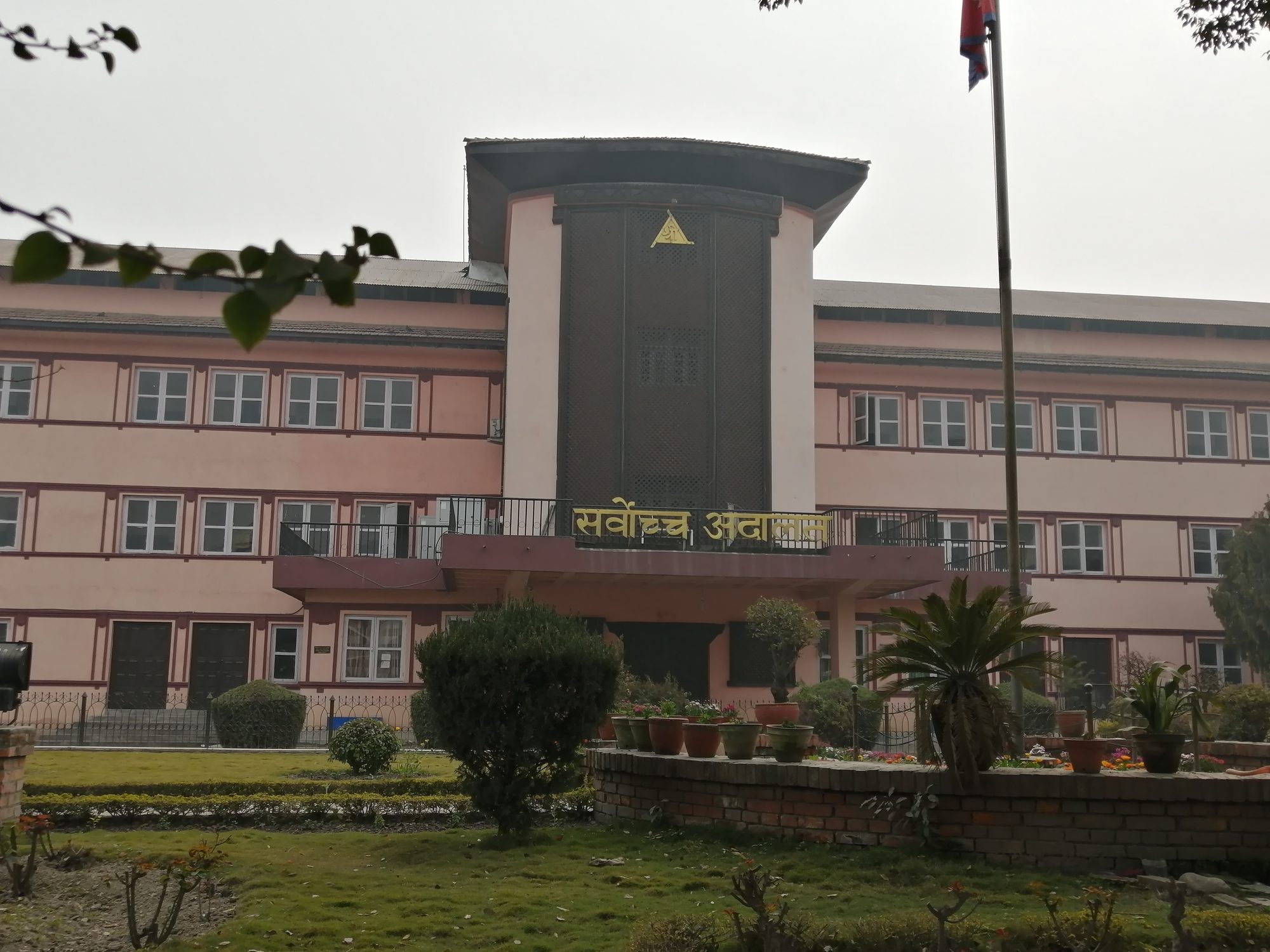
The courts have so far left the decision with the regulator. Nepal's telecoms rules require the NTA's prior approval for any transfer of more than 5% of an operator's paid-up capital, and the 2023 sale went ahead without it, Khabarhub reported. On 26 December 2024 a joint bench of Justices Sapana Pradhan Malla and Tek Prasad Dhungana dismissed a petition to cancel the sale and directed the NTA to regulate the transfer according to law, with power to approve it, refuse it or impose penalties, Khabarhub reported in July 2026. Ncell has since asked the prime minister's office to accept that the deal took place between shareholders abroad rather than as a direct sale of Ncell's shares, and says it gave the authorities evidence of the buyer's capacity, Nepali Telecom reported.
The report itself became a second dispute. The cabinet decided on 11 August 2026 to make it public, Nepali Telecom reported, and the information ministry released it, Himal Press reported. Ncell's company secretary petitioned the Supreme Court, arguing that publication breached the constitutional right to privacy, and on 14 August Justice Bal Krishna Dhakal issued an interim order telling the government not to make the report public and to maintain the status quo, although it was already online, Himal Press reported.
A third matter is a criminal case that concerns a different deal. Smart Telecom, a smaller operator, had its licence revoked in April 2023 after failing to pay about Rs 30bn in renewal fees and royalties, and in October 2025 its lender, Nepal Investment Mega Bank, auctioned its assets to Ncell for Rs 4.6bn (about $30m), Republica reported. On 12 August 2026 the Kathmandu district government attorney's office filed a charge sheet in Kathmandu District Court against 22 people, including Ncell's chairman, Acharya, and board member Sachin Lal Acharya, alleging fraud, criminal breach of trust, organised crime and banking offences and claiming about Rs 96.12bn (about $620m), Nepali Telecom reported. A charge is not a finding of guilt, and the court has yet to rule. Dilli Ram Shrestha, Ncell's chief corporate and regulatory officer, told a meeting with the finance minister that arrests and the threat of criminal cases against business people and investors could undermine Nepal's investment climate, Republica reported.
What comes next
The decision that matters most for the sale still belongs to the NTA: recognise the transfer, perhaps with a penalty, or refuse it. Nothing published as of 11 October 2026 shows that it has ruled. The Supreme Court has yet to decide finally on the report's publication, and the Smart Telecom case is at its first stage in the district court.
The calendar adds pressure. Under Axiata's terms the $45m balance falls due 48 months after completion, and the licence ends in 2029, when the inquiry recommended that the state secure Ncell's telecoms assets, Nepali Telecom reported. For an investor, the case is a practical test of three things: whether an offshore change of control needs Nepali approval in advance, how a disputed tax claim follows the seller, and what a licence is worth as its end date approaches. Our report on foreign investment approved and received shows why those answers matter to Nepal's wider effort to attract capital.
Right of reply: this article draws on published reporting, and The Nepal Standard did not contact the people named for it. Anyone named may send a response to [email protected]; we will publish relevant replies in full or in fair summary, normally within three working days. An arrest, investigation or charge is not a finding of guilt.
How this story was made: researched and written by The Standard’s desk with AI assistance, from the published reporting and official data credited below, and checked against those sources. Our standards.