Why a Kathmandu-Dhangadhi flight costs more than a flight to Delhi
State-set fare limits, expensive jet fuel and a five-month earning season sit behind a fare gap that has reached Nepal's parliament, according to The Kathmandu Post.
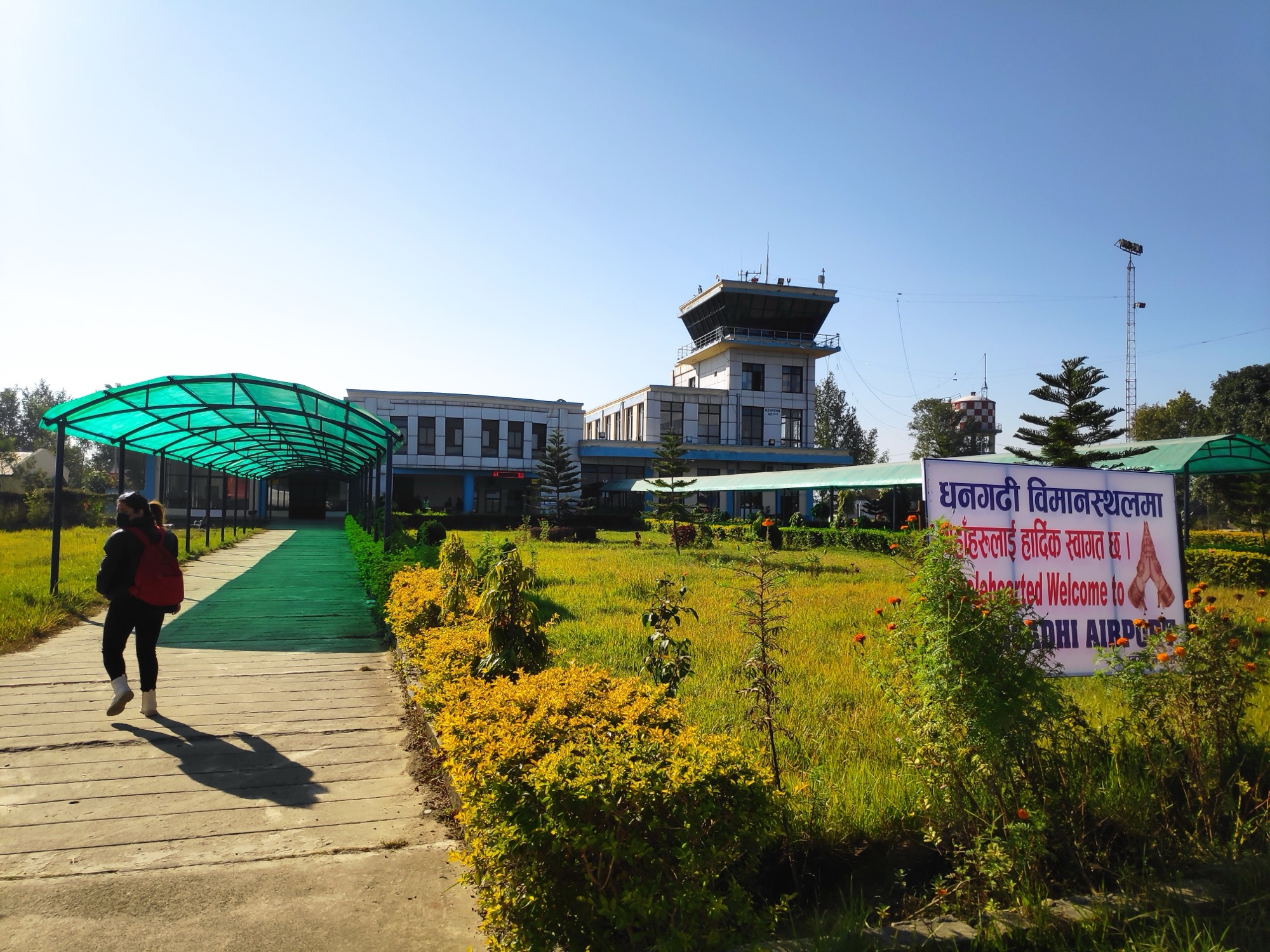
On 7 October 2026, Prem Singh Saud posted a screenshot of a domestic airfare on his Facebook page with a pointed question. If Sudurpashchim, the province in Nepal's far west, is not far away, why did it cost more to fly there than to Delhi, The Kathmandu Post reported.
Padam Subedi took up the same complaint and put numbers to it. By his account, a Kathmandu-Dhangadhi ticket for a flight of roughly 50 minutes cost Rs 22,180, while a Kathmandu-Delhi journey of about 1 hour 50 minutes cost Rs 15,367. He framed the point with the election-era slogan of Prime Minister Balendra Shah that the far west was no longer far, the Post said.
The paradox has reached parliament. Aakriti Awasthi, a lawmaker from the Rastriya Swatantra Party, urged the government to cut fares on the Dhangadhi route, arguing that Nepalis should not pay more to reach Sudurpashchim than to reach India's capital, The Kathmandu Post reported.
The explanation lies less in airline greed than in an unusual system of state price controls, a volatile fuel price and a business that earns most of its money in a few months of the year. It is a telling example of how a mountainous country that leans on air travel when roads fail must also live with the economics of a fragile, thin-margin aviation industry.
Source: The Kathmandu Post
A market priced by the state
The two tickets are governed by different regimes: officials decide what domestic airlines may charge, whereas cross-border fares are mostly left to supply and demand, according to the Post. In effect, the Delhi ticket reflects competition among carriers, while the Dhangadhi ticket reflects limits drawn by the state.
The maximum one-way fare to Dhangadhi has roughly doubled, from about Rs 11,000 in 2014 to more than Rs 22,000 in 2026. Officials fix both a maximum fare and a minimum fare on domestic routes, and Nepal is perhaps the only country that regulates the minimum too, The Kathmandu Post reported.
That minimum fare is a legacy of past failures. The government opened aviation to private operators in 1992, upwards of 75 carriers obtained registration in the decades that followed, and most have since disappeared; fare controls began in 1993, and the minimum fare was formalised in 2008/09 as carriers went under one after another, the Post wrote.
The early price wars were vivid. Carriers piled capacity onto the busiest airports and the tourist circuits, and prices tumbled as a result, the Post said, citing a Nepali Times report. Necon Air, founded in September 1992, charged some passengers just $32 for an ATR flight to see Everest, close to 60% below the officially sanctioned price, and halted operations in 2003. Cosmic Air brought 105-seat jets into the domestic market in December 2004, entered passengers on some routes into a motorcycle draw in April 2005, and collapsed later that year when its cash ran out, according to the Post.
Tri Ratna Manandhar, a former director general of the Civil Aviation Authority of Nepal (CAAN), the industry regulator, who was its safety chief at the time, said CAAN intervened because the prize offer was a serious safety issue, The Kathmandu Post reported. Agni Air and Gorkha Airlines were among carriers that vanished after crashes eroded passenger confidence, the Post said.
Since 2016, a government directive on airfares has required scheduled carriers to keep prices between the official minimum and maximum fares. Within those limits, airlines may design their own ticket classes, provided the cheapest is never sold for less than half the government's minimum fare, according to the Post.
Fuel, the cost that sets the surcharge
A domestic ticket combines a base fare with a fuel surcharge. The government sets and reviews the base fare, weighing requests from the Airlines Operators Association of Nepal alongside inflation data from Nepal Rastra Bank, the central bank, while CAAN's formula obliges airlines to adjust the surcharge each time jet fuel moves by Rs 4 a litre, The Kathmandu Post reported.
The price of that fuel has swung wildly. From Rs 72 a litre for domestic carriers in 2007, it spiked to Rs 232.88 a litre in November 2015, during India's blockade of Nepal, then slid to Rs 67 a litre by February 2021; it has since climbed to Rs 96 a litre in October 2022, Rs 128 a litre in January 2026 and an all-time high of Rs 269 a litre in April 2026, before easing to Rs 251 a litre by 12 October 2026, the Post wrote.
Source: The Kathmandu Post
By the reckoning of airline executives, between 35% and 40% of operating expenditure goes on fuel, and the rupee's slide against the dollar has made the burden heavier, according to the Post. Although the price has come down from its April 2026 peak, the October 2026 level is still close to double what it was in January 2026, which suggests the surcharge component of autumn tickets remains elevated.
Five months to pay for twelve
Demand is the third force. Traffic swells around Dashain, Tihar and Chhath, and again when monsoon floods and landslides block highways and leave travellers little choice but to fly, The Kathmandu Post reported.
Yet planes rarely fill in both directions. At festival time a service heading to Bhadrapur can sell out and then fly back with rows of empty seats, so airlines price the crowded leg higher and may cut the return fare by 60% to 70%, the Post said. On that logic, a passenger flying home to the far west for Dashain is partly paying for an empty seat on the way back.
Pratap Jung Pandey, president of the Airlines Operators Association of Nepal, said that income earned in five months, September to November and April to May, sustains airlines for the full year, and put profits at just 3% to 4% on investments running into billions. Taxes and other running costs make it hard to operate an airline in Nepal, the Post reported.
The largest private operator illustrates the squeeze. Buddha Air takes in annual revenue of Rs 15bn but makes a profit of only Rs 600m, its chairman Birendra Bahadur Basnet said, The Kathmandu Post reported. At the central bank's rate of Rs 153.54 to the dollar, that is roughly $97.7m in revenue and $3.9m in profit, a margin of about 4%.
Who pays, and who gains
The losers are travellers to and from the far west, who have few alternatives when highways are cut. The airfare becomes a premium on distance in a province that politicians have promised to bring closer.
The airlines are not obvious winners either. The figures point to an industry that charges heavily in peak months because it has little cushion for the rest of the year, and to a minimum fare rooted in a history of airline collapses. On this evidence, cutting the maximum fare without addressing fuel costs and taxes could put pressure on carriers that already operate on slim margins.
The Delhi comparison is therefore slightly unfair, but it is politically potent. The international route is priced by competition, while the Dhangadhi route carries government fare limits, a peak-season imbalance and a fuel bill that has grown sharply. Aviation fuel has become almost four times as expensive over two decades, the Post noted.
What to watch
The government's response to Awasthi's call will show whether the Shah administration treats its election-era slogan about the far west as a pricing commitment. Watch CAAN's next fuel surcharge review, since prices remain close to the April 2026 record. Any move on taxes or the base fare would signal whether policymakers favour cheaper tickets or healthier airlines, because the current numbers leave little room for both.
How this story was made: researched and written by The Standard’s desk with AI assistance, from the published reporting and official data credited below, and checked against those sources. Our standards.