Shesh Ghale and Jamuna Gurung slip to 150th on Australia's rich list
The couple behind the Melbourne Institute of Technology have made Australia's rich list for 18 straight years, but have slid from around 80th as their Kathmandu hotel, begun in 2014, finally nears opening.
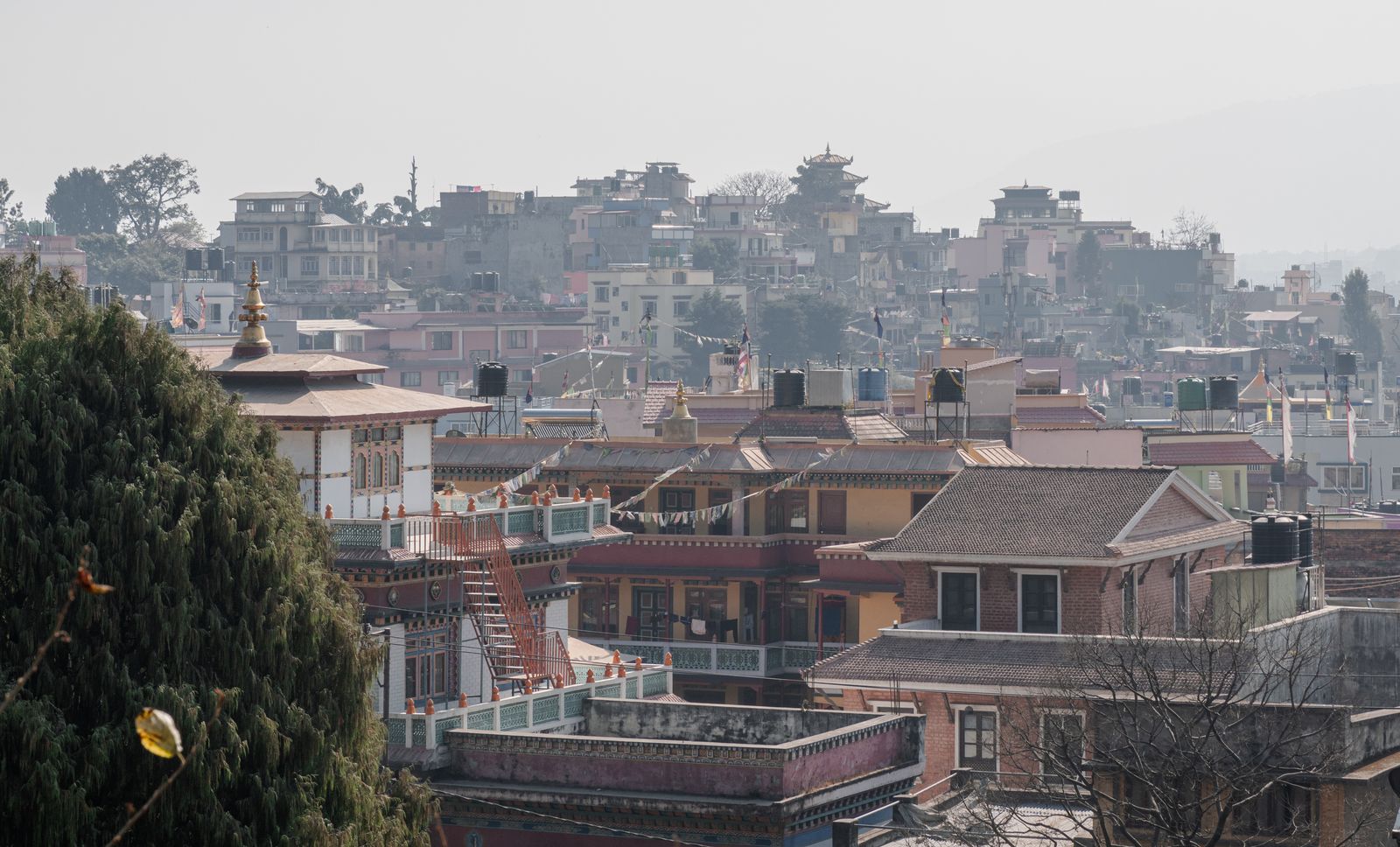
In June, David Marriott, chairman of Marriott International, walked a building site in Thamel, Kathmandu's tourist quarter, with its owners, Shesh Ghale and Jamuna Gurung, Nepali Times reported. The 17-storey tower was due to open in October 2026, bringing Marriott's Luxury Collection brand to Nepal for the first time, Himal Press reported in June. Its foundation stone was laid in October 2014 by the then prime minister, Sushil Koirala, with completion promised for February 2018, The Kathmandu Post reported at the time.
That delay of more than eight years sits beside another number from 2026. In the latest list of Australia's 250 wealthiest people, published by The Australian, Ghale and Gurung are ranked 150th and 151st, according to Onlinekhabar. The Himalayan Times reported that the couple once stood around 80th. They have now appeared on the list for 18 years in a row, since first entering it in 2009.
Their story matters beyond Kathmandu and Melbourne. The couple built their fortune teaching international students in Australia, and they are now among the most prominent members of a diaspora that Nepal keeps asking to bring its money home. How their wealth was made, and why it has stalled in the rankings, says a good deal about both Australia's education trade and Nepal's struggle to attract its own successful emigrants.
From Soviet highways to a Melbourne college
Ghale's route to wealth began far from either country. He studied civil engineering in the Soviet Union from 1979 to 1986 on a Nepali government scholarship, graduating from the Kharkov Automobile and Highway Institute, and then worked as a highway project engineer for Nepal's transport department, according to his biography on the Melbourne Institute of Technology's website. He moved to Australia in 1990, took an MBA at Victoria University in 1994 and became an Australian citizen in 1997. From 1997 to 2000 he served as Nepal's honorary consul general in Victoria, the same biography says. Federation University Australia awarded him an honorary doctorate in 2015, and he was a nominee for Ernst & Young's Australian entrepreneur of the year award in 2013, according to the couple's MIT Group Foundation.
Gurung, who studied marketing at Swinburne University, is the institute's co-founder and managing director, according to the couple's MIT Group Foundation. The pair founded the Melbourne Institute of Technology, known as MIT, in 1996. Onlinekhabar describes it as one of Australia's largest private higher education providers for international students, with campuses in Melbourne and Sydney and partnerships with Australian universities. Ghale remains its chief executive, and sits on its governing council as the owners' representative, the institute's website says.
The college was the engine, but property has been the other half of the fortune. In 2015, when the BRW Rich 200 placed the couple 99th with A$528m, up from A$335m and 150th a year earlier, Corporate Nepal reported that they had bought Melbourne's derelict Argus building for A$15m in 2010 and planned a A$50m renovation. Their most prominent site, a 3,900 sq m plot on William Street at the northern edge of Melbourne's central business district, was bought in 2009 for A$17.8m, Onlinekhabar reported. After the old building there was demolished in 2025, the couple switched plans from offices to a luxury hotel and serviced apartments.
The long slide down the list
The 2015 figures mark the arc. In 2014 the couple were 150th on BRW's list, the start of a climb into the top 100; in 2026 they are 150th again, albeit on The Australian's longer list.
What the 2026 ranking is worth in dollars is unclear from Nepali reports of the list. Onlinekhabar, citing The Australian, put the couple's combined wealth at A$121m. The Himalayan Times put it at about $1.2bn. The first figure is hard to reconcile with a place in the middle of the list, given that a fortune of A$335m was enough for 150th on BRW's shorter list in 2014, according to Corporate Nepal; The Nepal Standard has not been able to check the figure against The Australian's own list.
Neither Nepali report explains why the couple have slipped. The policy climate for their core business, however, has changed sharply. In August 2024 Australia announced a cap of 270,000 new international student enrolments for 2025, Reuters reported in a story carried by The Kathmandu Post. The country's education exports were then worth A$36.4bn a year, its fourth-largest export after iron ore, gas and coal, according to the same report, and private vocational and training providers had 50% more international students than before the pandemic.
The squeeze has fallen hard on Nepal. Australia rejected about 64% of offshore student visa applications from Nepal in the first five months of 2026, the highest rate recorded for Nepali applicants, The Kathmandu Post reported in July. Only 2,700 of 7,500 applicants were granted visas, against 7,167 of 8,028 a year earlier, after Nepal was moved to Australia's highest-risk assessment category. Vocational courses fared worst: only 56 of 549 Nepali applicants were approved, the paper said, and each applicant pays a non-refundable fee of A$2,500, about Rs 260,000, whatever the outcome. Around 60,000 Nepali students are enrolled in Australian institutions, about 9% of the total, making Nepal the third-largest source country, according to the Post.
These figures describe the market MIT serves; no source reviewed here links them directly to the couple's ranking.
A hotel as a homecoming
Ghale has long been the public face of Nepal's emigrant capital. He completed two terms as president of the Non-Resident Nepali Association (NRNA), the body that represents Nepalis abroad, ending in 2017, according to the MIT Group Foundation. Gurung, who helped establish a Nepali community association in Victoria, served on NRNA task forces between 2013 and 2015, including one on a fund for migrant workers, and coordinated relief work with the association's earthquake team after the 2015 disaster, the foundation says.
The Kathmandu hotel is the largest expression of that tie. When Koirala laid the foundation stone in 2014, the Rs 8bn project, about $52m at today's rate, was described as one of the largest foreign direct investments in Nepal and was expected to create 450 jobs, The Kathmandu Post reported. It was to have been a Sheraton, developed by MIT Group Holdings Nepal and managed by Starwood. Long construction delays ended that branding agreement, Himal Press reported.
The building that has emerged sits on 13 ropanis, about 0.66 hectares, in the Kesharmahal area near Thamel. It will have 225 rooms, a banquet hall for 2,000 guests, four restaurants, a spa and an infinity pool, according to Himal Press, which said the final investment has not been disclosed. The 2014 plan had called for 218 rooms and a 1,000-seat conference hall, The Kathmandu Post reported then, so the project has grown as well as aged.
It will not have the top of the market to itself for long. On the same visit in June, Marriott signed agreements with CG Hospitality Global, part of the Chaudhary Group, for a Ritz-Carlton in Thamel and a Westin in Kathmandu, each with about 150 rooms and due in 2031, Nepali Times reported. Onlinekhabar reported that the couple also own and are developing hotels in Belgium.
The Himalayan Times, reporting the 2026 list, argued that Nepal needs more investor-friendly policies if it wants to draw in money from wealthy Nepalis abroad. The finance ministry's plan to let non-resident Nepalis trade on NEPSE, the Nepal Stock Exchange, once the foreign investment and foreign exchange laws are amended, would be one step in that direction.
For Nepal, the couple's two numbers point in different directions. On the Australian list, their position has drifted while the student trade that built MIT is reined in, and as Nepal's own young people find it harder to get there. In Kathmandu, a project that took twelve years from foundation stone to opening is about to give the capital a new luxury hotel under a global brand. The hotel shows that diaspora money can be committed at scale in Nepal. The twelve years it took show how slow that can be.
Right of reply: this article draws on published reporting, and The Nepal Standard did not contact the people named for it. Anyone named may send a response to [email protected]; we will publish relevant replies in full or in fair summary, normally within three working days. An arrest, investigation or charge is not a finding of guilt.
How this story was made: researched and written by The Standard’s desk with AI assistance, from the published reporting and official data credited below, and checked against those sources. Our standards.
The long view Nepal's LDC graduation