Shah's India visit: jute duties, tea testing and port access are the trade questions
As Prime Minister Shah prepares to travel to Delhi on 22 November 2026, jute duties, tea testing and certification delays will test whether Nepal's trade diplomacy can match its export goals.
Biratnagar Jute Mills opened in 1936 and began Nepal's trade in finished jute goods. Nearly nine decades later, Indian anti-dumping duties on Nepali jute have risen sharply for several mills, days before Prime Minister Balendra Shah's first visit to New Delhi. The tension is plain: Kathmandu wants to export more, yet its main market has tightened the terms on goods it already sells.
Shah is due to fly to the Indian capital on the afternoon of 22 November 2026 and return on 23 November 2026, on an official visit at the invitation of Narendra Modi. About a dozen and a half businesspeople are expected to join him. On the evening of 22 November 2026, a Nepal-India Business Summit will be held at the Taj Palace Hotel, organised by the Federation of Nepalese Chambers of Commerce and Industry (FNCCI) and the Confederation of Indian Industry. Each side will send 20 participants. Nepal's finance and foreign ministers and India's commerce minister are due to speak.
The question is whether a visit whose publicised agenda leans towards infrastructure can deliver on trade barriers that earlier visits did not move.
A market that dominates
The numbers explain why the stakes are high. In 2025/26, Nepal's exports to India rose 15.12% to Rs 258.65bn, or 82.04% of all exports. Imports from India rose 13.01% to Rs 1.21 trillion, or about $8.1bn at the central bank's rate of Rs 148.58 to the dollar. Total bilateral trade reached Rs 1.46 trillion, about $9.8bn at the same rate. The trade deficit widened to Rs 951.95bn, according to the Department of Customs.
Source: Trade and Export Promotion Centre; Department of Customs, via The Kathmandu Post
That dependence cuts both ways. A wide deficit gives Kathmandu an argument for better access, but a concentrated export base leaves producers exposed whenever New Delhi changes a rule.
Jute
India first imposed anti-dumping duties on Nepali jute in 2017 and extended them for five more years in January 2023. Nepal's then prime minister, Pushpa Kamal Dahal, asked Modi to scrap them in June 2023. India promised to study the matter through a secretary-level mechanism, and no breakthrough followed.
A notification dated 24 September 2026 then raised duties roughly fourfold for several mills, according to Clickmandu, the only outlet to give these details. At Swastik Jute Mills in Biratnagar, the duty on hessian cloth went from $8.18 to $132 per tonne. At Baba Jute Mills it rose from $6.30 to $64. India's trade remedies directorate had concluded that dumping from Nepal and Bangladesh had continued and that imports would return to dumped prices if duties lapsed.
Nepali producers reject the premise. They say their output is under 1% of India's jute production and that they import raw jute from India and Bangladesh. Jute exports are worth about Rs 11bn a year, reaching Rs 10.89bn in 2025/26, mostly to India. Only six of the 12 mills once operating in the Morang-Sunsari corridor remain active, employing about 15,000 workers.
Industrialists say the duties cannot be lifted without a formal understanding between governments. This is likely the hardest ask, since it targets a measure imposed through an Indian trade-remedy process rather than a border practice that can be relaxed by instruction.
Tea and certificates: the non-tariff maze
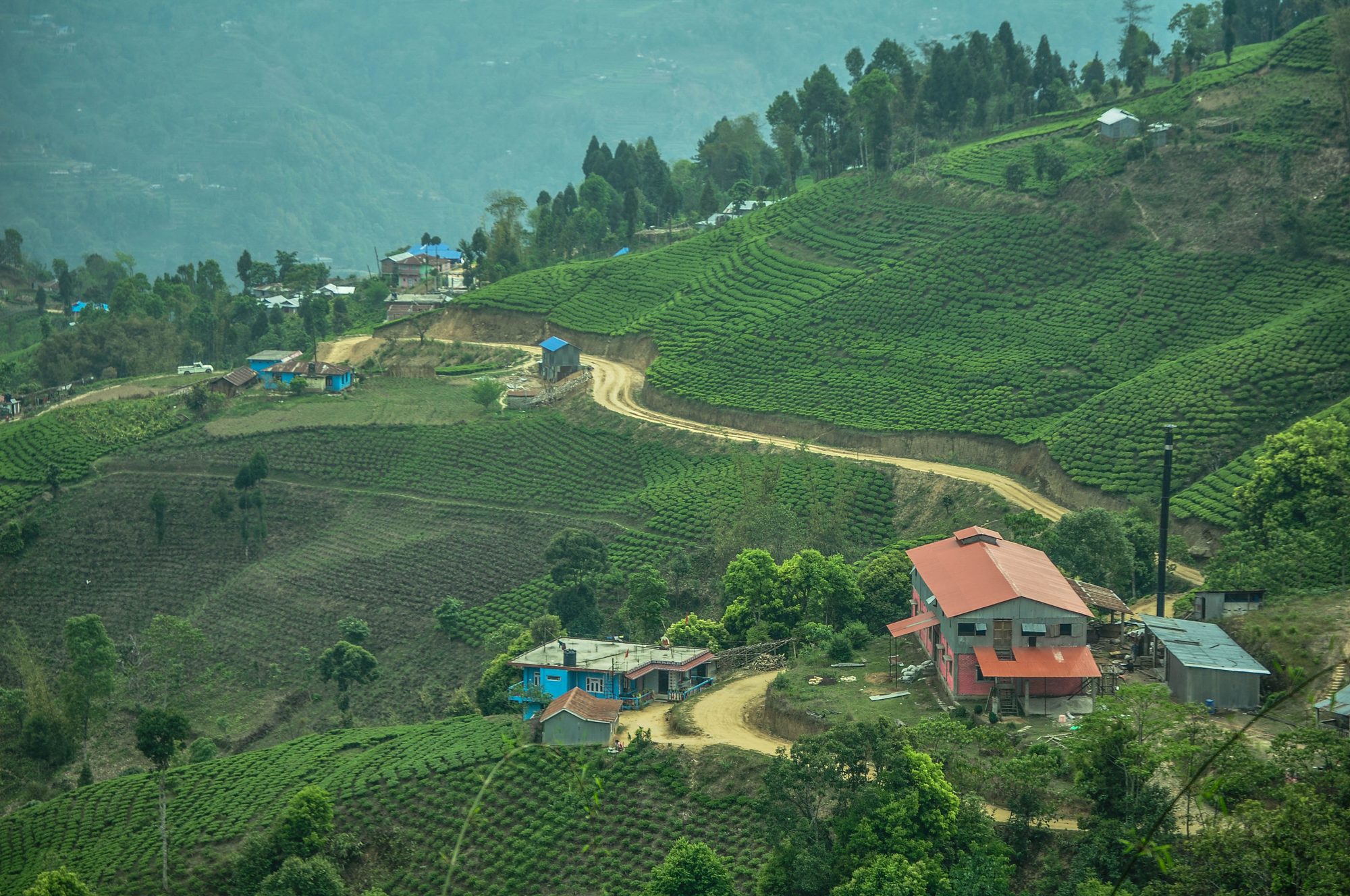
Tea exposes a different problem. Around 90% of Nepal's orthodox tea and 50% of its CTC tea goes to India. The Tea Board of India required laboratory testing of all consignments from 1 May 2026, and buyers halted purchases.
Accounts differ on what followed. One says exports resumed in late June 2026 after Nepal's government intervened and India relaxed its testing. Another says mandatory sampling and testing returned in June 2026, about two weeks after a relaxation, and buyers again suspended purchases. Either way, relief has proved fragile. Nepal's total tea exports, to all markets and not only India, fell 13.36% to Rs 3.97bn in 2025/26, with volumes down to 13,303 tonnes from 15,598 tonnes.
Source: The Kathmandu Post (iron, steel and plywood to India only; tea to all markets)
The remedy Nepal is seeking is a mutual recognition agreement for laboratories, under which each side accepts the other's accredited test results. That would cut duplicate testing, costs and clearance times. A related request covers Bureau of Indian Standards certification, where traders say issuance and renewal are delayed without explanation for steel, sanitary pads, thread, footwear and plywood. Nepal's iron and steel exports to India fell 62.43% to Rs 6.14bn, and plywood fell 18.81% to Rs 5.76bn.
Ports, pipelines and a crowded agenda
The industry ministry also wants access to the Dhamra and Mundra ports, a liquefied petroleum gas pipeline from Motihari to Sarlahi and a secretary-level review of the trade treaty, which the two governments agreed in September to revisit. With the Dodhara-Chandani Dry Port under construction, Nepal expects shorter routes to Mundra and Jawaharlal Nehru Port.
FNCCI's wider list asks for flexibility in the 30% value-addition threshold under rules of origin, an end to tariff-rate quotas on items such as vegetable ghee and copper products, exemptions from Indian export bans on sugar, wheat and paddy, and a dispute-resolution mechanism run by the two commerce ministries. Its president, Anjan Shrestha, says removing bottlenecks in certification, testing and transit would also make Nepal a more credible destination for Indian investors.
The publicised headline items, however, are air routes, energy, the Janakpur-Ayodhya railway and post-flood reconstruction. Exporters argue that expanding trade while core products face extra duties exposes weak coordination between export policy and diplomacy. The visit is brief and the infrastructure list is long, and trade remedies are the items least easily delivered by goodwill.
What to watch
- Whether the joint statement mentions jute duties or a review mechanism, or only refers to trade facilitation in general terms.
- Whether a mutual recognition agreement for laboratories is announced, or merely sent to officials for study.
- Any date for the secretary-level review of the trade treaty.
- Progress on Mundra and Dhamra port access and the Motihari-Sarlahi pipeline.
- Whether tea factories in Ilam and Jhapa face renewed testing delays after the visit.
How this story was made: researched and written by The Standard’s desk with AI assistance, from the published reporting and official data credited below, and checked against those sources. Our standards.
The long view Nepal's LDC graduation