Nepal and India revive air route talks on Mahendranagar corridor
After a three-year pause, Kathmandu wants two-way access on the L626 route. The outcome will shape fuel bills, airspace revenue and the fortunes of two airports that cost more than Rs 60bn.
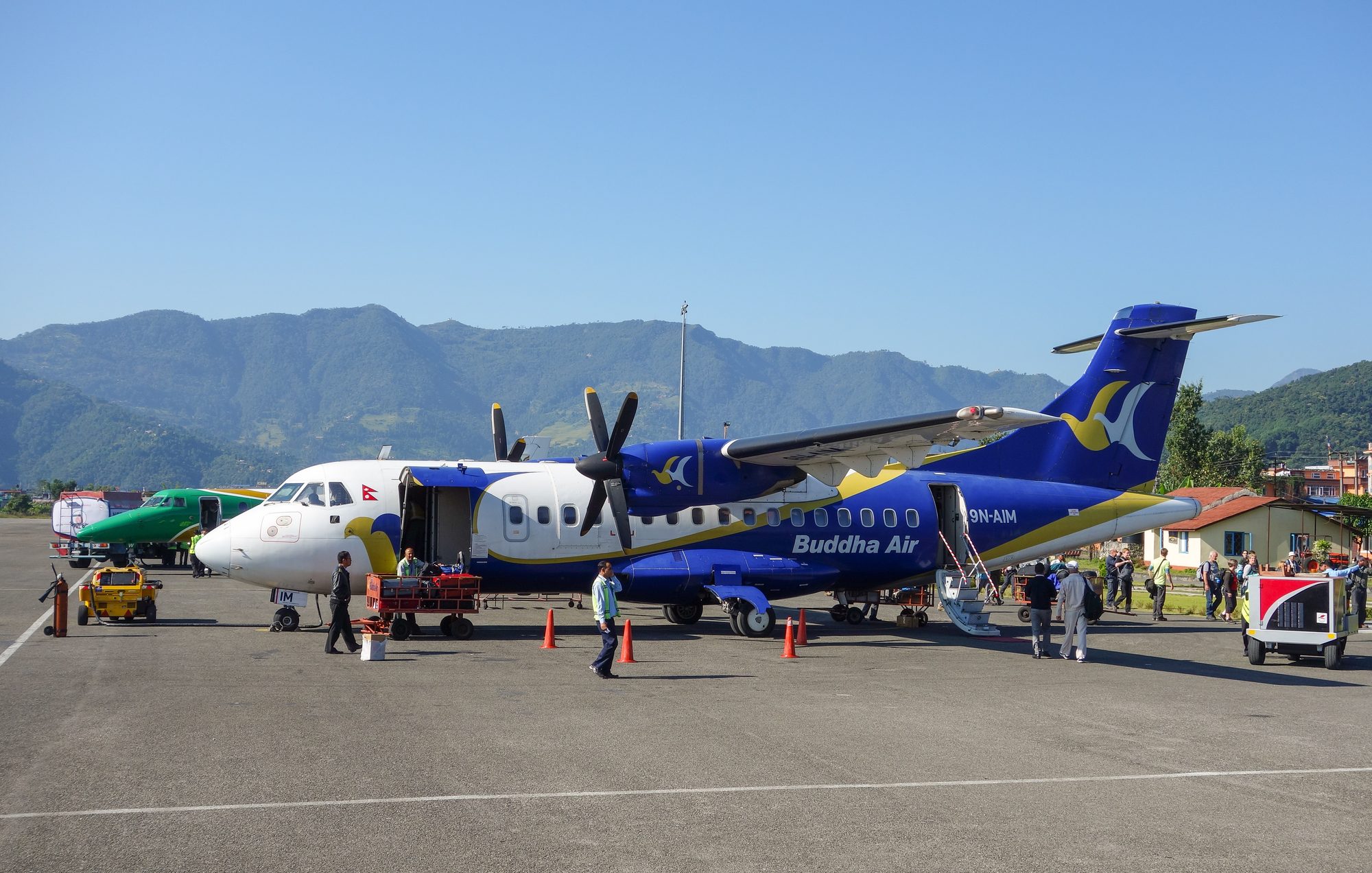
An aircraft bound for Bhairahawa from the west cannot simply cross the border and land. It must first make a detour of roughly 300 kilometres to the east, enter Nepali airspace at Simara, then turn back. Nepal built two international airports in the west and has spent more than Rs 60bn on them. Yet its air traffic arrangements still send many arriving flights the long way round.
That paradox is why a technical-sounding dispute over air routes has become a test of the Nepal-India economic relationship. After a three-year break, the two countries have resumed talks on cross-border corridors. Nepal hopes to secure an agreement during Prime Minister Balendra Shah's visit to Delhi.
What Nepal is asking for
The immediate request is narrow. Nepal wants the L626 route, linking Kathmandu and Delhi via Mahendranagar in Nepal and Pantnagar in India, to operate in both directions. Since it opened on 19 November 2009, it has served departures only.
The commercial logic is plain. L626 is about 20 miles shorter than the existing B345 route through Bhairahawa and Lucknow, which is also exit-only. It also lets airlines use far more Nepali airspace, which is where the revenue lies.
Source: The Kathmandu Post
Officials at the Civil Aviation Authority of Nepal say the state can earn $250 to $500 per aircraft, depending on size, for use of its airspace. Longer exposure to Nepali airspace therefore means more fee income. It also means shorter flights and lower operating costs for airlines.
An asymmetry that costs money
Nepal's complaint rests on a structural imbalance. Almost all inbound international traffic funnels through Simara. Departing aircraft have seven exit points: Bhairahawa and Mahendranagar in the west, and Simara, Biratnagar, Tumlingtar, Mechi and Janakpur in the east. Two further entry points, over Mechi and Tumlingtar, handle limited traffic from Bhutan and Lhasa.
The longer routing raises fuel use and operating costs, and experts say flights from New Delhi are especially affected. Tourism Ministry documents show that international flights to Pokhara from the west must cover an additional 185 kilometres unless new entry routes open.
India has conceded part of the ground. It allows inbound flights on L626, entering over Mahendranagar, but only at altitudes between 15,000 and 24,000 feet. Aviation experts say that is too low for jets, which burn less fuel at higher cruising levels. India approved the entry route for low-level flights in 2018, and it works for ATR-type aircraft.
Why India has hesitated
India's reservations have been consistent. New Delhi has cited security concerns around the Gorakhpur air base, where fighter jet exercises are held regularly, as the reason for caution over entry points at Bhairahawa and Nepalgunj.
The history shows how politics has repeatedly overtaken engineering.
- L626 opens, exit only
- Modi visit; leaders order a settlement within six months
- Both sides agree L626 should be two-way; India seeks internal consultations
- Joint technical team formed to study three proposed routes
- Nepal withdraws from a BIMSTEC military exercise in Pune; safety talks stall
- Meetings held, no breakthrough
Source: The Kathmandu Post
The six-month deadline set by Sushil Koirala and Narendra Modi after the 2014 visit was never met. India stayed positive until April 2018. Relations then deteriorated after Kathmandu pulled out of the Pune exercise and took part in a Nepal-China drill in Sichuan, which complicated defence sensitivities. Officials say India's position later hardened.
A second, lesser step is also on the table. The proposed near-border operation arrangement would let aircraft enter each other's airspace in emergencies such as weather diversions. Nepal sent a draft to India through the Foreign Ministry, and a Tourism Ministry official says Kathmandu is waiting for a reply.
The airports' problem is not only airspace
It would be easy to blame everything on the routes, but the picture is more mixed. Gautam Buddha International Airport in Bhairahawa became Nepal's second international airport on 16 May 2022. Pokhara International Airport opened on 1 January 2023. For a long time both handled little beyond occasional charters.
Two former Civil Aviation Authority officials say the route problem was used to explain away poor promotion of the airports. Of the 28 international airlines serving Nepal, half already enter from the east, and, they point out, flights from places such as Japan, South Korea, Dhaka and Kolkata face no such routing problem at the new airports. A Tourism Ministry official who asked not to be named cited "zero marketing" for the new facilities.
Demand can be created. On 25 September 2026, flydubai began daily scheduled non-stop flights between Dubai and Pokhara, the first direct link between Dubai and western Nepal. At the central bank's rate of Rs 149.86 to the dollar, the more than Rs 60bn invested in the two airports is above $400m. A single scheduled service is a modest return on that sum.
Opening L626 would lower costs for airlines coming from the west and add revenue, but it would not by itself fill the airports. Carriers weigh fares, traffic and promotion when choosing routes. Better routing removes one obstacle, not all of them.
The wider diplomatic backdrop
The air talks sit within a broader attempt to reset the relationship. A former diplomat writing in Online Khabar notes that most of the 42 bilateral mechanisms between the countries have now met, and argues that implementation is the real challenge. That reading fits aviation well: the principles were agreed in 2014 and again in 2016, and delivery is what has been missing.
What to watch
- Whether a joint statement during Shah's Delhi visit names L626 as a two-way route, and with what altitude limits.
- Whether India answers the near-border operation draft sent through the Foreign Ministry.
- Any movement on the Bhairahawa and Nepalgunj entry points, where the Gorakhpur concern is sharpest.
- Whether more scheduled carriers follow flydubai to Pokhara and Bhairahawa, and whether the Civil Aviation Authority of Nepal backs the airports with real marketing.
How this story was made: researched and written by The Standard’s desk with AI assistance, from the published reporting and official data credited below, and checked against those sources. Our standards.
The long view Nepal's LDC graduation