Nepal's flower industry imports 22 times what it exports
Despite investment above Rs 11.5bn, Tihar demand outruns supply, seed rules bite and Jhapa growers want curbs on Indian marigolds.
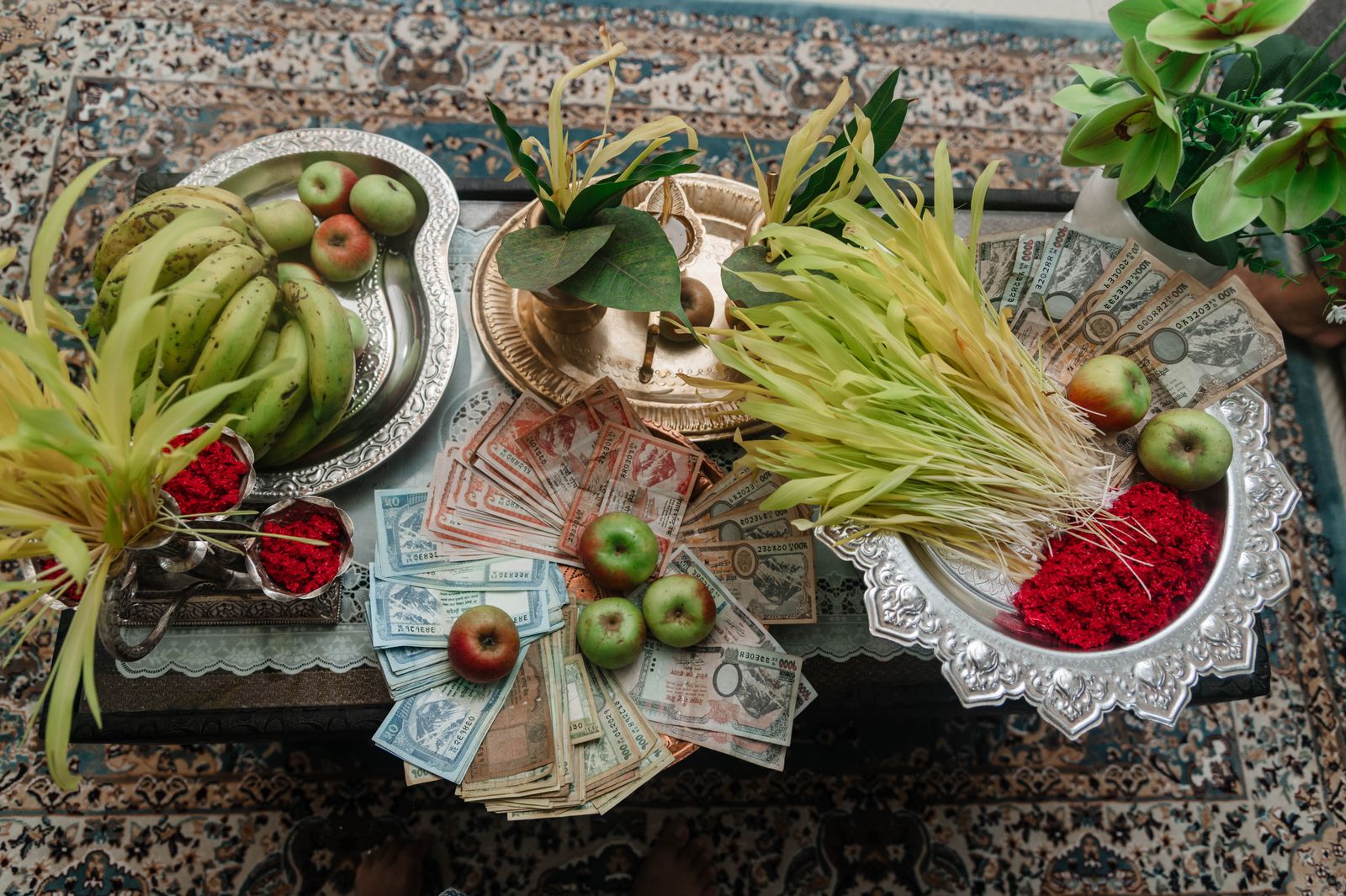
Nepal is projected to consume about 5.18 million flower garlands during Tihar, the festival of lights, and roughly 500,000 marigold garlands will cross the border from India. The reason is not a lack of farmers. Heavy rain in late September 2026 damaged marigold crops in several regions, and a sector that has grown quickly still cannot cover its own peak week.
That shortfall is a small version of a larger paradox. Floriculture in Nepal now represents investment above Rs 11.5bn (about $75.3m, at the central bank's rate of Rs 152.66 to the dollar) and supports more than 62,500 jobs, directly and indirectly. Yet in 2024/25 it imported flowers and related products worth Rs 261.4m and exported Rs 11.6m.
A Rs 645m festival
The Floriculture Association Nepal (FAN) projects that Tihar in 2026 will move Rs 645m of garlands, saplings and potted plants. Garlands account for Rs 480m, and plants for Rs 165m.
Marigold dominates. The association expects 4.5 million marigold garlands at an average wholesale price of Rs 90, worth Rs 405m. Globe amaranth garlands add Rs 27m at Rs 45 each. Chrysanthemum and mixed garlands contribute Rs 24m apiece, though the chrysanthemum garland is priced at Rs 1,200 and the mixed one at Rs 400. On the plant side, 3.5 million marigold saplings bring Rs 105m, and 800,000 potted chrysanthemums bring Rs 60m.
Source: Floriculture Association Nepal, via Clickmandu
Marigold demand is projected to rise by 500,000 garlands from 4 million in Tihar 2025, which FAN attributes to a wider consumer base and more commercial farming. Domestic growers should supply 4 million garlands, and farmers meet 88.89% of demand in major urban markets. At the stated average price, the 500,000 imported garlands are worth roughly Rs 45m, our own estimate rather than a reported figure.
Globe amaranth is the exception. Nepal is self-sufficient, and of the 600,000 garlands, 200,000 are earmarked for export. The buyers are Nepali communities in countries such as the United States, Australia and Japan.
Demand is outrunning farms
The structural problem is a mismatch of growth rates. According to FAN, demand and supply have generally risen by 10% to 15% a year, while domestic production has grown by only 7% to 9%. A gap that compounds annually will keep widening unless something changes.
Peaks are short: millions of garlands over four or five days at Tihar, and millions of rose stems in the week around Valentine's Day. Building capacity for those windows would leave it idle the rest of the year, FAN's general secretary, Hiramani Sharma, said. Growers who produce for the peak also risk flowers that bloom too early or too late.
That suggests some of the import bill is a rational choice rather than a failure. Yet imports more than doubled in 2024/25, up 105.66% from about Rs 127m, while exports fell 45.71%. That is more than seasonality.
The seed bottleneck
Tighter rules under the Plant Quarantine Act and the Seed Act now require seed varieties to be registered and imports to undergo pest risk analysis. Seeds and mother plants once entered through relatively simple procedures.
The rules may be sound in principle, but their sudden introduction caused difficulties for about one to one-and-a-half years, Sharma said. Delayed seeds disrupted planting schedules, cut local output and pushed traders towards imported flowers. He also said the Floriculture Promotion Policy 2069 had been implemented ineffectively.
The deeper constraint is scale. Nepal still depends on India, the Netherlands, China, Japan, Germany, the United States and Thailand for live plants, seeds, cut flowers, bulbs and tubers. Seed-production plants and tissue-culture laboratories need heavy capital, and a market this small may struggle to repay them. Importing from lower-cost producers is usually cheaper.
That points to a limit on import substitution. A Nepali grower is likely to remain a buyer of foreign genetics for some time, and abrupt quarantine tightening can shift costs onto growers.
Growers ask for protection
The industry's turnover is nonetheless growing. It reached more than Rs 3.94bn in 2025/26, up 16.91% from Rs 3.37bn in 2024/25, a year the association says was marked by policy difficulties and reduced production.
- Ornamental plantsRs 1,122m
- Cut flowersRs 793.9m
- Landscaping and gardeningRs 292.6m
- Seasonal flowering plantsRs 287.7m
- Marigold and globe amaranth garlandsRs 116.9m
Source: Floriculture Association Nepal, via Onlinekhabar
Ornamental plants are the largest segment. The listed segments do not add up to the total, and the Rs 116.9m reported for garlands sits far below the Rs 480m projected for Tihar alone. The sources do not explain the difference.
Where the market is tight, farmers want the border managed. In Jhapa, a delegation of 20 commercial growers led by Sushma Paudel of Birtamod gave the chief district officer, Shravan Kumar Pokharel, a seven-point memorandum. The growers say competition from Indian flowers leaves local marigolds unsold and going to waste in fields. They want local flowers prioritised in local markets, restrictions on Indian imports, and tighter monitoring at border points and customs offices.
They also want fair prices, institutional buyers such as government offices, schools and hotels to use domestic flowers, and accurate production data. Jhapa's commercial marigold area is about 15 to 20 hectares, by the farmers' own account, and they say weak market access caused financial losses in earlier years.
FAN shares part of the concern. It believes flowers are sometimes brought in illegally across the open border at festival time, though it has no official figures. A shortfall that requires imports and growers left with unsold stock are not necessarily in conflict. Domestic supply may fall short nationally while being poorly matched to markets, timing and logistics. The call for better data goes to this point, since the sources give no count of flowers crossing the border.
What to watch
The first test is how much of the 4 million domestic marigold garlands actually sell, and whether Jhapa growers report unsold stock after Tihar. The second is whether the government answers requests for border monitoring and production data. The third is whether seed registration and pest risk analysis procedures become smoother for growers, since that bears most directly on output. Valentine's Day demand for roses will show whether the gap repeats itself.
How this story was made: researched and written by The Standard’s desk with AI assistance, from the published reporting and official data credited below, and checked against those sources. Our standards.
The long view Nepal's LDC graduation