India's EU trade deal nears signature, and Nepal's export edge in Europe shrinks with it
Indian garments, carpets and pashmina are set to enter the EU duty-free from as early as 2027, wiping out the tariff margin that has kept Nepal's small European trade alive.
For two decades Nepal's carpet weavers and garment makers have had one advantage in Europe that their much larger Indian rivals lacked: they paid no duty. That advantage is about to disappear. The trade agreement India and the European Union concluded in January is moving towards signature, and once it takes effect Indian textiles, carpets and pashmina will enter the EU as freely as Nepal's do.
The timetable firmed up this autumn. On 11 September the European Commission asked EU member governments to authorise signing the deal, according to a summary by the law firm network Conventus Law. On 5 October Finland's ambassador to India, Mikko Kivikoski, said the two sides hoped to sign by the end of the year and that ratification would most likely take a few months, so the agreement could come into force sometime in 2027, the news agency IANS reported.
For Nepali exporters, that date matters more than any other in the deal.
What India gains
The EU will remove its tariffs on textiles and clothing from India, which run up to 12%, across yarn, fabric, ready-made garments and home textiles, Business Today reported when the deal was concluded. India's Carpet Export Promotion Council says handmade carpets will also gain duty-free or preferential entry. The EU's textile and clothing import market is worth about $263.5bn, the same Business Today report said.
Until now Nepal has sold into that market under the EU's Everything But Arms (EBA) scheme, which gives the world's least developed countries (LDCs) duty-free, quota-free access for every product except weapons. Indian textiles and clothing, by contrast, paid EU duties of up to 12%. For Nepali firms that margin mattered, because Indian producers have lower costs, larger scale and more stable supply, as Bizness News put it.
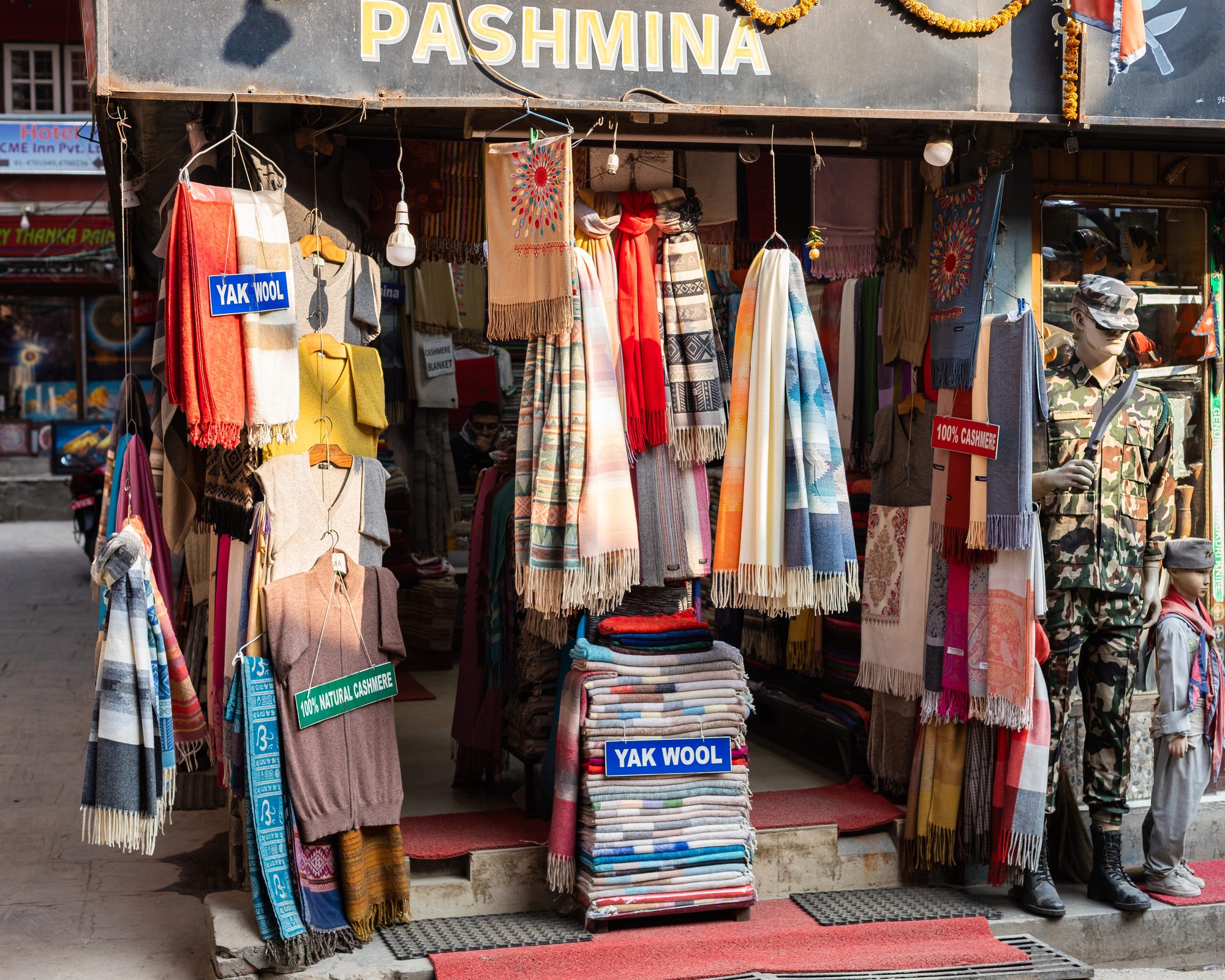
Nepal's exports to the EU were worth Rs 12.26bn (about $79m) in FY 2024/25, according to Bizness News. Ready-made garments account for about Rs 6bn (about $39m) a year of sales to Europe, the Garment Association of Nepal told The Kathmandu Post. Its other main exports to Europe include hand-knotted carpets, pashmina, felt products, handicrafts and tea, most of which India also makes.
Squeezed from both ends
The deal's timing compounds a problem Nepal already faces. Nepal is due to graduate from the UN's LDC category on 24 November, unless the General Assembly approves its request to defer to 2029, as we have explained. The EU allows three more years of EBA access after graduation. If Nepal graduates this year, its duty-free access ends around 2029, roughly two years after India's begins.
After that, Nepal would pay duty on garments that Indian competitors would not, unless it qualifies for the EU's GSP+ scheme, which offers tariff-free access in return for ratifying and enforcing conventions on labour, human rights, the environment and governance. The government has said it intends to apply.
Pashupati Dev Pandey, president of the Garment Association of Nepal, told The Kathmandu Post in January that the agreement could make it difficult for Nepali garments to compete in Europe, where sales were already declining. Bizness News, in a February report on the deal, identified carpets, garments and pashmina as the most exposed sectors. Pandey told the site that without productivity gains, product differentiation and active economic diplomacy, Nepal would struggle to hold its position. The International Labour Organization's LDC graduation project in Nepal expects garments to be among the hardest hit by graduation, including through job losses, the Post reported.
What to watch
Three decisions will set the pace. The first is the General Assembly vote on Nepal's deferral request, expected before 24 November, which decides whether EBA lasts to 2029 or to 2032. The second is the signing date of the EU-India agreement, and how quickly its textile tariffs fall once it is in force. The third is Nepal's GSP+ application, which depends on factories meeting labour and environmental standards as much as on the government's paperwork.
None of this makes Nepali carpets or pashmina less distinctive. It does mean they will increasingly have to win in Europe on quality, origin and reliability rather than on tariffs. Our editorial on what graduation demands of business argues that preparation should start now.
How this story was made: researched and written by The Standard’s desk with AI assistance, from the published reporting and official data credited below, and checked against those sources. Our standards.
The long view Nepal's LDC graduation