LDC graduation: what Nepal's exporters stand to lose, and when
Nepal is due to leave the UN's least developed country group on 24 November and has asked to wait until 2029. Here is what changes in Europe, Britain and beyond, for whom, and on what timetable.
Nepal is scheduled to leave the United Nations' list of least developed countries (LDCs) on 24 November 2026. Six weeks before that date, it still does not know whether it will. The government has asked for three more years, the UN bodies that reviewed the request have passed it on without objection, and the final word belongs to the General Assembly. For exporters, the answer sets the date from which they start to lose the most generous trade terms that richer economies offer, and Europe is where that loss would be felt first.
The LDC category is the UN's list of the poorest and most structurally vulnerable economies. Leaving it is meant to mark progress, and by the UN's own tests Nepal has qualified to leave for a decade.
A graduation postponed, and perhaps postponed again
According to The Kathmandu Post, Nepal first met the graduation criteria in 2015 and kept meeting them at the UN's reviews in 2018, 2021 and 2024. The move was put off after the 2015 earthquake and again during the pandemic. The UN Department of Economic and Social Affairs (DESA) records that the General Assembly set the current date in a resolution of 24 November 2021, which gave Bangladesh, Laos and Nepal an exceptionally long five-year preparatory period, against the usual three, so that they could plan their recovery from Covid-19.
On 13 May 2026, the foreign ministry told The Kathmandu Post, the government wrote to the chair of the Committee for Development Policy (CDP), the expert panel that advises the UN on the list, asking for graduation to be moved to November 2029. The ministry cited five factors: the loss of duty-free, quota-free market access; the risk to jobs; slow progress on its own Smooth Transition Strategy; the lingering effects of the pandemic, geopolitical tension and climate change; and higher fuel, food and fertiliser prices, with events in the Middle East weighing on remittances. The Post noted a World Bank growth projection of 2.3% for 2026 and reported that studies had projected employment in productive sectors could fall by as much as 35% after graduation without adequate transition measures.
Bangladesh, due to graduate on the same day, made the same request. On 21 July the UN Economic and Social Council (ECOSOC) adopted by consensus a decision recommending that the General Assembly rule on both requests before 24 November, the Bangladeshi news agency UNB reported. The CDP had found it would be appropriate for the Assembly to consider extensions for both countries, UNB said.
The Business Standard in Dhaka reported on 26 September that the Assembly's economic and financial committee, known as the Second Committee, was due to discuss both requests on 7 October and pass a resolution to the full Assembly for a vote by member states. At the time of writing, on 11 October, no final decision by the General Assembly had been reported.
What exporters keep, and for how long
The largest loss is in trade with Europe. In its statement at Nepal's trade policy review at the World Trade Organization (WTO) in November 2025, the European Union said Nepal currently enjoys duty-free, quota-free access under its Everything But Arms (EBA) scheme. According to an EU factsheet issued in April 2026, EBA covers every product except arms and ammunition, and countries that leave the LDC group keep those preferences for three years, which the EU says prevents sudden tariff increases. If Nepal graduates in November, the three-year clock starts then; if the Assembly grants the deferral, it starts in 2029.
What follows depends on a new European rulebook. The same factsheet says a revised Generalised Scheme of Preferences (GSP) applies from 1 January 2027 and is valid for ten years. Its standard tier offers zero or reduced tariffs on two-thirds of product lines. The more generous GSP+ tier offers zero tariffs on two-thirds of lines to economically vulnerable countries that ratify and effectively implement 32 international conventions on human rights, labour, the environment and climate, and good governance. Applicants must now submit a forward-looking plan of action, and the new rules link trade preferences to cooperation on readmitting a country's own nationals. The EU told the WTO that Nepal can seek GSP+ after graduation on request, and said it stood ready to help with any application.
Britain runs its own scheme. According to UK government guidance, its Developing Countries Trading Scheme (DCTS) gives LDCs, Nepal among them, zero tariffs on 99.8% of products. A country that graduates moves after a three-year transition to the Enhanced Preferences tier, which removes tariffs on 92% of product lines, provided it is judged economically vulnerable. Online Khabar, in an analysis published in March, noted that Türkiye, Canada, Australia and Russia also grant concessions on Nepal's main exports, including garments, carpets and handicrafts.
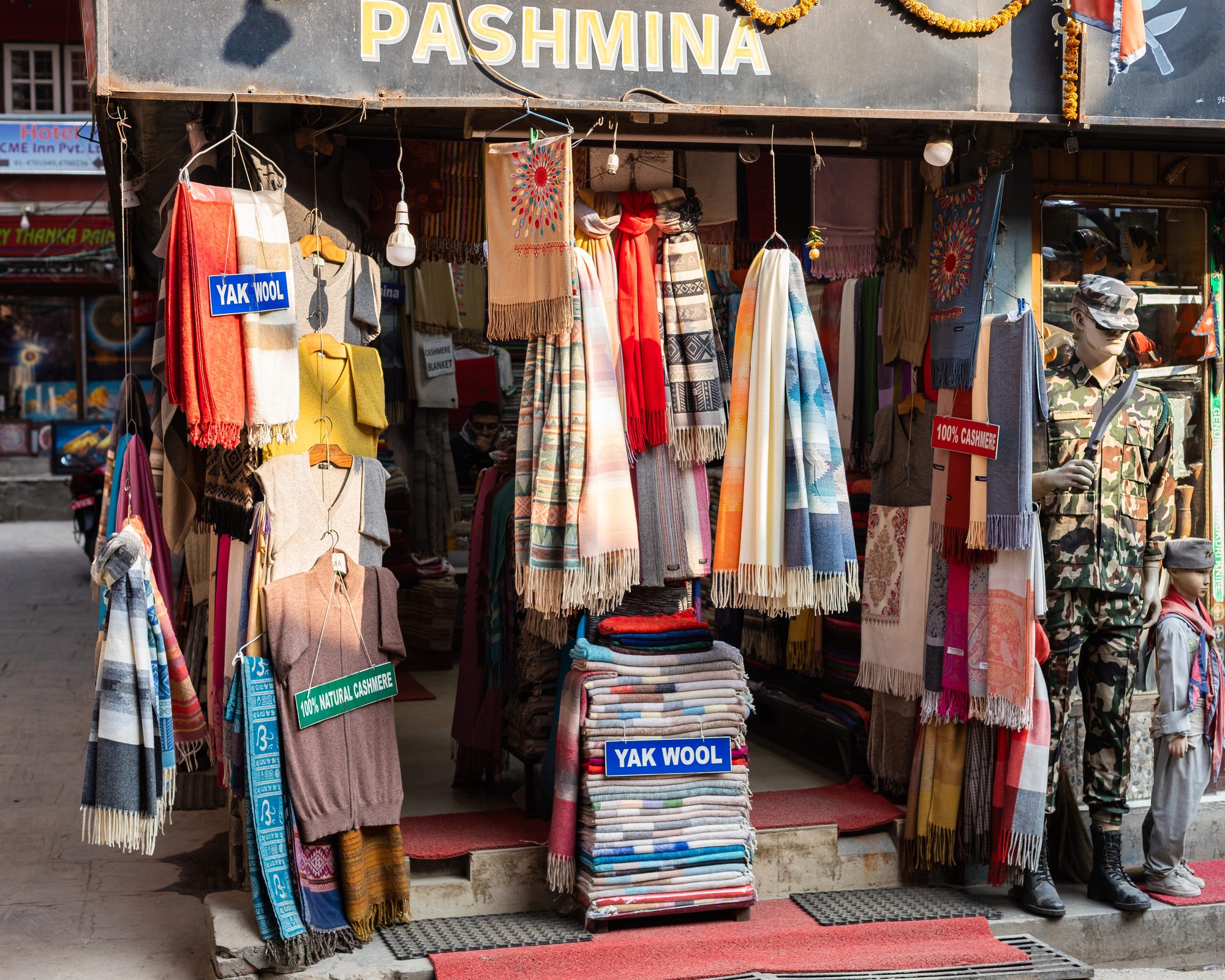
The sectors most exposed are the ones that sell to those markets. A ministry official told The Kathmandu Post that economists and industry representatives had warned that garments, pashmina and carpets could face higher tariffs and stricter rules of origin, which set how much of a product must be made in the exporting country, after graduation.
Why the trade hit may be modest
The overall damage is likely to be limited for a simple reason: most of what Nepal sells abroad goes somewhere that LDC status does not affect. Online Khabar reported that more than 80% of Nepal's exports go to India under the bilateral treaty between the two countries, and that goods exports amount to just 7% of GDP. It cited an estimate by the International Trade Centre (ITC), a joint agency of the UN and the WTO, that preference erosion would cut Nepal's exports by 4.3%, against roughly 14% for Bangladesh and 7.3% for Laos.
Europe is a small market for Nepal by comparison. The EU put the value of its two-way goods trade with Nepal at €376 million in 2024. Véronique Lorenzo, the EU ambassador in Kathmandu, told The Himalayan Times in August that Nepal's exports to the EU stood at "100 million", without naming a currency, against $6bn for Bangladesh, and that because Nepal exports so little, the impact of graduation would be minimal.
The trade balance shows the scale. Nepal Rastra Bank, the central bank, reported merchandise exports of Rs 315.29bn (about $2bn) in the 2025/26 fiscal year, up 13.8%, according to ShareSansar's summary of the bank's annual report. Imports rose 16.2% to Rs 2,096.38bn (about $13.5bn).
What to watch before November and after
The first date is the General Assembly vote, which ECOSOC asked to come before 24 November. A yes would keep Nepal in the LDC group until November 2029 and push back the start of the EU and UK transition periods. A no, or no decision, would mean graduation on schedule.
The second is GSP+. Under the EU's new rules, zero tariffs on two-thirds of product lines in Europe will depend on Nepal applying, implementing 32 conventions and presenting a plan of action, and the factsheet says any beneficiary may have preferences withdrawn if it violates the principles of conventions on human rights, labour, the environment or governance. That obligation falls on factories as well as on ministries.
The third is the cost of money. Online Khabar reports that Nepal's earlier move from low-income to lower-middle-income status in the World Bank's classification has already doubled the interest rate on the bank's lending to Nepal, from 0.75% to 1.5%, and that foreign aid has fallen from more than 28% of the budget in 2016/17 to 14.6% in 2025/26. Those changes did not wait for LDC graduation, and a deferral will not reverse them.
For most exporters the practical difference between graduating in 2026 and in 2029 is three more years of the current terms in Europe and Britain. Either way, the conditions for keeping access are now set out in writing. Our editorial on what graduation demands of business sets out the newspaper's view, and our report on the India-EU trade deal covers what that agreement means for Nepal's sales to Europe.
How this story was made: researched and written by The Standard’s desk with AI assistance, from the published reporting and official data credited below, and checked against those sources. Our standards.
The long view Nepal's LDC graduation