Nepal hydropower IPO rules: who gains if the 50% build rule becomes law
A draft amendment would write a 50% construction threshold for hydropower share sales into law, splitting investors and developers over when a half-built project should ask the public for money.
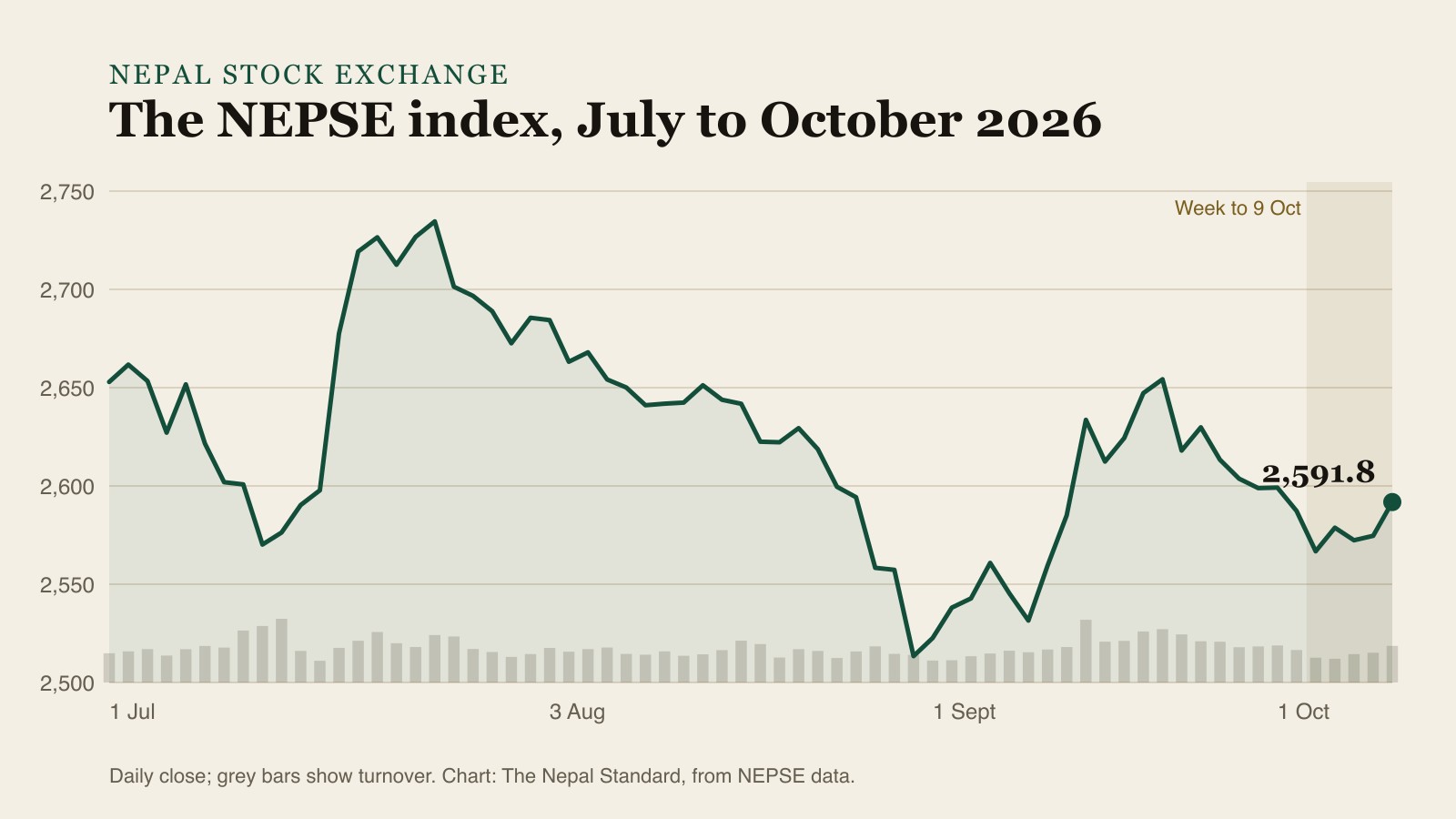
A rule that already governs Nepal's hydropower companies is about to be tested in a different way. Since the Electricity Regulatory Commission (ERC) issued its directive on public share issuance by electricity companies, a project under construction has needed at least 50% physical progress before it can sell shares to the public. But the Securities Act has never contained the requirement, and the government now proposes to close that gap.
The question is who benefits when a regulator's directive becomes statute. The answer divides investors worried about half-built projects from developers who say they need money early.
A directive becomes law
The provision appears in a draft titled the Ordinance to Amend Some Nepal Acts Related to Investment and Infrastructure, 2026. It would amend the Securities Act, 2007, and several related laws, and would fix the 50% threshold for hydropower initial public offerings (IPOs).
It is only a draft. The government has not decided whether to proceed by ordinance or by a bill in Parliament.
The choice of instrument matters because of how hard each is to change. A regulator can revise its own directive, whereas an Act can be amended only with parliamentary approval. Moving the threshold into law would therefore make it more durable and limit the ERC's room to adjust it.
Source: The Kathmandu Post
What the draft adds
The threshold is not the only change. Under the draft, an independent and qualified technical evaluator would have to verify construction progress, so the company's own account would not suffice.
Prospectuses would need to lay out total project costs, work still to be done, extra funding needs and confirmed sources of finance. They would also have to describe delays, cost overruns and other major risks, and report on power purchase agreements, generation licences and other approvals.
Issuers would also have to explain how they will use the proceeds, give estimated dates for completion and the start of commercial generation, and spend the money on the project's approved purposes. The Securities Board of Nepal (Sebon), the market regulator, could set further conditions.
Taken together, this reads less like a single hurdle than a disclosure regime. That may prove the more consequential change, since a half-built project would have to show its finances as well as its progress.
The case for tighter rules
Pressure for the draft comes from an assessment of the sector's record. A study committee coordinated by Phanindra Gautam, a former Sebon director, examined the shareholding structure of listed hydropower companies. It found that promoter shares had mostly turned into ordinary shares straight after lock-in periods ended, creating operational difficulties for listed companies outside banking, financial services and insurance.
The committee also pointed to years without dividends, results that fell short of IPO-era projections, and rising project costs. It argued that these problems justified tighter limits on offerings by companies not yet generating power, and it recommended the 50% construction test.
A high-level commission chaired by Rameshore Khanal, a former finance minister, went further. It recommended that hydropower companies be allowed to issue IPOs only once they begin generating electricity.
Keshav Koirala, a share investor, takes a similar line. He says allowing offerings at half-completion would hurt the stock market, and that shares should be sold only after generation starts.
The case against
Developers disagree. Ganesh Karki, a former president of the Independent Power Producers' Association, Nepal, says hydropower companies need substantial funding in the early stages, and that blocking IPOs then would be misplaced. He would prefer stronger oversight of construction and protection of investors' funds after approval to issue shares.
Subas Chandra Dhungana, a share investor and analyst, objects to applying one standard to every project. Large projects can take years to build, he says, and completing the second half after approval could take several more years and raise costs. He would tie eligibility to a project's generation capacity and its deadline for starting production.
The disagreement points to a real policy choice between a uniform rule and criteria that vary by project. A flat line is simple to administer, but projects of different scale and timelines would face the same test.
Winners and losers
Investors wary of buying into projects that exist mainly on paper are the likeliest gainers, since independent verification and fuller prospectuses would give them more to read. Developers seeking early capital stand to lose a funding route, and large, long-gestation projects could face higher costs, as Dhungana argues.
There is a wider signal. Sebon has separately published a draft directive on general eligibility for public offerings. It would require a track record of continuous operations before shares are issued, while allowing different standards across sectors. Read alongside the hydropower draft, it suggests regulators may want the IPO market to favour demonstrated performance over promise.
What to watch
First, whether the government chooses an ordinance or a parliamentary bill, since that shapes how openly the rule is debated. Second, whether the final text keeps a flat 50% line or admits sector-specific criteria, as critics urge. Third, the final form of Sebon's eligibility directive and how it treats hydropower.
How this story was made: researched and written by The Standard’s desk with AI assistance, from the published reporting and official data credited below, and checked against those sources. Our standards.
The long view The Nepal Stock Exchange
The long view Nepal's hydropower, from load-shedding to exports