Sudurpashchim tables Rs 37.7bn budget as Supreme Court refuses interim order
Days after one justice ordered the revision halted, a joint bench declined to block it. Nepal's far-western province now has a plan before its assembly, about 70% funded by Kathmandu, and a legal question still open.
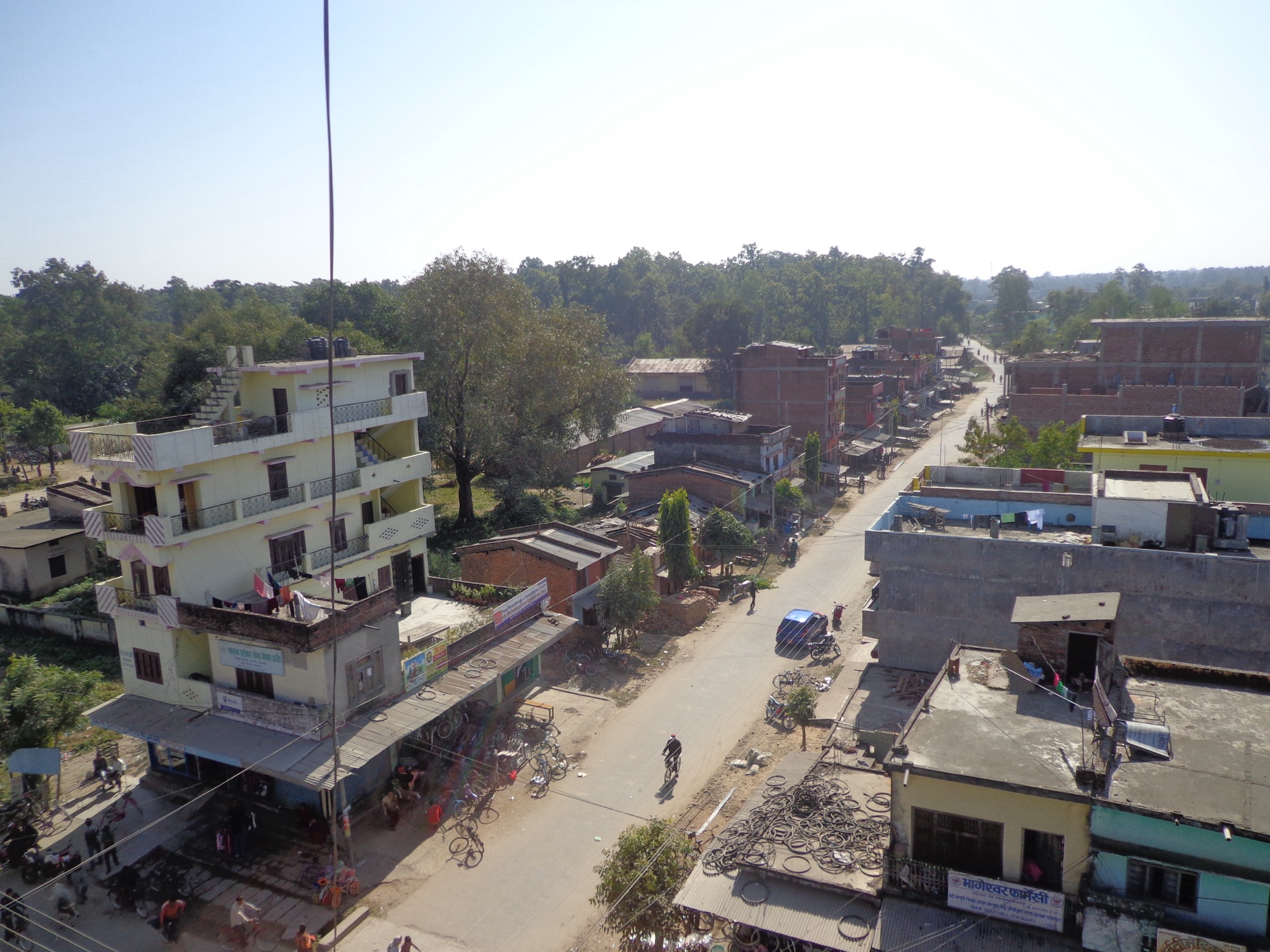
Sudurpashchim, Nepal's far-western province, finally has a budget before its assembly. Economic Affairs Minister Chakra Bahadur Malla presented a Rs 37.7bn spending plan for fiscal year 2083/84 to the Provincial Assembly in Dhangadhi on Sunday 11 October 2026, Online Khabar reported. At about Rs 155 to the dollar, that is roughly $243m.
It took a week of litigation to get there. On Tuesday 6 October, a single bench of Justice Mahesh Sharma Paudel ordered the provincial government to stop preparing a reworked budget, a day before it had planned to table one, The Himalayan Times reported. A joint bench of Justices Sapana Pradhan Malla and Balkrishna Dhakal has since refused the interim order sought by the same petitioner, The Himalayan Times reported on 11 October.
The fiscal year began in mid-July, so the province is almost three months into it without an approved budget. Provincial officials have described the situation as a budget vacuum, The Himalayan Times reported. Malla's plan ends the uncertainty over what the government intends to spend, but not over whether it may spend it: the budget still has to pass the assembly, and the court has yet to rule on the substance of the case.
How the first budget was lost
The government of then Chief Minister Kamal Bahadur Shah presented a Rs 37.7bn budget on 15 June through its economic affairs minister, Bikram Singh Dhami, Khabarhub reported. The assembly never passed it, and the bill lapsed into inactivity once the ruling coalition changed, Khabarhub reported. According to the petition now before the Supreme Court, the provincial government changed on 20 June, The Himalayan Times reported.
A coalition of the CPN and the CPN-UML then took office under Khagaraj Bhatt, a CPN leader who became chief minister with UML backing about two months before the new budget was presented, Online Khabar reported. (Khabarhub spells his surname Bhatta; this story follows Online Khabar.) The assembly later voted unanimously to withdraw the old Appropriation Bill, 2083, and the Bill to Implement Financial Proposals, 2083, which allowed Malla to bring in a revised budget, Khabarhub reported.
The total is unchanged from Dhami's figure, Online Khabar reported. None of the three reports sets out which allocations the new coalition altered.
What the delay means for contractors and suppliers
For businesses in the far west, the provincial budget is a customer as much as a policy document. The new plan gives priority to major infrastructure, healthcare, tourism and the promotion of local products, Khabarhub reported. Its presentation is expected to let economic activities and development projects that had stalled in the province get moving again, Khabarhub reported.
The named allocations are small but concrete. Seti Provincial Hospital in Dhangadhi is to receive Rs 255m for an improvement plan, Khabarhub reported. The budget sets aside Rs 50m for the Phapla Cricket Ground in Kailali and Rs 32.5m for a feasibility study of a cable car at Badimalika, Khabarhub reported. It also allots Rs 12m to brand local goods as "Sudur Koseli", Rs 10m towards building the province's permanent capital and Rs 10m to repair the suspension bridge at Dodhara Chandani in Kanchanpur, Khabarhub reported.
For builders and local suppliers, the practical point is timing. In our assessment, a budget that is presented but not passed does not authorise new spending, and every week of delay shortens the season left to award and complete works before the fiscal year closes in mid-July 2027. That squeeze matters more for capital projects than for salaries, and Nepal's provinces already struggle to spend their development budgets, as our analysis of provincial spending showed.
Who pays for Sudurpashchim
The funding table shows how little of the budget the province raises itself. Only Rs 1.72bn, about 4.6% of the total, is expected from internal revenue, Khabarhub reported.
Most of the rest comes from the federal government in Kathmandu. The budget counts on Rs 10.25bn from federal revenue sharing, Rs 9.06bn in fiscal equalisation grants, Rs 6.04bn in conditional grants, Rs 388m in matching grants, Rs 527.6m in special grants and Rs 70m from royalty sharing, Khabarhub reported. By our calculation, those federal transfers add up to about Rs 26.3bn, or roughly 70% of the budget.
The remaining Rs 9.65bn, about a quarter of the total, is money carried over from the previous fiscal year, Khabarhub reported. Online Khabar put the carry-over lower, at Rs 9.35bn, with matching grants of Rs 380m and special grants of Rs 520m. Khabarhub's lines sum exactly to the budget total, so the chart below uses them.
- Federal revenue sharingRs 10.25bn27%
- Savings carried forwardRs 9.65bn26%
- Fiscal equalisation grantsRs 9.06bn24%
- Conditional grantsRs 6.04bn16%
- Internal revenueRs 1.72bn5%
- Special grantsRs 0.53bn1%
- Matching grantsRs 0.39bn1%
- Royalty sharingRs 0.07bn<1%
Source: Khabarhub
This is how Nepal's federal fiscal system is built. Provinces receive shared revenue and grants from the centre under the Intergovernmental Fiscal Arrangement Act, 2017, one of the laws the Supreme Court bench considered, The Himalayan Times reported. In practice, Sudurpashchim's spending power depends far more on federal transfers than on its own tax base. A carry-over worth a quarter of this year's budget also suggests, in our reading, that the province did not spend everything it had last year.
The question the court has not answered
The challenge was brought by advocate Maniram Upadhyay against the Office of the Chief Minister and Council of Ministers of Sudurpashchim, among others, The Himalayan Times reported. His case is that once a finance bill has been registered in the assembly, an incoming government that takes power before the vote cannot substantially rewrite it, The Himalayan Times reported. When the first order was issued, he argued that a government cannot shelve a budget already presented and then introduce a second one for the same fiscal year, The Himalayan Times reported.
The joint bench held that a province's power to make substantive changes to a budget after presentation is a matter for the final hearing, and saw no urgent reason for interim relief, The Himalayan Times reported. It weighed constitutional provisions, the Sudurpashchim Provincial Assembly Rules and the fiscal arrangement act, and addressed the rules on withdrawing bills and on supplementary estimates, The Himalayan Times reported. The bench stressed that refusing interim relief does not decide whether the province may lawfully revise the budget, The Himalayan Times reported.
That question reaches beyond Dhangadhi. Provincial coalitions in Nepal change often, and a final ruling will set how much room any incoming government has to rework a budget its predecessor tabled but could not pass.
What to watch
First, the assembly vote. The withdrawal of the old bills passed unanimously, Khabarhub reported, which points to a smooth passage, though no vote has yet been held.
Second, the final hearing of Upadhyay's petition. A ruling against the government could unsettle a budget that may by then be law and partly spent; a ruling in its favour would give provincial coalitions wide room to rewrite inherited plans.
Third, spending. With about a quarter of the budget made up of last year's unspent money and the fiscal year well under way, the test for Sudurpashchim is whether contracts are awarded and paid faster this year than last.
Right of reply: this article draws on published reporting, and The Nepal Standard did not contact the people named for it. Anyone named may send a response to [email protected]; we will publish relevant replies in full or in fair summary, normally within three working days. An arrest, investigation or charge is not a finding of guilt.
How this story was made: researched and written by The Standard’s desk with AI assistance, from the published reporting and official data credited below, and checked against those sources. Our standards.