Shah's India visit: business deals on the table
Prime Minister Shah takes 52 business leaders to India, while the roughly one million Nepalis working there are not on the labour ministry's list of issues.
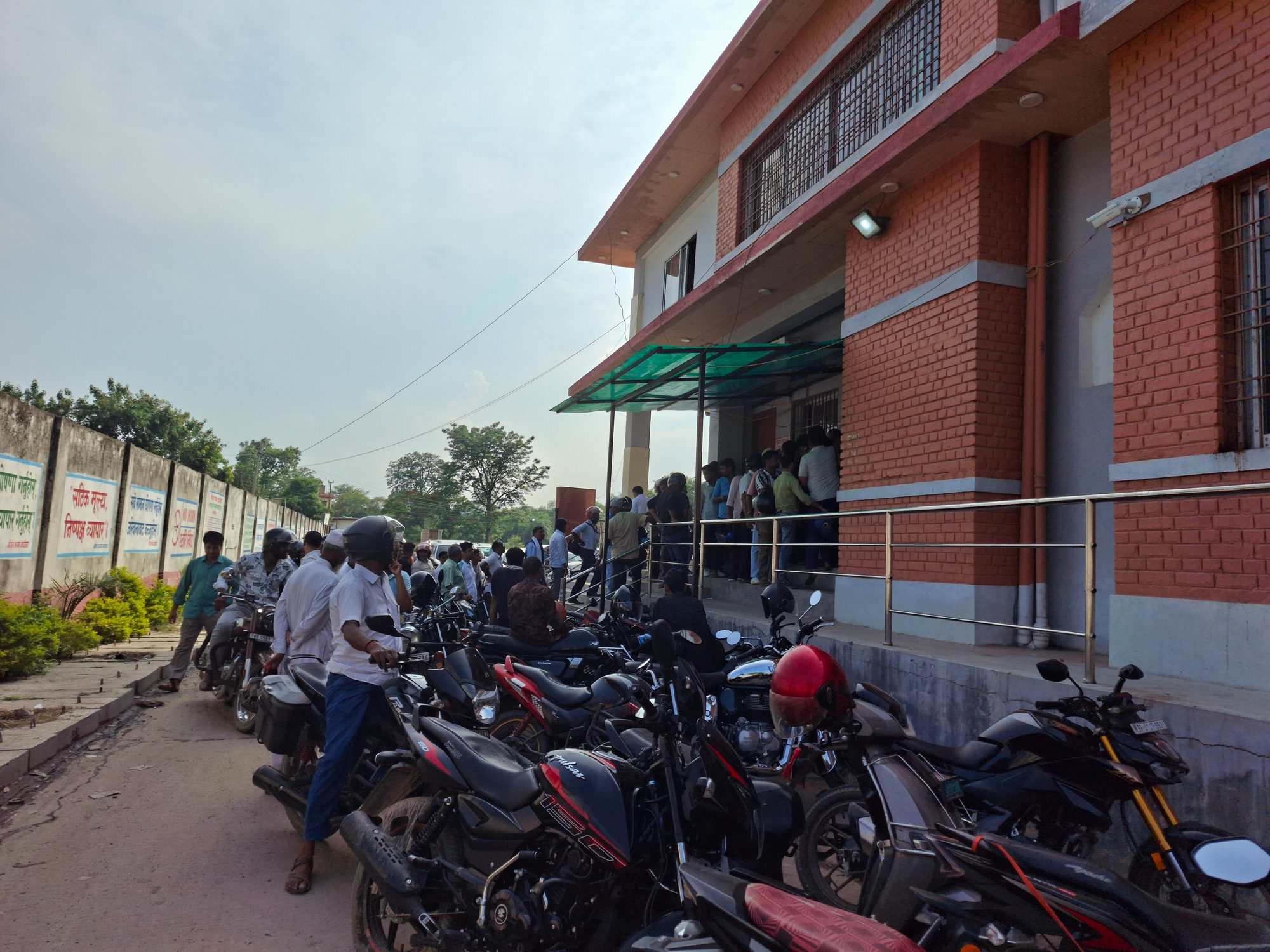
Prime Minister Balendra Shah's delegation to India includes 34 government representatives, 52 private sector businesspeople and members of the media. The Ministry of Labour, Youth and Employment, meanwhile, did not forward any agenda on the Nepalis who work in India, the largest group of Nepali workers abroad, according to ministry sources.
The contrast frames a visit centred on economic diplomacy. It also raises a question for investors in Kathmandu and beyond: who exactly will benefit from the trip?
A visit built around business
Shah travels on 22 and 23 November 2026 at the invitation of Indian Prime Minister Narendra Modi. Foreign Secretary Amrit Bahadur Rai set out the programme at a briefing at Singha Durbar, the seat of Nepal's government, on Friday 20 November 2026. He said a Nepal-India Business Forum will be held during the stay.
The forum is meant to gather business representatives from both countries to discuss cooperation, policy perspectives and economic partnerships. Rai said the talks were expected to help widen trade, investment and economic cooperation.
The political choreography is conventional. Shah will hold delegation-level talks with Modi, followed by a joint press conference. Modi will host a formal luncheon for the Nepali side. Shah will also call on President Droupadi Murmu, meet External Affairs Minister S Jaishankar and pay tribute at Rajghat in New Delhi, the memorial to Mahatma Gandhi.
Source: Online Khabar
What Nepali businesses could gain
The concrete deliverables are still thin on detail, but their shape is clear. Rai said the visit would include the inauguration of projects in energy cooperation and connectivity, as well as the laying of foundations for new ones. Memorandums of understanding are due to be exchanged in education, health, agriculture, sports, disaster management and human resource development.
For Nepali companies, the energy and connectivity items are likely to matter most. Nepal's economy is closely tied to its southern neighbour, and any project that eases the movement of power or goods feeds directly into costs and margins. The projects have not been named, so the scale of the gain cannot yet be judged.
The presence of a 52-member private sector contingent is itself a signal. Governments often use such delegations to turn political goodwill into introductions and, eventually, contracts. Whether that happens depends on follow-through after the forum, not on the photographs.
Memorandums of understanding commit governments to cooperate, not to spend. Business readers should treat them as a statement of intent and watch for budgets, timelines and regulatory changes that would turn intent into activity.
The workers not on the agenda
The Ministry of Labour estimates that around one million Nepalis work in India, the largest destination for Nepali workers. The informal nature of the work means no exact figure exists.
According to ministry sources, the Ministry of Labour, Youth and Employment did not forward any agenda on these workers for the visit. The prime minister's office and the foreign ministry had asked for issues to be submitted. The labour ministry discussed the matter internally and judged the concerns not significant enough for the prime ministerial level, the sources said.
Source: Ministry of Labour estimate
The gap is structural. Nepal does not classify those going to India as foreign employment workers, and India has no separate system to identify them.
Those heading to India generally rely on verbal agreements or intermediaries.
Money, documents and a banking problem
The issue is not only social. It is also financial, and therefore of interest to bankers. Labour and migration expert Jeevan Baniya says workers without Aadhaar, India's national identity card, struggle with bank transactions, and even those who hold one face limits on the amount they can transfer. Some turn to hundi, an informal transfer system, or to individuals who carry money.
Prakash Madai of Needs Nepal, who has researched the subject, argues that digital payments, banking services and QR-based transactions could bring more of these earnings into formal channels.
The problem is not confined to Nepalis in India. Baniya notes that Indian workers in Nepal are not enrolled in Nepal's social security system either, and says there is no dedicated bilateral labour agreement. Madai holds that the same arrangements should apply to Indian workers in Nepal. "The 1950 treaty addresses movement and trade," he says, arguing that social security should join the agenda.
There is a domestic policy hook. Nepal's National Labour Migration Policy 2026 has, for the first time, formally included workers in India. The omission of their concerns from this visit suggests a gap between policy text and diplomatic practice.
What to watch
- Which energy and connectivity projects are inaugurated, and whether foundation-laying comes with funding and dates.
- Whether the Nepal-India Business Forum produces named commitments or only general statements.
- Whether the joint press conference or any memorandum touches on labour, social security or remittance channels.
- Whether the labour ministry's decision to hold back an agenda is revisited under the new migration policy.
- The press briefing to be held at Tribhuvan International Airport after the prime minister returns, and the details the foreign ministry says it will publish on its website.
How this story was made: researched and written by The Standard’s desk with AI assistance, from the published reporting and official data credited below, and checked against those sources. Our standards.