Nepal's SIP investors weigh a 5.26% return after five years of weak markets
Monthly fund plans offered small savers a route into equities. One five-year example, at 5.26% a year, shows how far results can sit from calculator projections.
A calculator on a fund manager's website says that Rs10,000 set aside every month for 20 years, growing at 12% a year, becomes Rs9.991m. The saver would have paid in Rs2.4m. It is an alluring picture, and the question now is what has happened to the people who took it at face value.
Systematic investment plans, or SIPs, drew growing interest from young Nepali savers who lacked the time, knowledge or confidence to buy shares directly. Many are now dissatisfied with low returns, and some have closed their plans. One fund manager says more investors asked to discontinue before Tihar, the major autumn festival, in 2026.
What an SIP is
An SIP is a facility attached to an open-ended mutual fund scheme. The investor buys units at regular intervals, usually monthly, over a chosen period. Open-ended schemes have no maturity date and are not listed on the Nepal Stock Exchange (Nepse), the country's only stock market. Closed-ended schemes are listed and have a fixed life. Units are bought and sold through the offices or websites of the merchant bankers who manage the funds.
Nepal has 14 open-ended schemes offering SIPs. Mutual funds put roughly 75% to 80% of the money they collect into the stock market, which is their main source of income. An SIP is therefore an equity product, and when the market disappoints, the fund does too.
The five-year test
NMB Capital launched the NMB Saral Bachat Fund in 2021. An investor who put in Rs5,000 a month and reinvested dividends would have made 61 contributions by 1 November 2026. The total outlay is Rs305,000, which buys 3,255 units at an average cost of Rs9.17.
At a net asset value (NAV) of Rs10.48 a unit, those units would sell for Rs348,515, a gain of 14.26% on the money paid in.
Source: The Kathmandu Post
The 14.26% figure overstates the result. Because the money went in by instalments, the fairer measure is the annualised return, which works out at 5.26%. In some cases, SIP returns have been lower than bank deposit interest rates. The sources give no deposit rates, so the comparison cannot be made here.
Projection and arithmetic
Fund managers publish calculators that let users enter a period, a monthly sum and an expected return. A 12% assumption produces a handsome result, and many investors came to believe their money would double or multiply several times. Stakeholders say not everyone understands that the calculator output is an estimate with no promise attached.
Actual earnings also depend on the unit price at each monthly purchase. Prices move, so the cost of accumulating units varies.
A benchmark, and its limits
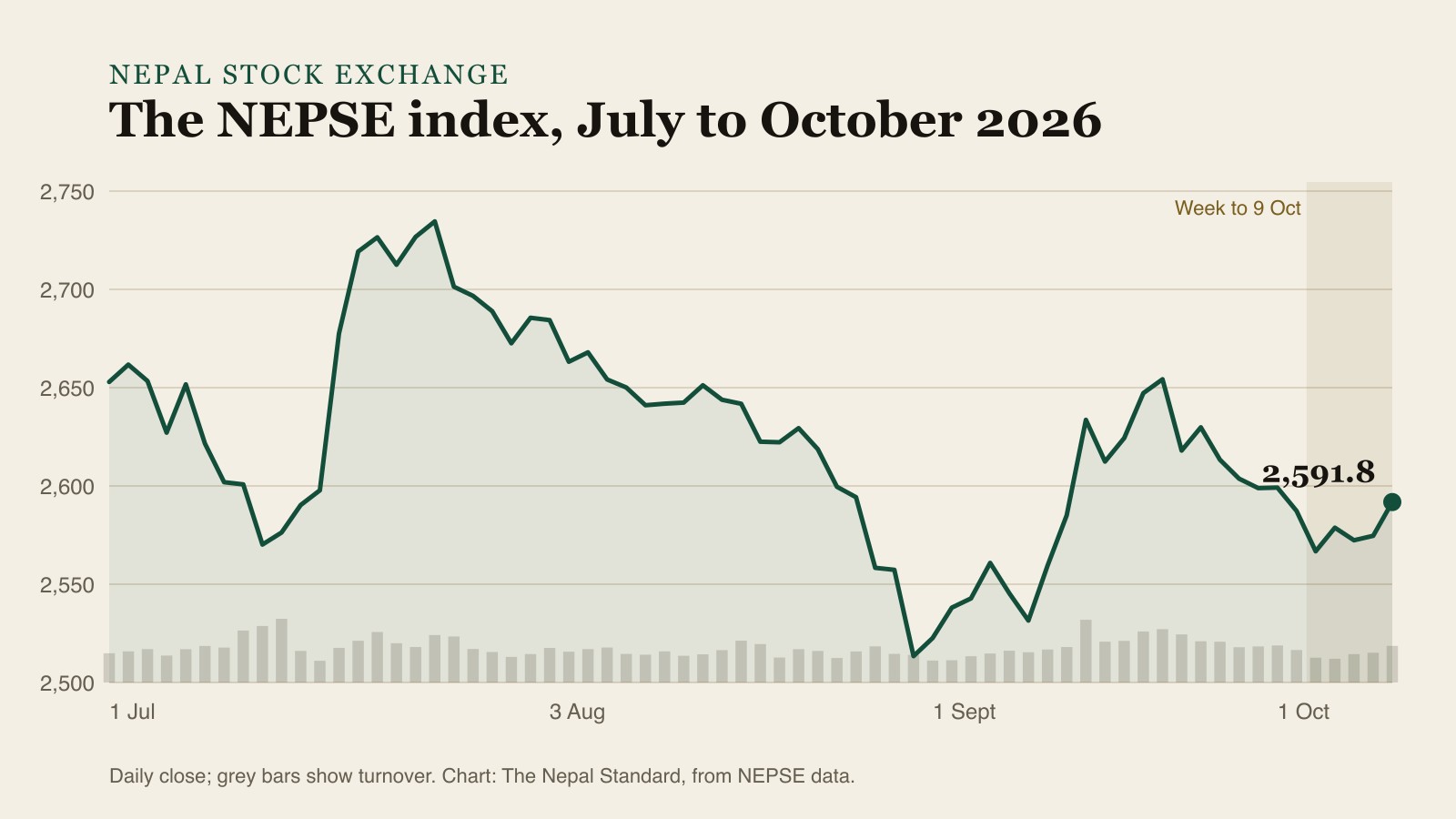
Deepesh Kumar Vaidya, chief executive of NMB Capital, says the product should be judged by its purpose: gathering small sums from people who cannot trade themselves. He says a fixed monthly investment in a portfolio tracking the Nepse index would have returned around 6% a year over five years. He attributes the weak showing to the market downturn, which lowered NAVs and cut earnings from equity holdings, and says returns could improve if the market recovers.
Source: NMB Capital
On those figures, the fund's result sits close to what a plain index approach would have delivered. That suggests the market, rather than fund selection alone, explains much of the gap. Analysis aside, the plans keep one clear advantage: unlike a fixed deposit, an SIP does not require a lump sum of Rs100,000 or more.
Overseas access
Existing policy allows these schemes to invest in foreign markets, but that option has not been opened. Vaidya says overseas access could diversify holdings and possibly improve returns.
What to watch
- Whether the Nepse recovers enough to lift NAVs and ease investor dissatisfaction.
- Whether foreign investment by mutual funds, already permitted under policy, is opened up.
- Whether fund managers present projected returns with more cautious assumptions.
How this story was made: researched and written by The Standard’s desk with AI assistance, from the published reporting and official data credited below, and checked against those sources. Our standards.
The long view The Nepal Stock Exchange