Nepal's festive spending: Asoj handset imports nearly double as dry fruit bill passes Rs 3bn
Dashain and Tihar lifted handset imports and filled gift packets with foreign nuts, but higher phone prices make the surge harder to read.

A Tihar gift of cashews, almonds and walnuts looks like the most local of traditions. The customs data show how much of it rests on imports. Nepal imported more than Rs 3bn of dry fruits in the first quarter of the fiscal year 2083/84, covering the Nepali months of Shrawan, Bhadra and Asoj.
The two data sets, both from the Department of Customs, offer a partial read on festive demand. Households are spending and, in phones, trading up. That is good news for importers and distributors. It also raises a question for policymakers about how much of this spending feeds domestic producers.
Phones: volume or price?
In Asoj, handset imports cleared customs at more than Rs 9bn, up from Rs 5.45bn a year earlier. Duties, excise, logistics and margins add roughly 40% to that value, which puts estimated retail turnover for the month at about Rs 13bn.
Across Shrawan, Bhadra and Asoj, customs-cleared mobile imports reached Rs 18.81bn, up 38% from Rs 13.62bn in the same quarter of the previous fiscal year. Clickmandu puts the three-month trade, including duties and margins, at more than Rs 26.34bn, or about $173m at the central bank's rate of Rs 152.23 to the dollar. The monthly figures it cites (Rs 3.87bn for Shrawan, Rs 5.86bn for Bhadra, Rs 13bn for Asoj) do not sum neatly to that total, so they are best read as approximate. They show an uneven build towards the Asoj peak.
The headline growth mixes two things. Industry insiders say buyers are moving in large numbers from basic bar phones to premium smartphones. Retailers say handset prices have risen by 20% to 40% because of tight chip supply and costlier components such as 5G modems and on-device AI hardware. On the evidence, part of the rise is likely to be price rather than volume.
A supply squeeze with no quick end
The Nepal Mobile Distributors Association says chips now sit inside appliances, cars and drones as well as phones. Global foundries are reportedly booked to capacity until at least 2028, taking new orders only for delivery in 2029 and beyond. Industry stakeholders therefore expect prices of smart electronics to stay elevated rather than ease soon.
For a small import-dependent market this matters beyond Nepal. Nepali buyers are unlikely to have much influence over how chips are allocated, which makes them price takers in a global queue.
Dry fruits: a tradition on imported supply
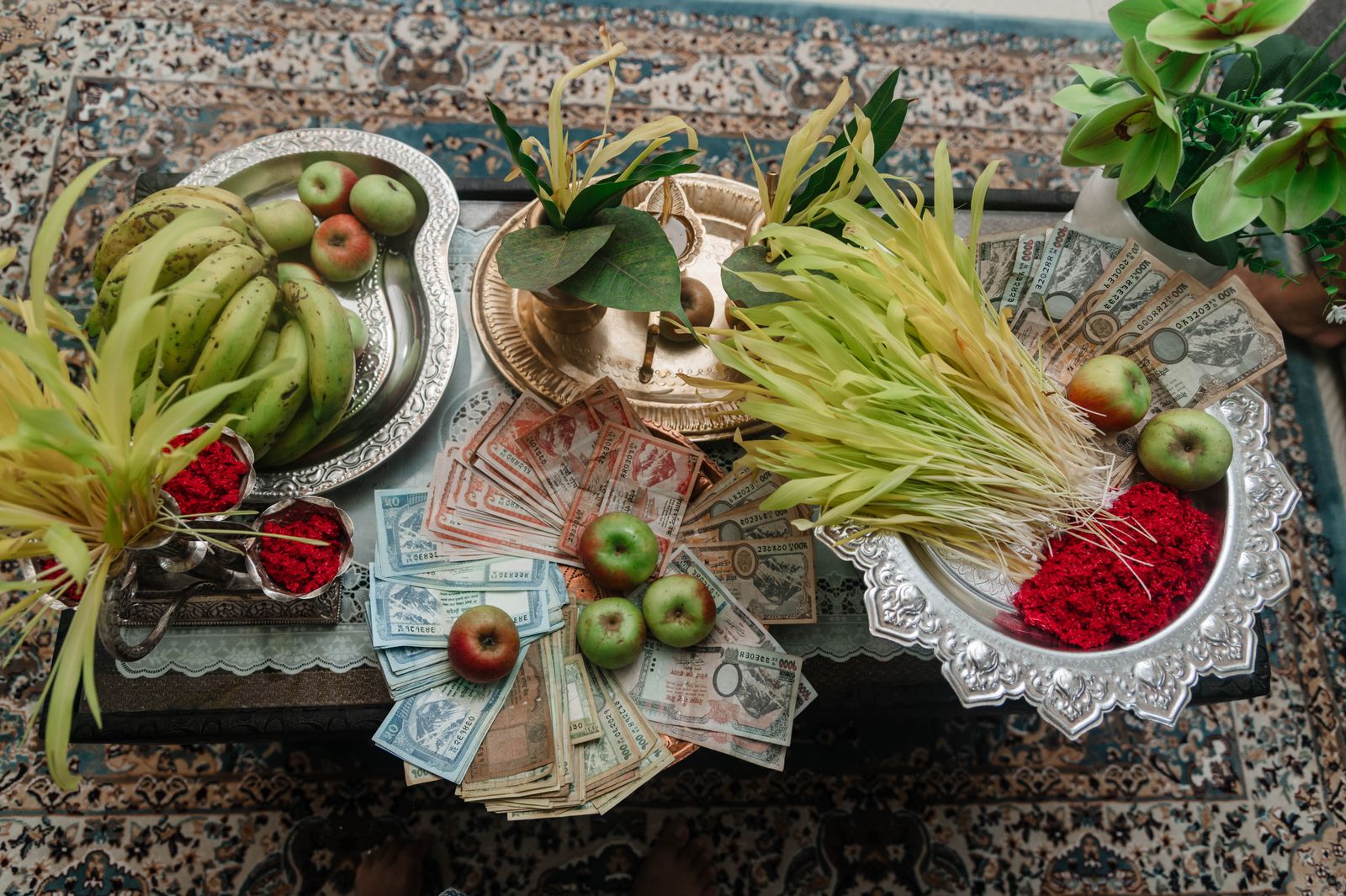
The bhai masala packet, given by sisters to brothers on Bhai Tika, shows the dependence clearly. Dry fruit imports exceeded Rs 3bn in the first quarter.
Walnuts, cashews and almonds alone topped Rs 1.5bn. Areca nuts were the largest single line shown, at Rs 847.7m for 3.24 million kilograms. In-shell walnuts followed at Rs 573.3m for 1.45 million kilograms, which also yielded Rs 139.4m in revenue for the government.
Shelled almond imports rose to 506,079 kilograms from 402,368, and shelled cashews to 469,416 kilograms from 409,913.
Supplier data cited for the previous fiscal year, not this one, show concentration. China supplied 1.282 million kilograms of in-shell walnuts, the United States 398,212 kilograms of almonds, and Vietnam the largest share of cashews at 208,674 kilograms.
Tastes are also shifting. Consumers are choosing roasted and salted cashews and pistachios over raw ones, sold in packets that generally command higher prices. Nepal imported 87,658 kilograms of roasted and salted pistachios from China, worth Rs 115.6m. Limited commercial production of walnuts and almonds leaves the domestic market reliant on imports at peak demand.
What the spending pattern says
A column in The Kathmandu Post argues that festival bonuses and promotions push Nepalis to overconsume. It cites a Nepal Rastra Bank (NRB, the central bank) report for 2020/21 saying households spend more than 35% of income during festivals on garments and household items. It also cites Revenue Department data showing the import rate rising from an average of 5.5% in January to August to 13.9% in the festive months.
Analysis: festive demand is real, but in these two categories a large share of the spending is likely to go to imported goods, with importers, distributors and the state taking their cut through margins and duties. Higher phone prices also mean households may be paying more for the same device, which could leave less for other purchases once the festivals end.
What to watch
Whether handset imports fall back after Tihar will show how much of the surge was seasonal. Later customs data may clarify the split between units and value. Chip-driven pricing is the other variable, given the reported capacity booking until at least 2028.
How this story was made: researched and written by The Standard’s desk with AI assistance, from the published reporting and official data credited below, and checked against those sources. Our standards.
The long view Nepal's LDC graduation