Nepal's big employers are too few for its young workforce
A handful of family-built business groups anchor private hiring in Nepal, yet 500,000 young people enter the labour market each year and about 2,000 leave daily for jobs abroad.

Nepal's first industrial enterprise, Biratnagar Jute Mills, was co-founded by Ramlal Golchha, and his family's fourth generation now runs one of the country's biggest private employers. Yet the list of Nepali groups that directly employ 10,000 people or more is short. Golchha, Chaudhary, IME, Shankar, Golyan, Triveni and Bhatbhateni are on it. Vishal Group is also named among the largest, though no headcount is available for it. Some 500,000 young people enter the labour market every year, and about 2,000 leave the country for work each day.
The question for investors in London or Singapore is why, 35 years after liberalisation, the private sector has not produced more employers of this size. The answer lies less in the ambition of existing groups than in the economy around them.
A short list of large employers
The groups are diverse, with interests from factories and shops to banks, power, farms and hotels. Golchha Organisation began with jute mills and has since moved into steel, food products, sugar, electrical goods, automobiles, financial services and technology. It says it employs more than 10,000 people directly.
The other groups give similar figures. Chaudhary Group says it employs around 15,000 people, Triveni Group more than 15,000, and Shankar Group around 15,000 across more than 100 businesses. IME Group says around 20,000. Bhatbhateni Supermarket and Golyan Group each say more than 10,000.
- IME Group20,000
- Chaudhary Group15,000
- Triveni Group15,000
- Shankar Group15,000
- Golchha Organisation10,000
- Bhatbhateni10,000
- Golyan Group10,000
Source: The Kathmandu Post
Several of these are floors ("more than 10,000") rather than precise counts. Even so, the combined totals are small beside the 500,000 people who join the workforce every year.
Why the pipeline is thin
Nepal has had 32 governments in the 35 years since multi-party democracy was restored in 1990. Political instability, internal conflict, inadequate infrastructure and weak governance have kept job creation below what liberalisation promised.
The mix of investment matters too. Services have grown, but mostly in trade, hospitality and traditional finance, which create relatively few jobs. Shrestha says large-scale employment comes from industry and manufacturing, which remain weak. Investment in information technology, data centres and artificial intelligence is below expectations.
Incumbents want to grow, with conditions
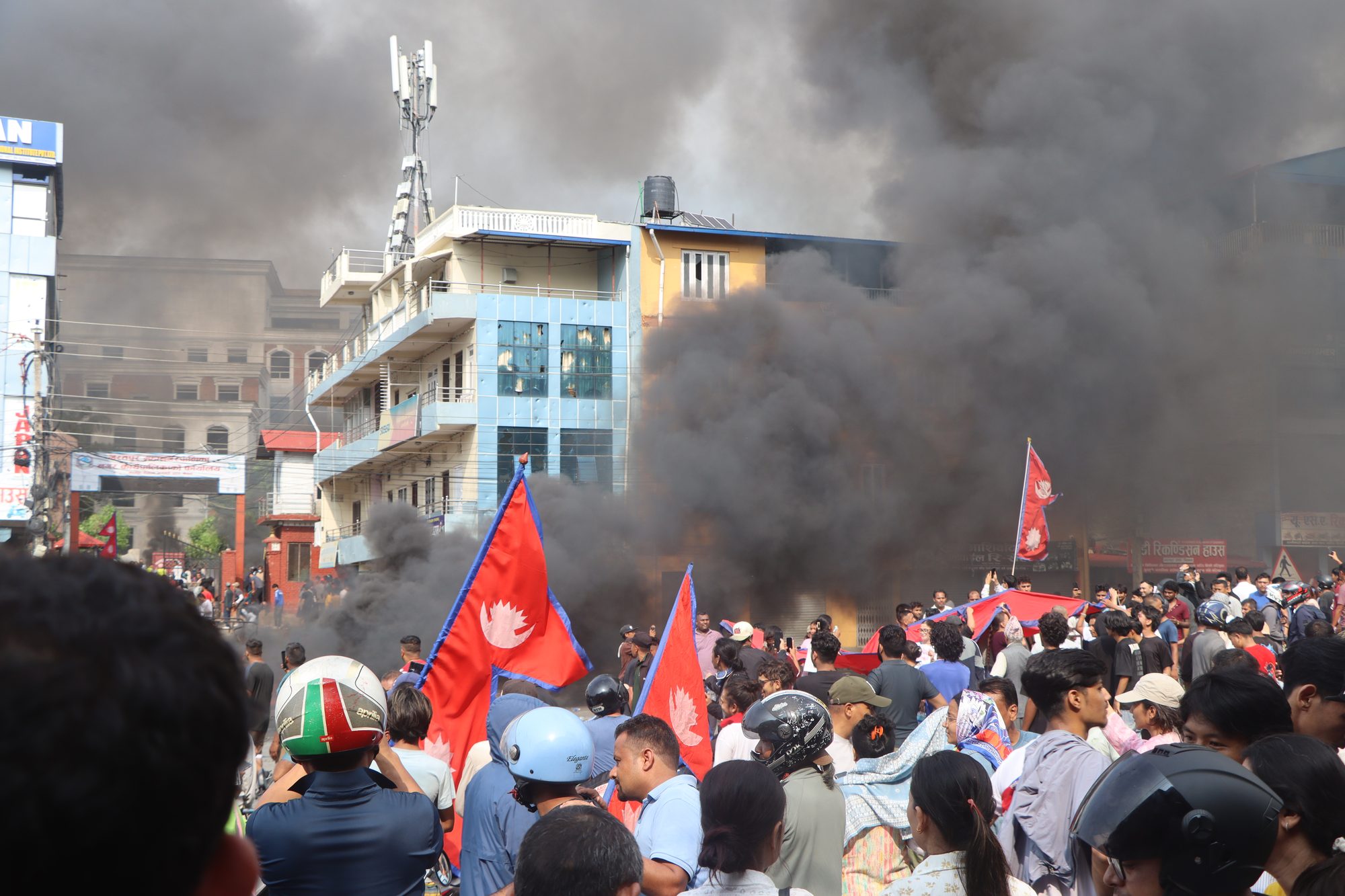
The established groups say they would hire more. IME Group expects more than 1,000 additional jobs when projects under construction open. Triveni Group says it aims to add 300 to 500 jobs over the next three years, and expects its cable car and hydropower projects, now under construction, to add to its workforce once completed. Bhatbhateni is working to reopen stores damaged in the Gen Z protests of 2025 and to open four new outlets. Chaudhary Group is pursuing projects including a chemical fertiliser plant, and Golyan Group plans jobs through Reliance Spinning Mills and its energy and hotel businesses.
These additions are measured in hundreds or low thousands. Set against 500,000 annual entrants, they look marginal, which suggests expansion by incumbents alone is unlikely to close the gap.
Chandra Prasad Dhakal, chairman of IME Group and a former president of the Federation of Nepalese Chambers of Commerce and Industry, says more than 81% of employment comes from the private sector. He says failure to implement announced reforms has undermined confidence. Abhimanyu Golchha, a director of Golchha Group, makes the conditional case: if the investment climate improves and businesses can expand, more jobs will follow.
The export of workers
The alternative is already visible. In 2024/25, Nepal issued more than 839,000 labour permits for overseas employment, counting both new and renewed permits. Remittances support foreign exchange reserves, consumption and poverty reduction, but the departure of skilled and semi-skilled workers raises the risk of labour shortages for domestic industry, with possible effects on production capacity and competitiveness.
Source: The Kathmandu Post
There is a plausible loop here. Weak domestic hiring pushes workers abroad, remittances sustain consumption, and the departure of workers may erode the base manufacturers need to expand. Money sent home can also ease the pressure to change the model that sends people away.
What to watch
Watch whether government capital expenditure rises, since Shrestha identifies it as a direct constraint on job creation. Track whether new industrial entrants appear, rather than expansions by established groups, and whether higher-value sectors such as data centres draw investment. Finally, follow the overseas permit figures, which include renewals and so are an imperfect gauge of how many Nepalis are leaving.
How this story was made: researched and written by The Standard’s desk with AI assistance, from the published reporting and official data credited below, and checked against those sources. Our standards.