Nepal Premier League: how a cricket league became a Rs 1.5bn business
In three seasons the NPL has gone from paying broadcasters to selling its rights for Rs 335m. An analysis of where the money comes from, where it goes, and whether the business can last.
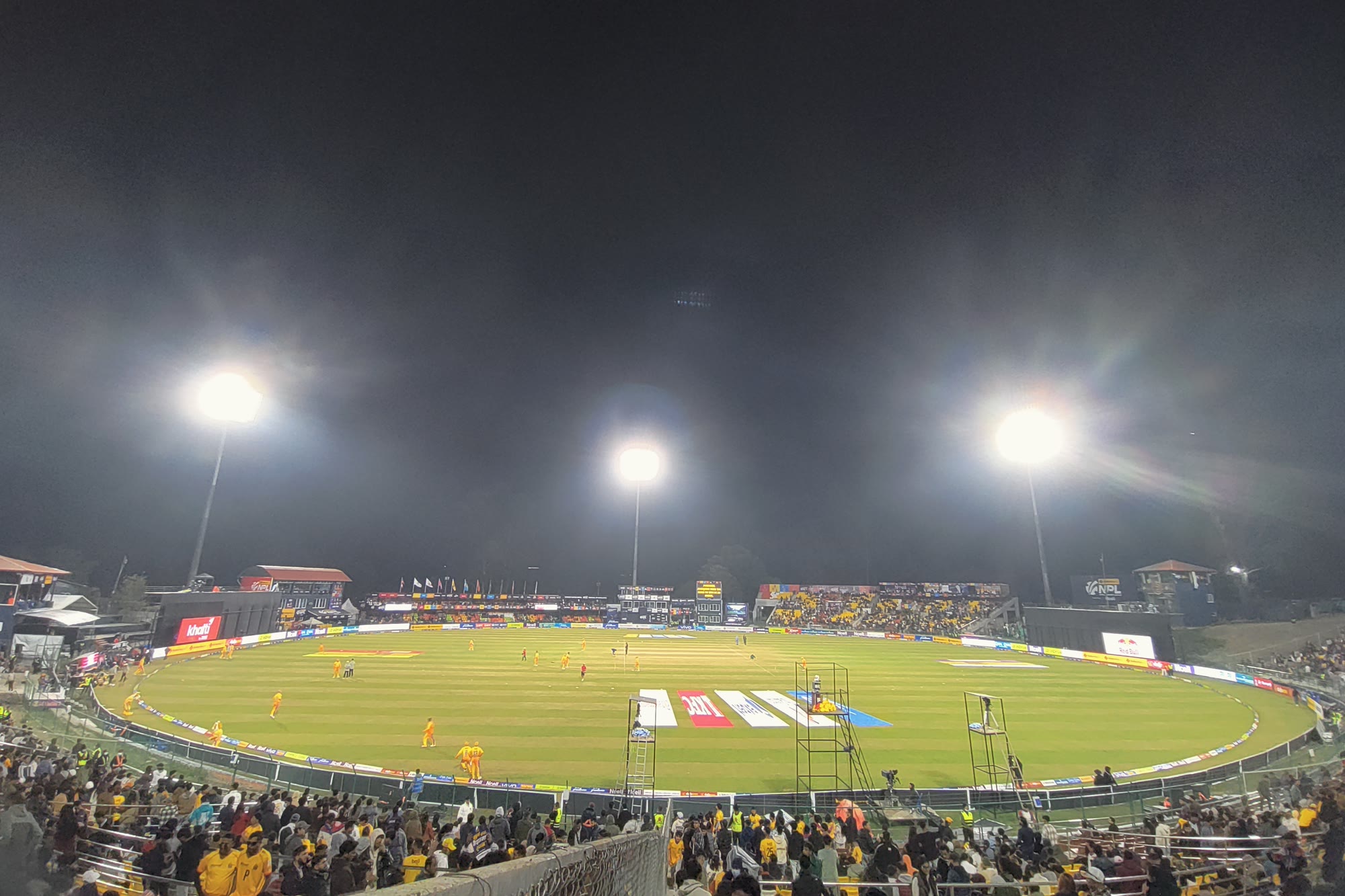
Two years ago the Cricket Association of Nepal had to pay a broadcaster to put its new league on television. On Monday, 26 October 2026, when Lumbini Lions and Sudurpaschim Royals open the third season of the Nepal Premier League in Kirtipur, the money will flow the other way. Two Nepali media companies have agreed to pay Rs 327m for the right to show it, and the league's organisers expect the season to move about Rs 1.5bn through the economy, roughly $9.9m at the central bank's rate of Rs 151.44 to the dollar on 22 October 2026.
That reversal, from buying airtime to selling it, is the clearest sign of what the NPL has become in three seasons: not just a cricket tournament but Nepal's first serious attempt at a sports business, with franchise owners, media rights, title sponsors, a ticketing contract and a wage bill. The question for the next 26 days, and for the seasons after, is how much of that money stays, and whether the business can stand on its own once the novelty fades.
From cost centre to profit
The league's own accounts tell a story of fast growth from a small base. The Cricket Association of Nepal (CAN), the sport's governing body and the league's organiser, earned Rs 276.9m in revenue from the first season in 2024 and Rs 473.6m from the second. Against operating costs of Rs 219.6m, the second season produced a net profit of Rs 92.12m, up from Rs 24.65m in the first.
Source: Cricket Association of Nepal figures, via The Kathmandu Post
For the third season CAN's treasurer, Padam Khadka, has said the organisers expect about Rs 200m from sponsorship and more than Rs 700m from ticketing and broadcasting combined, against costs of around Rs 300m. The headline Rs 1.5bn adds the spending of the eight franchises to CAN's own takings, and the figures quoted around it are not always consistent: one breakdown put CAN's direct revenue at Rs 750m. These are projections, not audited results.
The rights that changed hands
The most important change is in media rights. In the first season, CAN paid Star Sports to carry the league on its global platform, according to a 2025 column in The Kathmandu Post. For the third season CAN sold the rights in three packages for a combined Rs 335.3m: global streaming rights to NetTV for Rs 180.4m, Nepali television rights to Himalaya Television Network for Rs 146.4m, and ticketing rights to the payments company eSewa for Rs 8.5m, under a deal in which CAN keeps 95% of ticket revenue.
Source: Cricket Association of Nepal, via Desh Sanchar
This matters beyond cricket. Media rights are the engine of most profitable sports leagues, from India's IPL to English football, because they turn an audience into predictable income that does not depend on the weather or the size of the stadium. A Nepali broadcaster paying nine figures for a domestic competition is a vote of confidence that advertisers will follow. It also moves money between Nepali companies rather than out of the country, which was the case when CAN paid a foreign broadcaster.
Where the franchise money goes
The eight franchises are where most of the spending happens, and where the economics are least certain. In the first season the teams paid between about Rs 11m (Karnali Yaks) and Rs 35.7m (Pokhara Avengers) for licences that must be renewed each year, a total of Rs 161m to Rs 169m depending on the source.
- Pokhara AvengersRs 35.7m
- Kathmandu GorkhasRs 33.33m
- Janakpur BoltsRs 20.5m
- Lumbini LionsRs 18.6m
- Chitwan RhinosRs 17.6m
- Sudurpaschim RoyalsRs 16.89m
- Biratnagar KingsRs 15.1m
- Karnali YaksRs 11.17m
Source: Farsight Nepal
Teams spent an average of Rs 80m to Rs 100m a season in the first two years. This year that is expected to reach about Rs 150m each, or roughly Rs 1.2bn across the league. Kathmandu Gorkhas expects its operating costs to rise to about Rs 150m from Rs 110m, while its revenue has grown 20% to 25%, said Shrawan Singh, the team's chief operating officer.
The split of that spending is revealing. Each franchise may spend only Rs 9m on its 14 Nepali players, including up to Rs 2m for its marquee player, under a salary cap set by CAN. Overseas players are budgeted at Rs 30m to Rs 40m per team. Across eight teams, that implies Rs 240m to Rs 320m for foreign players against Rs 72m for Nepali ones. The stars are the reason broadcasters pay and crowds come. David Warner, David Miller, Andre Russell, Shakib Al Hasan and Moeen Ali are among this season's overseas names. But by our reading, a large share of the league's biggest single cost is paid to players who are not based in Nepal, which limits how much of the Rs 1.2bn circulates locally.
The franchises have so far lost money. Owners now say rising sponsorship and broadcast income may change that. Sandesh Katwal, chief executive of Lumbini Lions, the defending champions, said the team expects to break even or turn a profit this season, having signed six foreign players and nearly two dozen brand partners.
The crowd economy
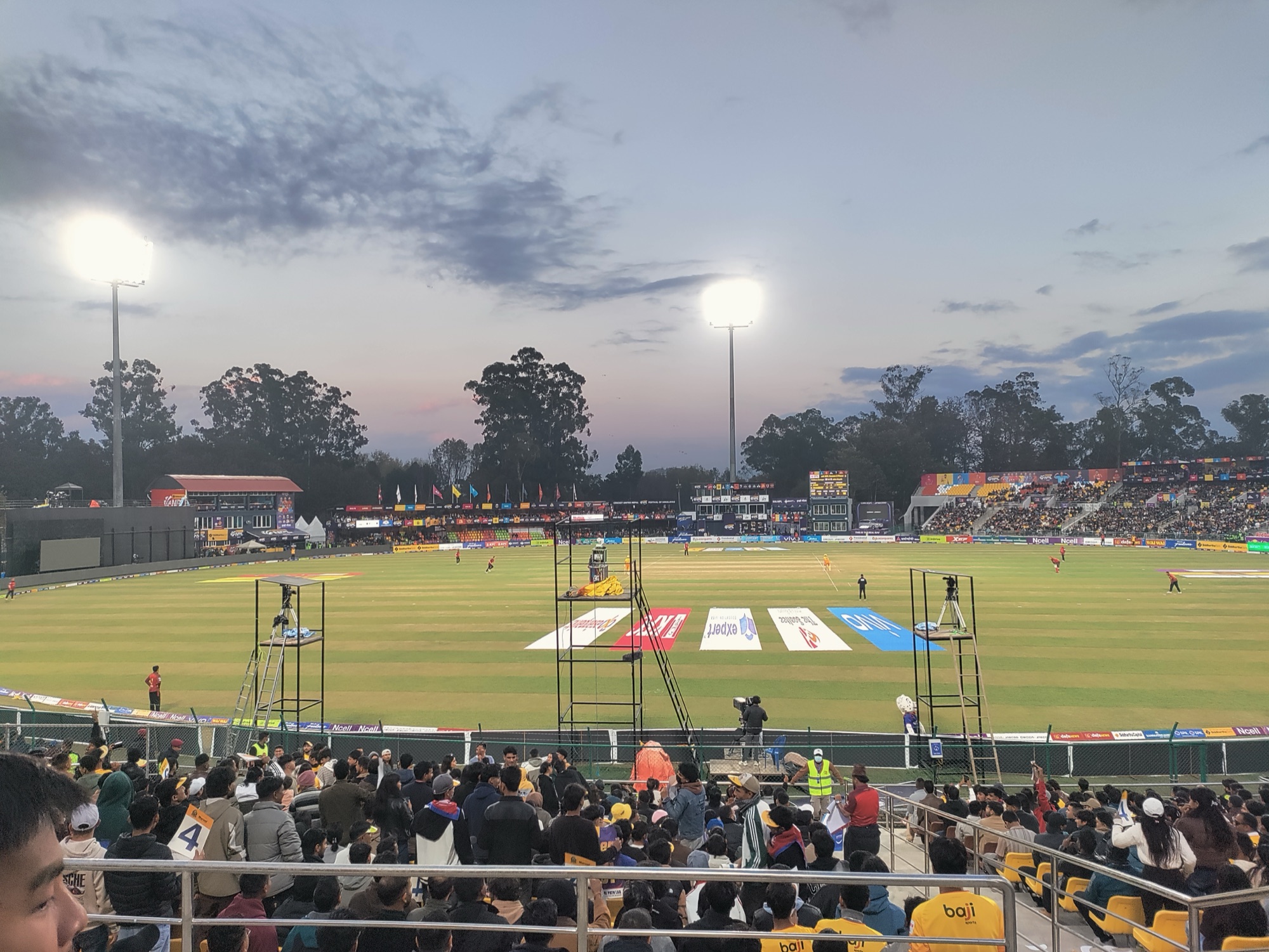
Ticketing is the part of the league that ordinary fans pay for, and it is growing quickly. Ticket sales passed Rs 40m in the first season, reached about Rs 80m in the second and are projected to exceed Rs 110m this year. Prices have risen too: a general seat for a league match cost Rs 300 in 2024 and costs Rs 500 this season, with premium seats at Rs 1,000 and seats for the final up to Rs 2,000.
Source: The Kathmandu Post, Farsight Nepal
Every match is played at the Tribhuvan University ground in Kirtipur, which holds about 15,000 people. The first season drew about 130,000 spectators and sold out its opening match. The ground now has new stands and floodlights, and the league has gained ICC recognition, so players' runs and wickets count in official T20 records, and introduced the Decision Review System this season.
Around the ground, the spending is harder to measure. Merchandise, food, transport and accommodation for fans who travel from outside the valley all add to the total, and one franchise reportedly sold 5,000 replica shirts in the first season. But no one has published a measured estimate of that wider spending, and CAN's own secretary said in 2025 that it would take at least three years to assess the league's economics properly.
Banks, brands and the business community
The league has also become a marketing platform for Nepal's corporate sector. Siddhartha Bank holds the title sponsorship on a five-year deal, and its chief executive, Rameshwar Prasad Bashyal, describes the league as a driver of tourism, investment and employment. The analyst Anil Keshary Shah has called it a "vital lifeline" for a sluggish economy.
That enthusiasm is easy to understand. In a year when Nepal's economy has been weighed down by floods, weak demand and closed trade routes, a month of full stadiums and prime-time audiences is a rare opportunity for banks and consumer brands to reach a large, young audience at once. The league gives them something Nepal has lacked: a national entertainment property that companies can buy into.
What could hold it back
The weaknesses are as clear as the growth. The whole league runs on one ground, which caps ticket income and leaves no room for home matches in the cities the teams are named after. Paras Khadka, CAN's secretary and a former national captain, has said the league's long-term viability "requires a lot more work," including substantial investment in infrastructure.
Transparency is the second risk. The headline numbers come from CAN and the franchises, not from audited accounts, and they shift between statements: viewership claims for the first season ranged from more than 50 million YouTube views, cited by CAN's president, to 3.7 million viewers of the final, reported elsewhere. A league asking banks and broadcasters for larger cheques will eventually need to publish figures they can check.
The third is dependence on imported stars. A league whose appeal rests on overseas names must keep paying for them, while Nepali players, capped at Rs 9m per squad, see a much smaller share. Building the domestic talent and the grounds that would let the league stand on Nepali cricket, rather than rented celebrity, is slower and less glamorous work.
Why it matters
For Nepal's economy, the NPL is not yet large. Rs 1.5bn is a modest sum next to remittances or hydropower. Its significance is in what it proves: that a domestic sports competition can attract private owners, sell media rights to Nepali companies, fill a stadium at rising prices and turn a profit for its organiser from its first season. That is a model other sports, and the companies that sponsor them, will study closely.
What to watch
- Final ticket sales and attendance for the third season, against the projection of more than Rs 110m.
- Whether any franchise publicly reports a profit, which would mark the league's shift from prestige spending to business.
- Progress on a second venue, without which ticket income and the league's reach outside Kathmandu will stay capped.
How this story was made: researched and written by The Standard’s desk with AI assistance, from the published reporting and official data credited below, and checked against those sources. Our standards.