Nepal's six-month maternity leave bill puts private employers on notice
A bill to nearly double maternity leave and almost triple paternity leave would reach private payrolls, as Nepal responds to its weakest population growth in eight decades.
For at least three decades from the 1960s, the Nepali state urged its citizens to keep families small. Official messaging tied large families to being uneducated and uncivilised, and a family planning body founded in 1959 carried a Nepali word in its name that can mean control, Online Khabar reported. That message is now being turned on its head.
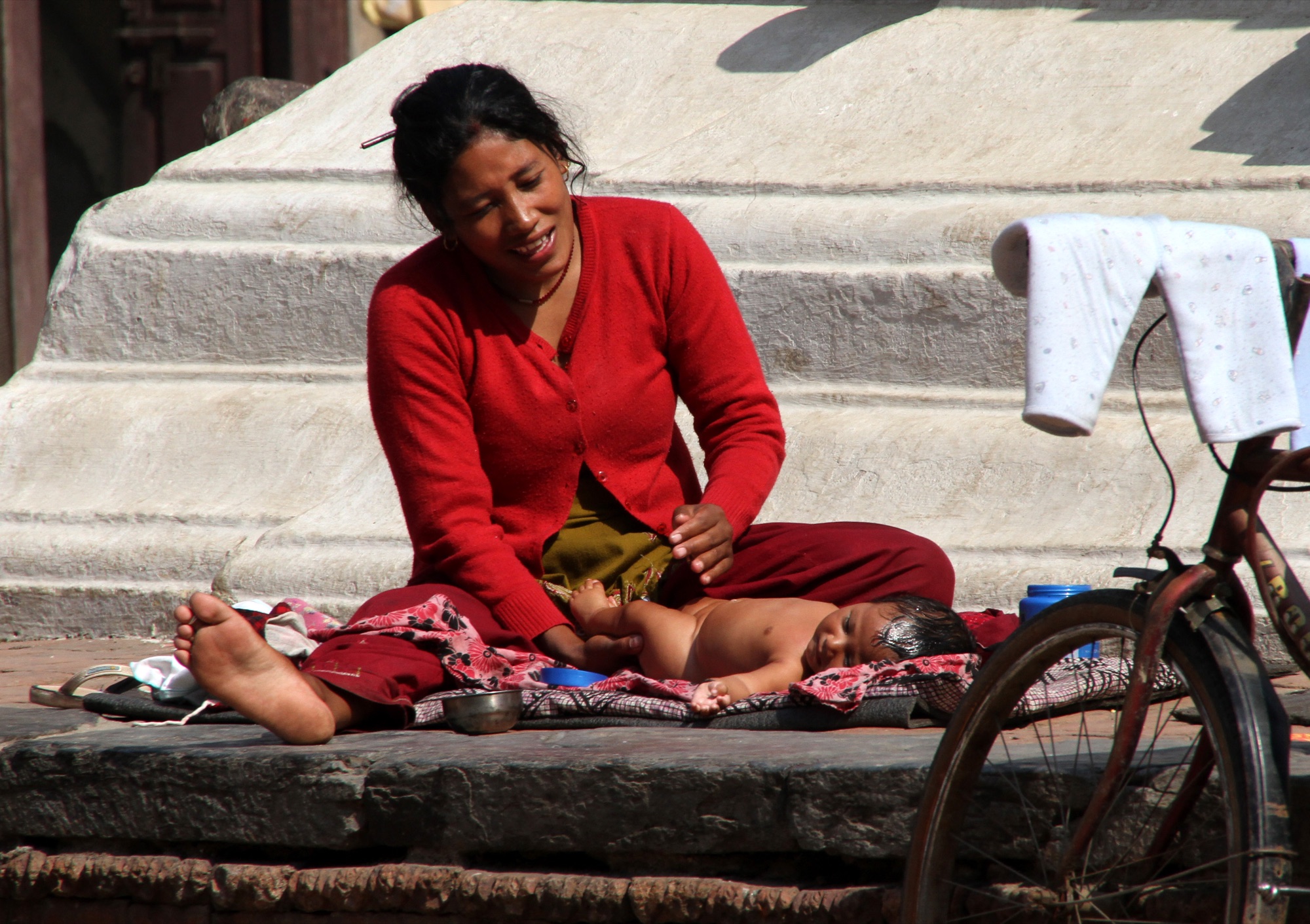
A bill registered in the House of Representatives, the lower house of Nepal's parliament, would lengthen paid maternity leave to six months from the current 98 days, and paternity leave to 42 days from 15. Officials cite Nepal's falling rate of population growth as one reason for the proposal, the outlet reported.
The practical stakes are clear. The new entitlements would apply to staff in private firms as well as in government and non-governmental bodies, according to the same report.
What the bill changes
The vehicle is an amendment to the Safe Motherhood and Reproductive Health Rights Act, 2018, which sets the existing entitlements. As drafted, a mother could take her leave before or after giving birth, and a father could take his in the weeks around his wife's delivery, with both periods paid, Online Khabar reported.
The government's case rests on demography. Explaining the reasons for the bill, Health and Food Hygiene Minister Nisha Mehta wrote that the latest census showed population growth in steady decline, and that the law should offer incentives, leave among them, to encourage growth, the report said.
In the chamber, Mehta told lawmakers that six months of leave was not simply a perk for staff. She tied it to respect for motherhood, to the health and nutrition of mothers and newborns, and to the state's long-term spending on human capital, and said the goal was a "healthy, capable and productive workforce", according to Online Khabar.
That framing matters for employers. Presenting leave as national investment rather than a perk is, in effect, an argument for treating its cost as a social good. Yet who would pay for the extra weeks is not among the provisions that have been reported, leaving the most pressing question for companies unanswered.
Eight decades of growth, then a slide
The figures behind the bill are stark. Census growth came in at 0.92% in 2021, down from 1.35% in 2011 and the first reading under 1% in eight decades, Online Khabar reported.
No census has recorded faster growth than the 2.62% of 1981, according to National Statistics Office records cited by the outlet. The rate eased to 2.08% in 1991, rose to 2.25% in 2001 and has fallen steeply since; only the censuses of 1921 and 1931 showed negative growth.
Source: Nepal census data, via Online Khabar
The decline is uneven, and in places absolute. Population is already shrinking in 34 districts and in the areas of 319 local governments, and some local authorities have responded with cash rewards and other schemes meant to encourage births, the report said.
The local picture deserves as much attention as the national average. A countrywide rate of 0.92% masks places where the population is already falling.
Why the state once wanted fewer births
The reversal is striking given how consistent the earlier stance was. Nepal opposed rapid population growth from its first five-year plan in 1956, the Family Planning Association of Nepal was founded in 1959, and the National Population Policy, 2014, notes that the first five plans focused on migration, family planning and maternal and child health, Online Khabar reported.
International NGOs promoting population control also shaped Nepal's approach in the decades after the Second World War, when countries of the Global South were often portrayed as places whose growing numbers bred poverty and instability, according to the outlet.
Similar fears drove policy elsewhere in Asia, from India's sterilisation drive under the emergency declared in 1975 to China's one-child policy, introduced in 1979, ideas that trace back to Thomas Malthus and to Paul Ehrlich's The Population Bomb, published in 1968, the report said.
The present slowdown is the product of a long accumulation: generations of official encouragement to keep families small, combined with broad social transformation, Online Khabar argued, noting that other countries trying to raise birth rates have struggled. A leave entitlement, however generous, is one lever against forces that took decades to build.
The employer's ledger
Whether leave can move birth rates matters directly to employers. If longer leave does little for births, companies would carry the cost without the demographic return used to justify it. If it does work, the payoff comes slowly, through children who will not reach working age for many years, while the absences begin as soon as the law takes effect.
Hiring is a second consideration. A six-month entitlement in private firms gives employers a reason to weigh it when recruiting women of childbearing age. A much longer paternity entitlement shifts part of the burden to male staff, which could narrow that incentive, though by how much cannot be judged in advance.
Mehta's own words point to the trade-off. She urged lawmakers to think beyond present needs about the society Nepal wants to build, Online Khabar reported. Companies, meanwhile, must run with the workforce they have now.
What to watch
The first test is the bill's passage. The 42-day paternity figure holds only if lawmakers approve the bill unamended, the outlet reported. Any changes, particularly to the coverage of private organisations, would alter the calculation for companies.
The second is financing. Any detail on whether the state, employers or a shared scheme funds the extra weeks will determine how heavily the policy lands on payrolls.
The third is the next census. With population already falling in many districts, the government will need evidence that leave incentives change behaviour, or pressure will grow for other tools alongside the local schemes already in place.
How this story was made: researched and written by The Standard’s desk with AI assistance, from the published reporting and official data credited below, and checked against those sources. Our standards.