Ten shares and a lottery: why Nepal's IPOs are oversubscribed many times over
Millions of Nepalis apply for every new issue, most leave with nothing, and the system shapes how the whole market behaves.
In June, Sanigad Hydro offered 4.67 million shares to the Nepali public. According to ShareSansar, 2.73 million valid applications came in, asking for nearly 30 million shares. The allotment was settled by computer lottery: 467,400 applicants received 10 shares each, and roughly 2.26 million, more than four in five, received none.
That is how most initial public offerings (IPOs) in Nepal end. Applying has become something close to a national habit, in the words of a ShareSansar analysis, and the numbers bear it out.
How the lottery works
Most Nepali IPOs are sold at a face value of Rs 100 a share, with a minimum application of 10 shares, or Rs 1,000 (about $6.50). Applications are made through Meroshare, the online depository platform, with the money blocked in the applicant's bank account until allotment. Slices of each issue are reserved for employees, mutual funds, non-resident Nepalis and, in the case of hydropower projects, people in the districts affected by construction. What remains goes to the general public.
When demand exceeds supply, which is almost always, the issue manager does not scale everyone back proportionately. Instead, a lottery picks winners, each of whom receives the minimum lot of 10 shares. Everyone else gets their money back.
Demand on a vast scale
Recent issues show the pattern. Everest Colour, a paint maker based in Chitwan, drew 2.44 million applicants by the close of its offer in June, making it oversubscribed 40.16 times, according to ShareSansar. Between August 2025 and February 2026, Jhapa Energy was oversubscribed 42.99 times with about 1.87 million applications, and Salpa Bikas Bank around 19.4 times with roughly 2.3 million, the same publication reported. Eleven companies launched IPOs in that six-month window, compared with eight in the previous six months.
The investor base keeps growing. The Securities Board of Nepal (SEBON) told parliament in late September that about 8.1 million demat accounts had been opened, with 5.12 million active Meroshare accounts, according to ShareSansar. Many of those accounts exist mainly to apply for IPOs.
Why people apply
The logic is simple. New shares usually list well above Rs 100. ShareSansar noted in February that no recent IPO was trading below its face value, and an analysis it published in December observed that newly listed shares often post a run of 10 to 15 consecutive days at the upper daily price limit. For an applicant, the downside is a few days of blocked funds; the upside is a quick gain on Rs 1,000. In a country with limited investment choices outside bank deposits, land and gold, that is an attractive bet, even with long odds.
The side effects
Critics argue that the system distorts the market. The December ShareSansar analysis made the case that allotting tiny parcels to hundreds of thousands of people creates mass shareholding with almost no tradable supply. Most winners hold their 10 shares indefinitely because selling them is barely worth the effort. The few shares that do trade are scarce, so prices can be pushed sharply higher after listing, benefiting active traders who accumulate early. When promoter lock-ins later expire, a large block of supply arrives in a thin market, a concern behind SEBON's new rule requiring large shareholders to give advance notice of big sales.
The same analysis contrasted Nepal with India, where retail investors are allotted shares in defined lot sizes within a fixed retail quota. Proposals in Nepal have ranged from larger minimum lots to more book-built issues priced above face value, which would reduce both the number of applicants and the size of listing-day gains.
Capital raised, or tickets sold?
The system has real merits. It spreads ownership widely, it is transparent, and it has drawn millions of people into the formal financial system. Companies, including hydropower developers that struggle to raise long-term finance from banks, have used it to fund projects. But a market in which most new shareholders own a token stake they never trade is not quite the shareholder democracy it appears. Nepal's IPO boom has created millions of investors. It has not yet created a deep market.
How this story was made: researched and written by The Standard’s desk with AI assistance, from the published reporting and official data credited below, and checked against those sources. Our standards.
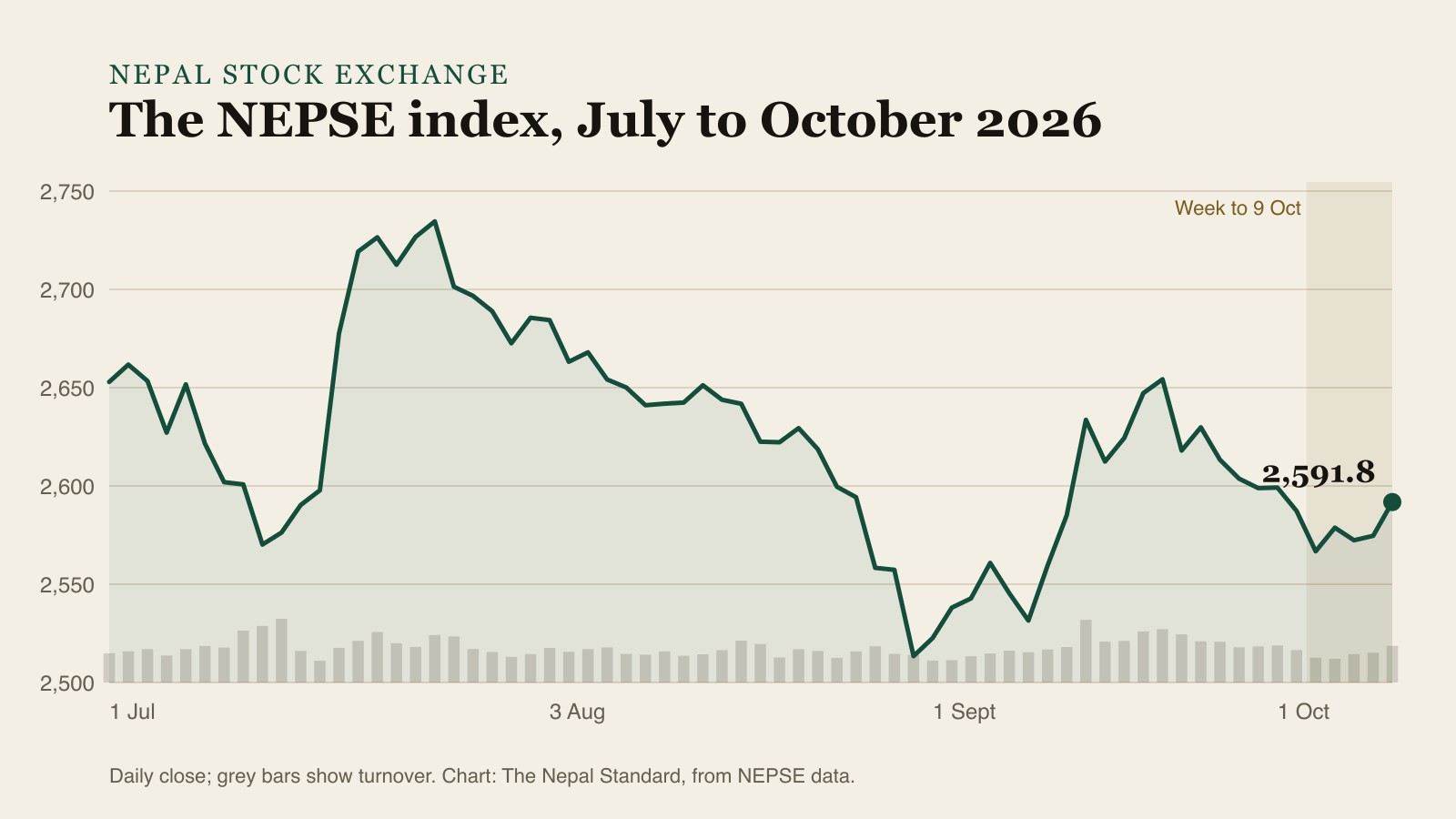
The long view The Nepal Stock Exchange
The long view Nepal's hydropower, from load-shedding to exports