Hormuz chokehold: a shipping lane Nepal never uses, and the prices it sets
The war around the Strait of Hormuz is repricing fuel, food and fertiliser worldwide. Nepal, a landlocked importer, has no ships there, but the same price chain runs through any country that buys energy abroad.
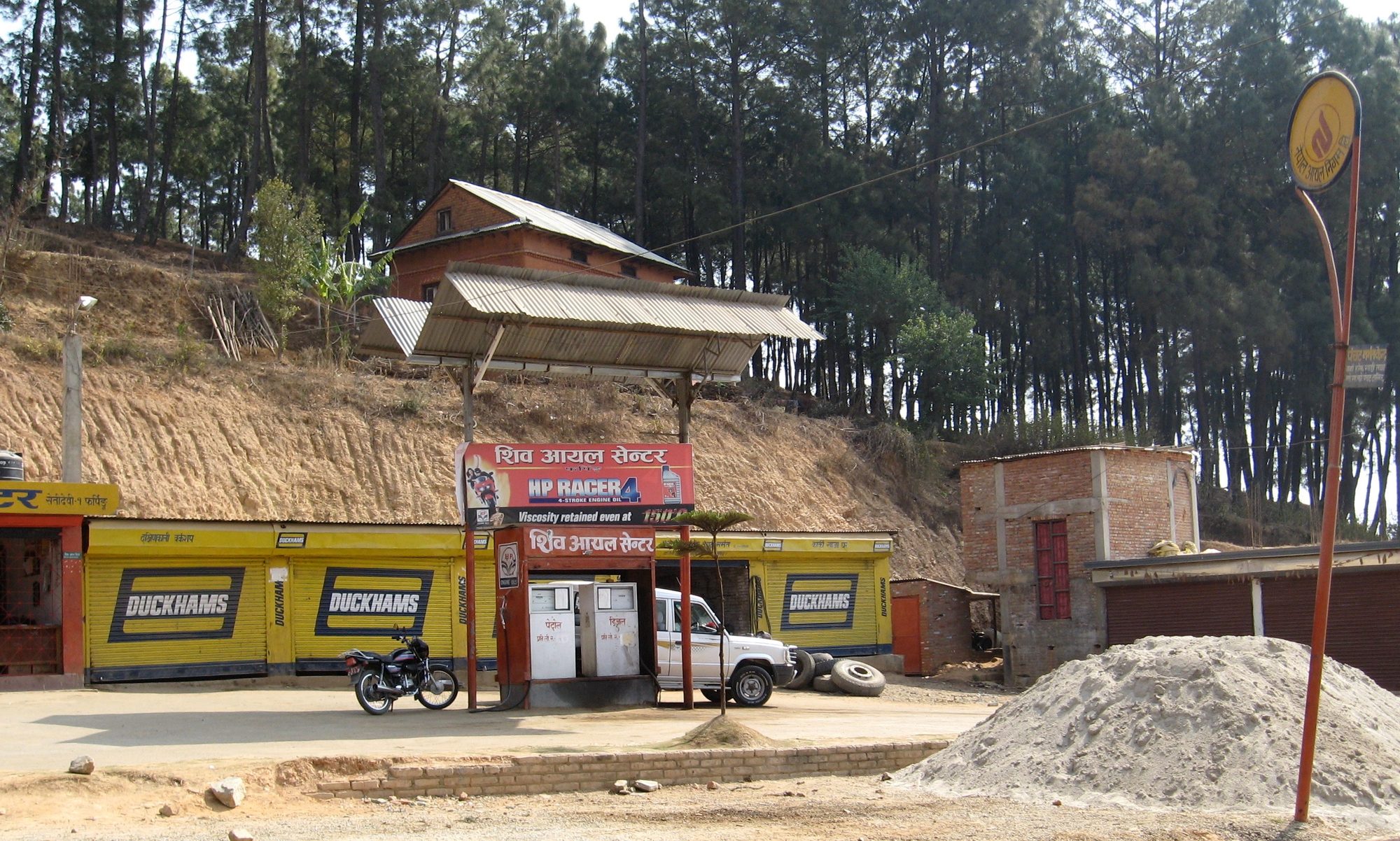
Nepal has no coastline and no ships in the Strait of Hormuz. Yet before the fighting began, about 20 million barrels of oil and petroleum products passed each day through that strip of water between Iran and Oman, and the war that has made it unsafe is lifting prices for fuel, food and farm inputs far beyond the Gulf.
The strait links the Persian Gulf to the Arabian Sea. Oil from Saudi Arabia, Iraq, Kuwait, the United Arab Emirates, Qatar and Iran leaves the Gulf through it, as does much of Qatar's liquefied natural gas bound for Asia and Europe. China, India, Japan and South Korea depend heavily on the route. The US Energy Information Administration puts the 2025 flow at about a quarter of the world's seaborne oil trade.
How the crisis unfolded
The United States and Israel attacked Iran on 28 February 2026. Iran moved to halt and control traffic in the strait, and Washington answered with a blockade of Iranian ports.
In March 2026 the International Energy Agency (IEA) called the disruption the largest in the history of the oil market, saying traffic had dropped below 10% of its pre-war level. Its 32 member states agreed to release 400 million barrels from emergency stocks, the biggest coordinated release the agency has made.
Neither the April 2026 ceasefire nor the June 2026 agreement held. Tension rose again after the agreement formally expired in August 2026. By the first week of November 2026, indirect talks mediated by Qatar had produced no deal, and reports pointed to further escalation around the strait at the start of that month.
Why this is not ordinary inflation
The trouble lies in delivery as well as output. A producer can pump oil and still fail to sell it if the ports, pipelines or sea lanes that carry it are shut. Insurance premiums for ships entering the zone have risen, crews face danger, voyages take longer and cost more, and some operators have rerouted or stopped sailing.
Gulf producers have alternatives, but they are partial. Saudi Arabia can send crude through its East-West pipeline to Yanbu on the Red Sea, and the UAE can use a pipeline to Fujairah. Neither can replace what Hormuz carries, and options for gas are thinner still.
Prices therefore respond to fear as well as to barrels. Freight, insurance and the expectation of future shortage are all being added to the cost of energy.
The World Bank's arithmetic
The World Bank's commodity outlook of 28 October 2026 sets out the scale. It projects global commodity prices up 23% in 2026, with energy prices able to rise 32%. Brent crude is expected to average $91 a barrel, against $69 in 2025.
The Bank estimates global oil supply could fall 5.2% in 2026, which might be the largest drop in four decades outside the 2020 pandemic recession. It expects food prices to climb about 10% in 2026 and a further 7% in 2027, with fertiliser up 14% in 2026. It also warns that if the Middle East war, disrupted Black Sea food supplies and bad weather coincide, food prices could rise faster still.
Where Nepal may be exposed
The supplied reporting offers no Nepal-specific figures on fuel imports, fertiliser purchases or remittances, so any assessment of Nepal rests on reasoning, not measurement.
On that reasoning, a country that buys its fuel abroad takes the global price with little room to absorb it. Costlier diesel raises the cost of moving goods, and costlier gas raises the cost of making fertiliser. Both feed through to farmers and consumers.
What to watch
The first test is the Qatar-mediated talks. Without a deal, the strait stays contested and the price, insurance and freight pressures described above persist.
The second is whether the World Bank's warning on food comes to pass. It says prices could rise faster if Middle East disruption, Black Sea supply problems and bad weather occur together.
How this story was made: researched and written by The Standard’s desk with AI assistance, from the published reporting and official data credited below, and checked against those sources. Our standards.
The long view Nepal's LDC graduation