Fast Track contractors face the axe as Army is pressed to deliver
A tunnel breakthrough gave the government a stage to threaten contract cancellations on a road that is about half built, years late and far over its first budget.
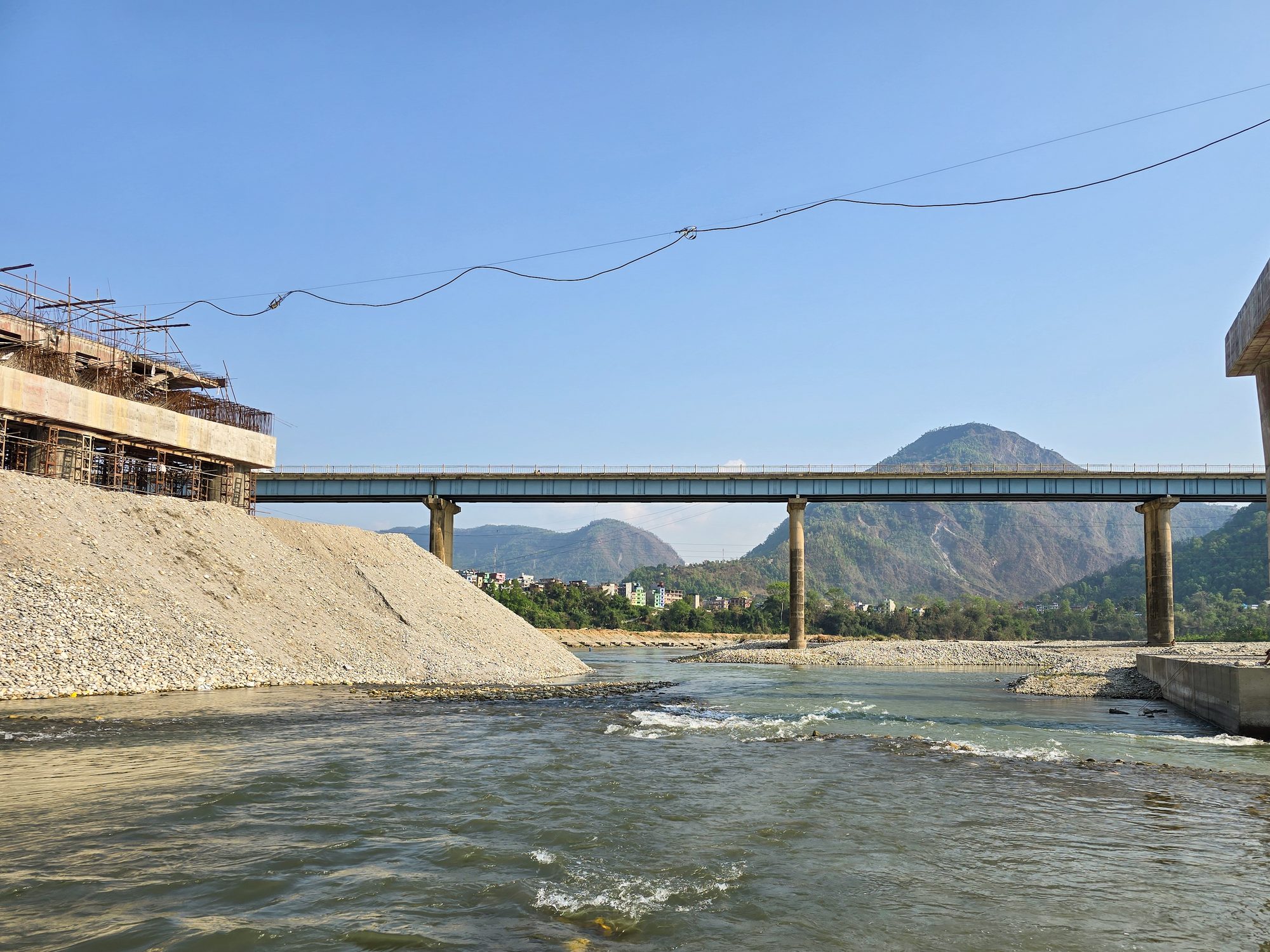
The breakthrough at Mahadevtar, on the Kathmandu-Tarai-Madhes Fast Track, was marked at a ceremony on 18 November 2026. Infrastructure Minister Sunil Lamsal chose the occasion to warn that contractor agreements could be cancelled.
The milestone arrived with a reminder of how much remains undone. Physical progress stands at 50.54%, nine years after the project was launched in 2016/17.
Who is in the firing line
Lamsal named packages 9A, 9B and 8B as having performed unsatisfactorily. In his assessment, the companies had not worked to their own commitments despite repeated warnings, site inspections and official letters. He said the list was not limited to those three.
The threat is aimed at revised schedules that the contractors themselves submitted. Lamsal said contracts that fail even that test would be terminated immediately, and that the government would grant no more time or extra facilities.
The work itself will continue. Once problems at the project's starting point in Kathmandu are resolved, terminated packages are to be re-tendered along with the remaining work.
The Army's position
The project is run by the Nepali Army, to which the Cabinet assigned it on 4 May 2017. The Army does not escape pressure. The government has warned it to speed up, and the deadline has been extended twice. A Cabinet meeting set March 2029 as the new target.
Lamsal was warmer toward the force. He praised its speed in pressing ahead although the project began without the legal provisions needed for its implementation, and said its role in similar large projects would be expanded.
That may matter for the construction industry. If the Army becomes the preferred way to deliver big projects, the government would be relying on one institution for delivery, with private firms working as its contractors.
Why the pressure is rising
The cost of delay is no longer abstract. Floods in the Trishuli and Bhotekoshi rivers damaged the Krishnabhir section of the Prithvi Highway, which subsided. Restoring temporary traffic took 18 days. In that time Kathmandu Valley faced a severe shortage of cooking gas and food prices rose.
The valley holds roughly 15% of the population but about 40% of economic activity. The Fast Track, about 70 kilometres long, is expected to cut eight to 10 hours from freight journeys between the Tarai-Madhes and Kathmandu, and to lower fuel use, vehicle wear and consumer prices.
- Project launched
- Cabinet assigns project to the Army
- Mahadevtar tunnel breakthrough
The unresolved starting point
Contractors are not the only obstacle. Package 11 has not reached procurement. Land acquisition along the Khokana-Bungamati section is unresolved, and decisions on the starting point and traffic management are pending. The Army says it is working with landowners on compensation and has begun designing alternatives.
This complicates the case on both sides. Firms could point to an entrance that is still unsettled; the government could point to tunnels being dug. The Army says excavation is complete on six tunnel sections at Dhedre, Lendanda and Mahadevtar, among 14 tunnels at seven locations, while eight sections at four locations remain under construction.
The delays have been attributed to poor coordination among agencies, local protests, obstructions along the alignment and the Covid-19 pandemic. Higher costs came from delays, alignment changes and altered structures. At the central bank's rate of Rs 149.57 to the dollar, the revised estimate of Rs 211.93bn is about $1.4bn.
What to watch
First, whether any contract is actually terminated, and which packages.
Second, how quickly the Kathmandu starting point is settled, since re-tendering depends on it.
Third, spending against the Rs 211.93bn estimate, with Rs 94.22bn spent by the end of 2025/26.
Fourth, the proposal from some experts for a dedicated sunset law to override legal hurdles.
How this story was made: researched and written by The Standard’s desk with AI assistance, from the published reporting and official data credited below, and checked against those sources. Our standards.