Europe's fuel-price anger is reshaping its politics, and its markets are watching
Dearer energy after the US-Iran war is driving street protests, and far-right parties in France, Germany, Italy and Poland are drawing on the discontent.
"We cultivate the land, we harvest debts." The slogan hung from a banner in Gela, on Sicily's southern coast, where farmers brought their tractors to a protest rather than to a field.
Their grievance is fuel. The same squeeze is moving from farmyards to ballot boxes across Europe, and the question for investors is whether governments burdened by deficits and bond-market pressure can hold off challengers who promise cheaper energy.
Energy costs and a political price
The US-Iran war, which began in February 2026, sent energy prices sharply higher. The European Commission, the European Union's executive arm, puts the cost to Europe at roughly €100bn ($112bn) through disrupted trade and energy markets. Gas has risen about 140% and diesel prices have doubled. Europe's economies were already worn down by the pandemic and by Russia's 2022 invasion of Ukraine.
For readers beyond Europe the stakes are practical. A region with squeezed households and costlier fuel is a weaker market for exporters elsewhere, and political instability there can unsettle European assets. This is analysis, drawn from the reported figures. Nepal, which sends goods and people to wider global markets and buys fuel priced in a global market, is not insulated from a prolonged European slowdown or an energy shock of this size.
From school buildings to burning town halls
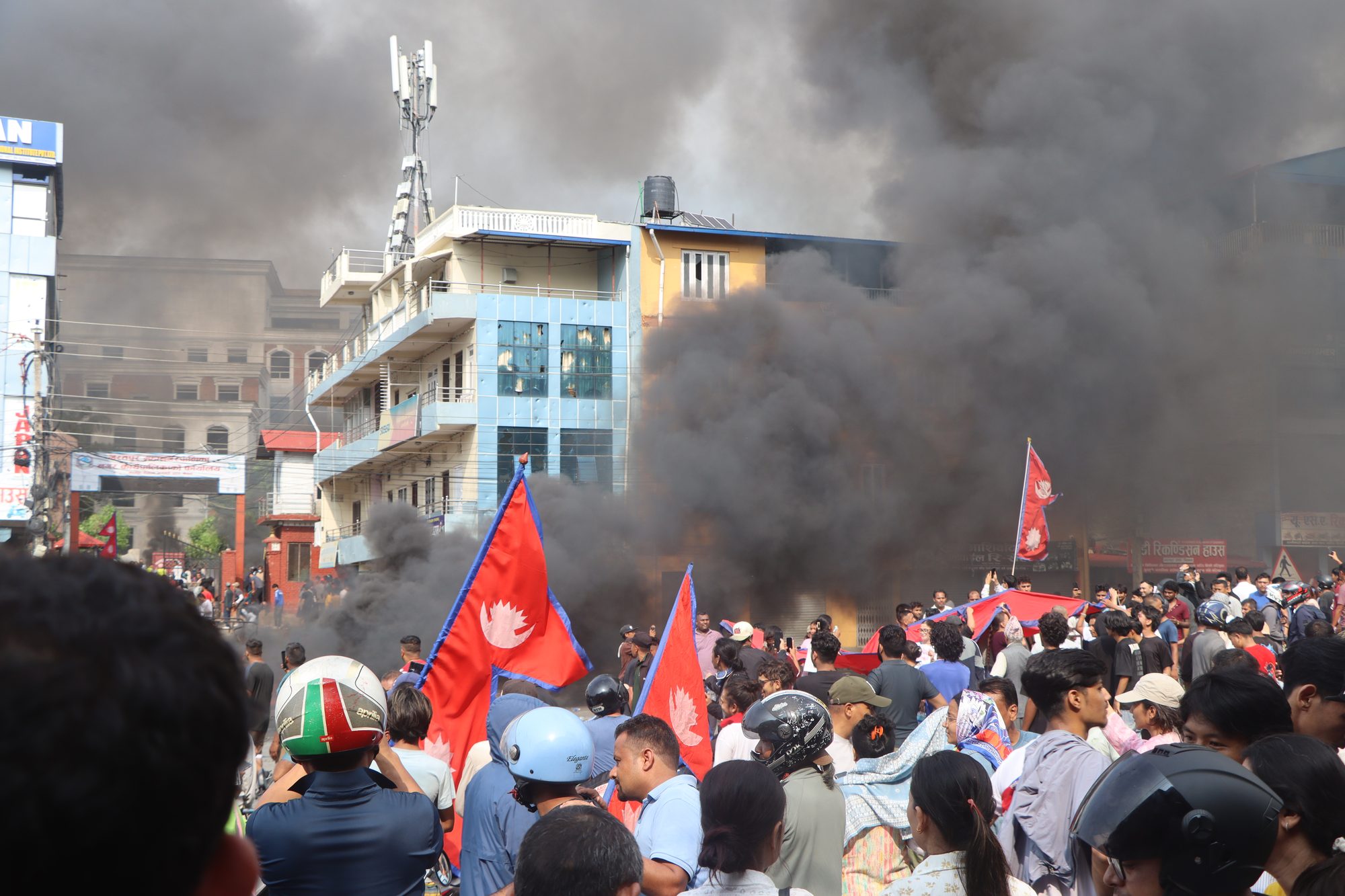
In France, the unrest began as demonstrations over run-down schools in Paris's northern suburbs and has become among the country's worst in decades. Shops have been looted and buildings torched, among them a 19th-century town hall in Limoges. President Emmanuel Macron has recognised the "legitimate demands" of those angered by living and fuel costs, while separating them from the people who destroyed and looted.
The pattern is not French alone. In Milan, police clashed with demonstrators who hurled stones. Roadblocks by truckers, farmers and steelworkers in parts of southern Italy have contributed to local fuel shortages and raised concerns over supermarket supplies. Tens of thousands marched in Lisbon over wages and housing. In Spain, the eviction of an 87-year-old woman set off protests over rents and helped trigger a snap election due in November 2026.
The political scientist Gilles Ivaldi of Sciences Po calls purchasing power "a major driver of populist politics".
Who gains at the ballot box
In France, where the presidential election is due in April 2027, the frontrunner Marine Le Pen of the far-right National Rally proposes a sharp cut in value-added tax on fuel, an idea with broad public support. Polling by Elabe shows her ratings improving and Macron's slipping since the war began. His government also faces a swelling budget deficit and pressure from bond markets.
In Germany, the Alternative for Germany (AfD) leads national polls. Inflation reached nearly a three-year high in September 2026, with energy price inflation at 14.9%.
In Italy, Prime Minister Giorgia Meloni faces a new rival in National Future, led by the former army general Roberto Vannacci. In Poland, worry over energy bills is lifting the Confederation of the Polish Crown, led by Grzegorz Braun.
A common thread is the call to restore energy ties with Russia. The AfD, National Future and the Confederation of the Polish Crown all advocate it, and politicians on both the hard right and hard left argue it would lower costs. That challenges the mainstream European consensus on supporting Ukraine.
What to watch
- The French presidential election in April 2027 and whether Le Pen's fuel tax cut becomes policy.
- Spain's snap election in November 2026 and whether housing anger shapes the result.
- The path of European gas and diesel prices.
- Whether calls to restore energy ties with Russia move into mainstream manifestos.
How this story was made: researched and written by The Standard’s desk with AI assistance, from the published reporting and official data credited below, and checked against those sources. Our standards.