Bhotekoshi floods lay bare the fragility of Nepal's northern trade
A washed-out bridge strands Rasuwa's cabbages, shuts the main China crossing and strains public finances, while Annapurna trekkers show tourism can recover when access does.
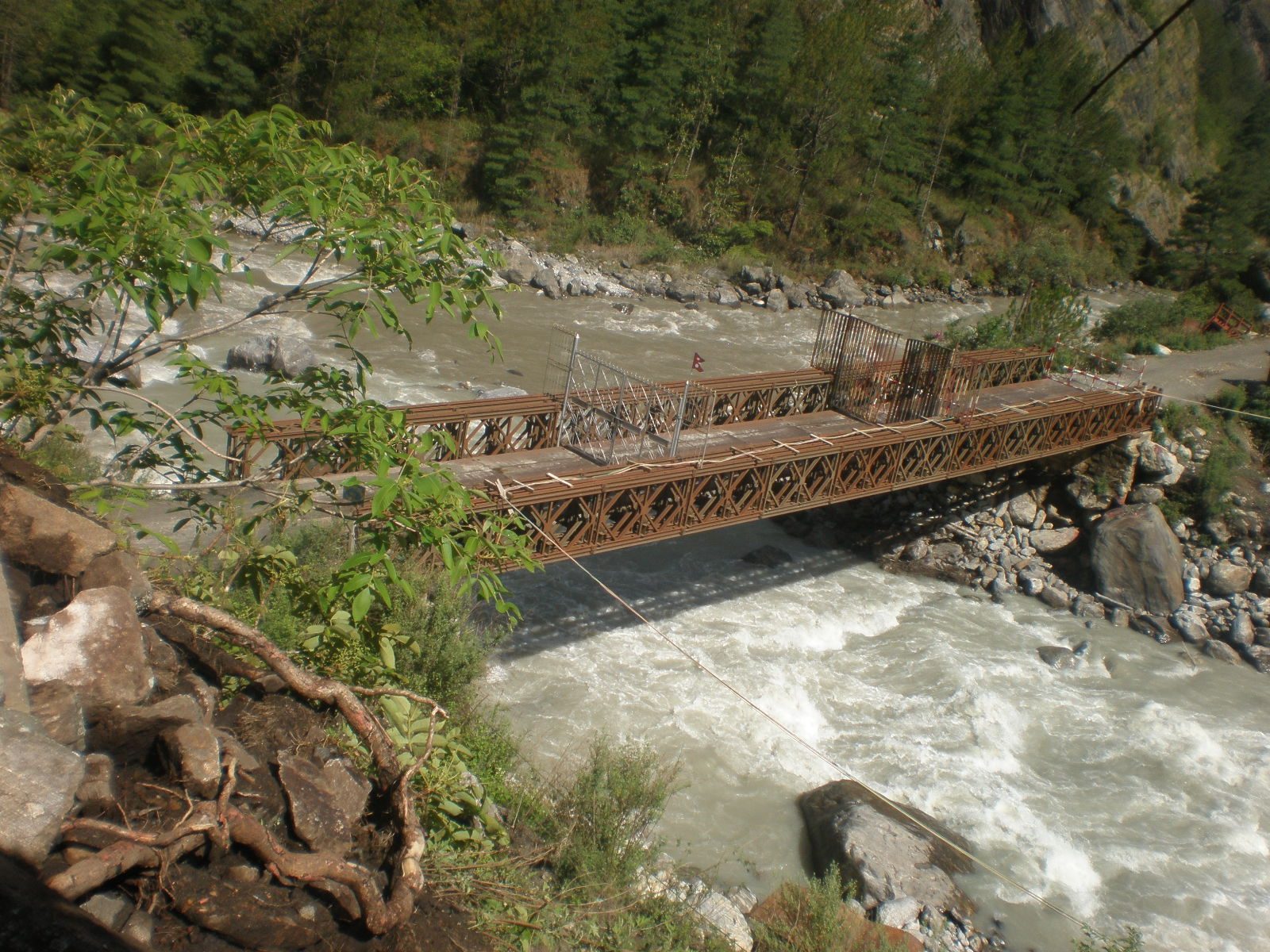
In Galtang, a village in Rasuwa district, a cabbage crop is going to waste. The vegetables are not poor. They are stranded. For more than two months, the lack of a bridge at Syaphrubesi has stood between the harvest and the markets of Kathmandu and Chitwan.
The cabbage illustrates a larger question. When one river corridor fails, how far does the damage travel? The floods of 26 August 2026 on the Bhotekoshi and Trishuli rivers suggest the answer: into household incomes, a major trade route with China, the public purse and the finances of small traders.
A harvest that cannot cross the river
Wards 2, 3, 4 and 5 of Aamachhodingmo Rural Municipality exported vegetables worth around Rs40m in 2025. Backed by municipal subsidies, farmers doubled the area under cultivation in 2026. The expansion has arrived just as the road out has gone.
Trucks can run within the municipality, but produce must be carried by hand across the Bhotekoshi at Syaphrubesi and loaded again on the far side. Each load is handled twice. Kasang Tamang, a farmer and trader, says freight alone reached Rs16 per kg by the time his cabbages arrived in Kathmandu, where he could get at most Rs30. Local farmers are selling at Rs9 per kg or less. A truck trip of 16km from Galtang to Syaphrubesi costs Rs15,000, a fare that once covered the run to Kathmandu or Chitwan.
About 25% of the crop has already rotted, according to the municipality's vice-chair, Chandika Tamang, who says the rest will be lost unless it sells within 20 to 25 days. She adds that farmers have begun feeding unsold vegetables to their cattle. The World Food Programme airlifted 8,000kg to Bidur on 9 October 2026 as a pilot, but has not repeated it.
The lesson for investors is that rural value chains in Nepal's hills can hang on one point of failure. Subsidised expansion of output is worth little when one missing span cuts it off from buyers.
Source: Sources listed at the end of the story
A border crossing that keeps breaking
The same missing bridge blocks the way to Rasuwagadhi, 152km north of Kathmandu. It became the country's principal route for trade with China after the April 2015 earthquake disrupted the Tatopani crossing. Electric vehicles make up 60% of imports through the post, according to customs data. Electrical equipment, garments, footwear, telecoms gear and machinery for hydropower projects also come this way.
The crossing has been shut since 26 August 2026, with no date for reopening. It is the second long closure in a short span. Flooding on 8 July 2025 destroyed the Miteri Bridge and the customs yard at Timure, and the post stayed closed for nearly six months, until 1 January 2026.
The plan is sequential. Vijay Jaisi, director general of the Department of Roads, says a Bailey bridge (a prefabricated steel span) at Syaphrubesi is expected before Tihar in early November 2026, followed by four more between there and the border. A permanent road awaits a feasibility study that needs the finance ministry's approval.
The harder questions are unresolved. Officials have not decided where to relocate customs and immigration offices, and China has not stated its view. An eight-member Chinese technical team is assessing the damage. Officials are also weighing a Kathmandu to Kerung expressway, with tunnels and elevated sections, in place of the long-studied railway. Its cost and timetable are unknown pending a detailed study.
The pre-flood upgrade of the 16km Syaphrubesi to Rasuwagadhi road, funded by a Chinese grant, cannot simply resume on its old alignment. Importers of vehicles and hydropower equipment should probably assume a temporary, weather-exposed link for some time, and that the crossing's location may change.
The fiscal bill
The government's Rapid Damage and Needs Assessment puts direct damage and economic losses at Rs408.29bn. Recovery and reconstruction needs are put at Rs723.31bn, about $4.75bn at the central bank's rate of Rs 152.23 to the dollar. The two totals measure different things, so the gap between them is not a like-for-like comparison.
A provisional $21.6m from the UN Fund for Responding to Loss and Damage is subject to a Nepali funding proposal and final approval. Even in full it would cover a small fraction of the need.
The risk, as one commentary in Spotlight Nepal argues, is that reconstruction crowds out health and education spending. That is a risk rather than a certainty. Lenders should also watch private balance sheets: traders in Trishuli Bazaar, Dhunge Bazaar and Betrawati lost buildings, merchandise and gold, and with them working capital and, in many cases, savings and outstanding loans. Uncertainty over which areas will be declared high-risk "red zones" leaves families and shopkeepers unable to decide whether to rebuild.
Source: Government of Nepal Rapid Damage and Needs Assessment
The counterpoint on the trails
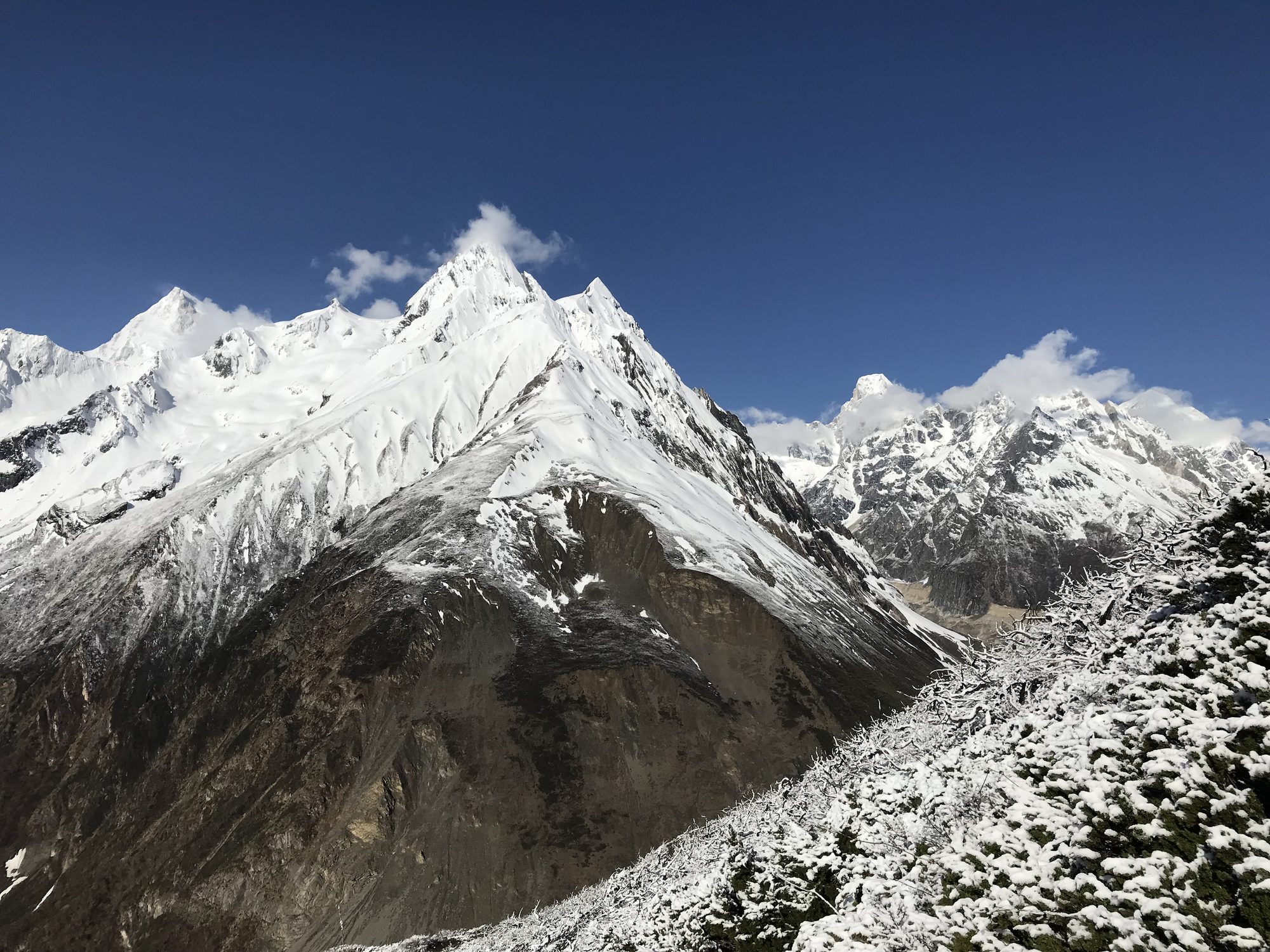
Tourism offers a more hopeful reading. Rain, floods, landslides and snow from 24 to 27 September 2026 disrupted travel on the Annapurna Circuit for nearly three weeks. Within a week of the onset, 379 foreign trekkers had left Manang. Yet 5,384 foreigners walked the circuit between 11 and 25 October 2026, during Dashain, which is 769 more than in the same period in 2025. A figure of 552 foreign check-ins at Dharapani on 13 October 2026 was the highest daily count of the year.
Several factors appear to have helped. A temporary structure at Chame's suspension bridge reopened the road, trails were repaired and snow was cleared, some trekkers diverted from the blocked Manaslu route, and interest in trekking has been growing. The Annapurna case suggests that speed of repair, not the absence of damage, decides whether demand returns. Rasuwa faces a different test, because its crossing depends on a chain of bridges and a road track over far greater distances.
What to watch
- Whether the Syaphrubesi Bailey bridge is installed before Tihar in early November 2026, and whether Rasuwa's remaining crop can still reach buyers.
- The decision on where to site customs and immigration offices, and China's stated position.
- A published recovery financing plan separating public costs from private losses, and the fate of the UN fund proposal.
- The red zone designations, and how banks treat flood-hit traders' loans.
How this story was made: researched and written by The Standard’s desk with AI assistance, from the published reporting and official data credited below, and checked against those sources. Our standards.
The long view Nepal's LDC graduation