SEBON eases its share-sale notice rule to 15% and five trading days after investor protests
Six weeks after it required big shareholders to announce sales 15 days ahead, the regulator has narrowed the rule to founding holders and large sales, and added a duty to disclose buy-backs.

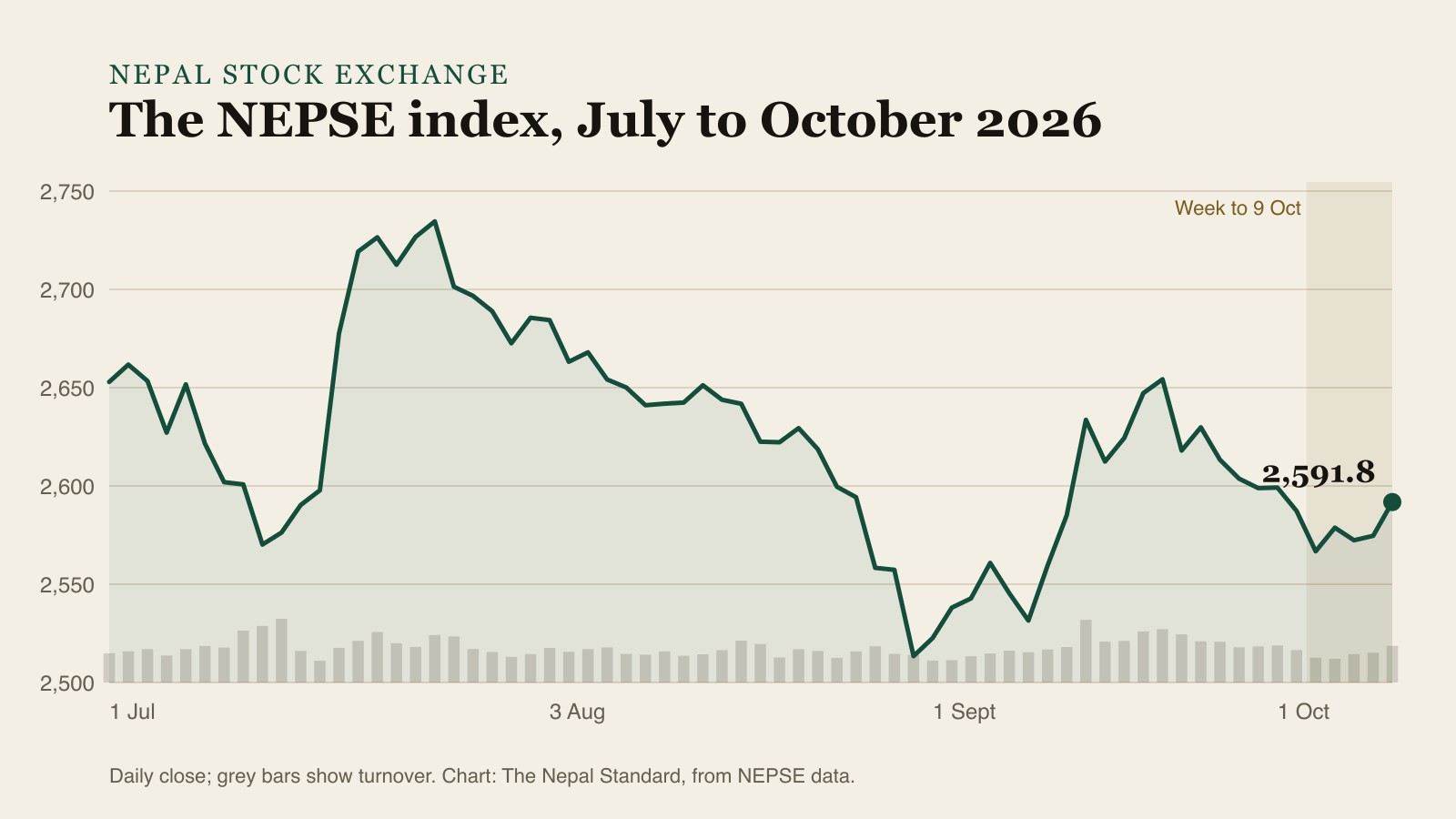
The Securities Board of Nepal (SEBON) has rewritten the rule that some investors blamed for weighing on share prices through September. In a circular dated 23 Asoj 2083, or 9 October 2026, the regulator amended the directive it issued on 9 Bhadra (25 August), ShareSansar reported.
Under the original directive, any basic shareholder of a listed company who intended to sell 5% or more of their holding had to tell the company 15 days in advance, and the company had to publish the notice through the Nepal Stock Exchange (NEPSE), Insurance Khabar reported at the time. The notice was valid for three months. A basic shareholder is defined by the Companies Act as someone holding at least 1% of a public company with paid-up capital above Rs 250m, NEPSE Trading reported; for smaller companies the threshold is 5%, according to Bajarko Chirfar. In a company with Rs 2bn of capital, that meant anyone holding 200,000 shares, and a sale of as few as 10,000 shares required a public notice, Bajarko Chirfar calculated.
What has changed
The revised rule applies to basic shareholders who held their shares at the time of the company's initial public offering, ShareSansar reported. They must now give notice only if they plan to sell 15% or more of their holding after the lock-in period ends, and the notice period falls from 15 days to five trading days. The notice remains valid for three months.
SEBON has also added an obligation in the other direction. A basic shareholder who announced a plan to sell, but did not sell or did not complete the sale, and who then buys more shares in the same company must report the purchase, with price and quantity, as soon as possible after the trade. The company must publish it through NEPSE.
Why the regulator moved
The original rule drew complaints from the start. The notices became, in effect, advance warnings of large supply, and investors argued that they deterred big buyers who did not want to be locked into a 15-day wait to exit, Bajarko Chirfar reported on 4 October, comparing it to a controversial loan-cap policy of the past. Critics also said it was one-sided. A NEPSE Trading analysis argued that disclosing only sales while leaving large purchases unreported could itself be used to move prices, for example by announcing a sale and then not selling.
Investor groups spent about three hours with SEBON officials in early October. They asked for the rule to be lifted for shares bought on the secondary market, for the notice period to be cut to seven days, and for a separate bulk-trading window for large blocks, including promoter shares released from lock-in, Bajarko Chirfar reported, adding that SEBON appeared receptive. The revised rule goes further than the proposed seven days but does not create a bulk window. The week of trading before the change, when the index ended almost flat, is described in an earlier report.
Promoter shares are also coming to market through the older, slower channel of company-run sales. Kumari Bank has opened 78,677 founder shares to the general public after existing promoters showed no interest within 35 days, and Lumbini Bikas Bank is offering 151,585 promoter shares to outside investors on the same basis, Bajarko Chirfar reported.
What to watch
The first test is the volume of new notices on NEPSE now that only sales of 15% or more by founding holders must be flagged. The new purchase disclosure will also show whether shareholders who announced sales return as buyers. Investors' other requests, a bulk-trading window among them, remain open.
How this story was made: researched and written by The Standard’s desk with AI assistance, from the published reporting and official data credited below, and checked against those sources. Our standards.
The long view The Nepal Stock Exchange