Nepal IPO pipeline hits Rs 71.42bn as state factories eye revival
A manufacturing-led queue of share offers builds on the stock market, while the finance ministry audits seven shuttered state industries.
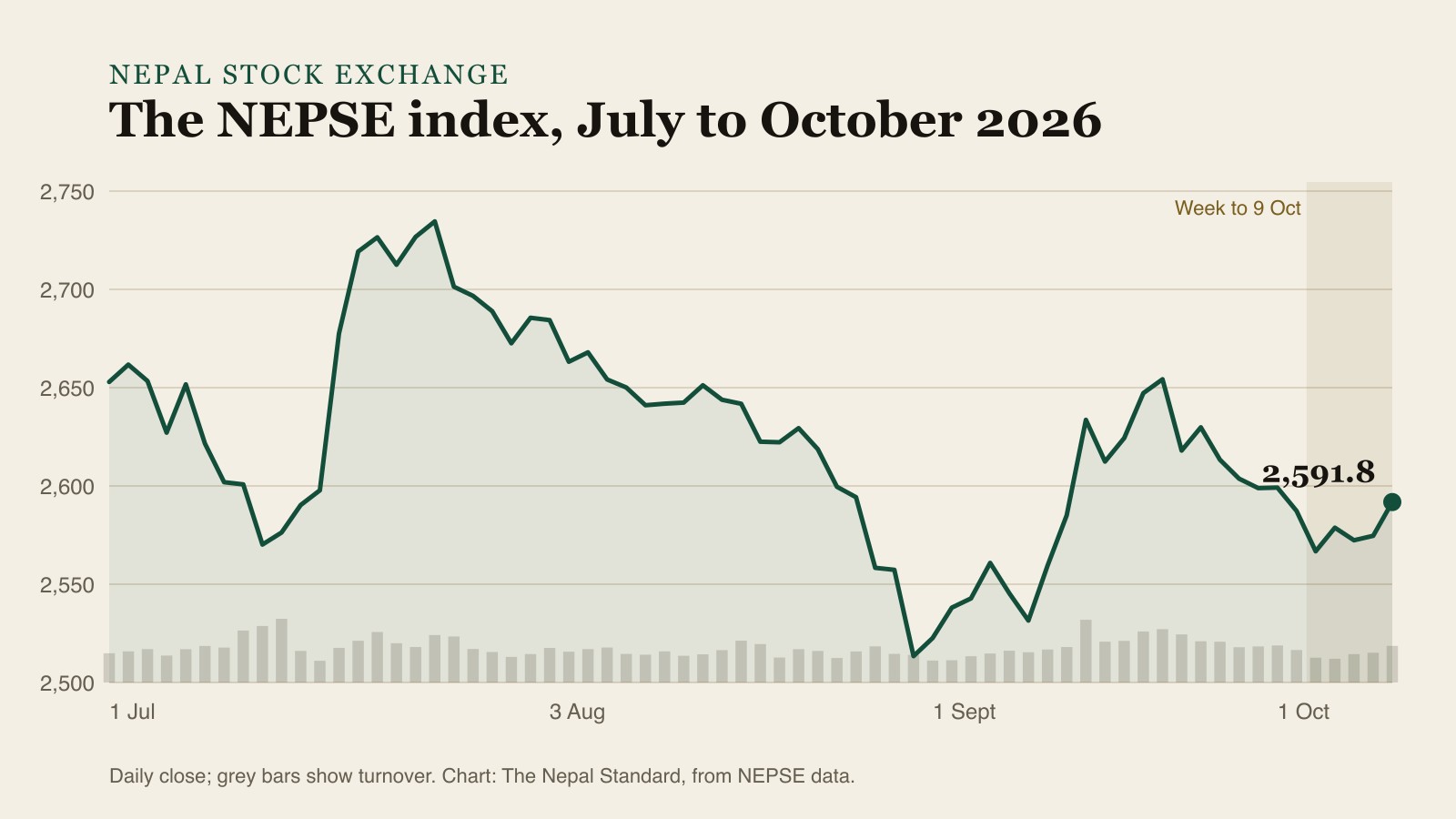
A pipeline of initial public offerings (IPOs) in Nepal has swelled to Rs 71.42bn, about $472m at the central bank's rate of Rs 151.44 to the dollar. Manufacturing leads it, according to NEPSE Trading.
Separately, the government is trying to bring seven long-closed state industries back to life. At one of them, Hetauda Textile Industry, some machines have begun trial production after the government released Rs 3.3m. The two tracks pose a question for investors: who will pay to build and revive factories in Nepal, and on what terms?
A pipeline led by manufacturing
NEPSE is the Nepal Stock Exchange, the country's only bourse. A pipeline is a statement of intent, not money raised. Whether Rs 71.42bn is absorbed will depend on how issues are priced and on the quality of the companies, not on the headline figure.
Peoples Energy
Peoples Energy has proposed a 20% IPO alongside an expansion of its capital, and has called its 10th annual general meeting. The sources give no further detail on the company, the size of the offer or its timing.
- 1Due diligence audit of assets and liabilities
- 2Government studies the reports
- 3Public-private partnership model selected
- 4Investment managed
Source: Online Khabar, citing the Ministry of Finance
The state turns auditor
The second track is slower and more politically charged. Under a public-private partnership model, the government has started reopening seven large state-owned industries that have been closed for a long time. They are Gorkhakali Rubber Udhyog, Janakpur Cigarette Factory, Butwal Dhago Karkhana, Nepal Metal Company, Nepal Orind Magnesite, Hetauda Textile Industry and Udayapur Cement Industry.
In a written reply to parliament reported on 15 October 2026, the finance ministry said due diligence audit reports are in hand for five of the seven. The audits value each company's assets and liabilities. The valuations for Butwal Dhago Karkhana and Nepal Orind Magnesite are still under way.
The ministry said the reports will feed a government study, after which a partnership model will be chosen and the investment managed. Analysis: the audit matters commercially because it shapes what a private partner would inherit.
A policy argument in the background
The reply was prompted by a written question from the lawmaker Nischal Rai. He pointed to a tension between the finance ministry's message to investors that private enterprise leads the economy and Prime Minister Balendra Shah's Facebook posts saying state industries are starting to run one after another. He asked whether the country was returning to a state-run model that, he said, had failed worldwide even before 1990.
The ministry replied that the government had to take the initiative on industries closed for long periods, and that any reopening will be done with the private sector. Private industries, it said, would gain additional markets through links with the plants, and the stated aim is a production-oriented economy. The reply also cited the constitution's call for public, private and cooperative participation.
At Hetauda Textile Industry, the Rs 3.3m went to repairing basic infrastructure and machinery. Some machines are now in trial production, and a reopening model is to be chosen afterwards. The sum is small, which suggests the state is spending on repair and testing rather than on a rebuilt industrial base.
The 2026/27 budget also favours injecting capital into some public enterprises and disinvesting shares in others.
Two ways to fund production
In the stock market, private issuers must persuade investors that they can earn a return. In the state-industry track, the government must persuade private partners to take on assets whose condition is still being valued.
For investors, the audits could be as important as the IPOs. If the reports are shared with bidders, they would show whether closed plants carry liabilities that outweigh their assets. If they stay internal, the partnership terms will be harder to judge.
What to watch
- Whether the audits for Butwal Dhago Karkhana and Nepal Orind Magnesite are completed, and whether the five finished reports are made public.
- Which partnership model the government selects, and whether trial production at Hetauda Textile Industry leads to a reopening plan.
- The outcome of Peoples Energy's 10th annual general meeting, and the size, price and timing of its offer.
- How much of the Rs 71.42bn pipeline is approved and issued.
How this story was made: researched and written by The Standard’s desk with AI assistance, from the published reporting and official data credited below, and checked against those sources. Our standards.
The long view The Nepal Stock Exchange