Nepal's central bank booked Rs 410bn in profit. The state will see Rs 42bn of it
Revaluation of foreign exchange and gold, not operations, drove Nepal Rastra Bank's 2025/26 result and a balance sheet that grew 45.06%.
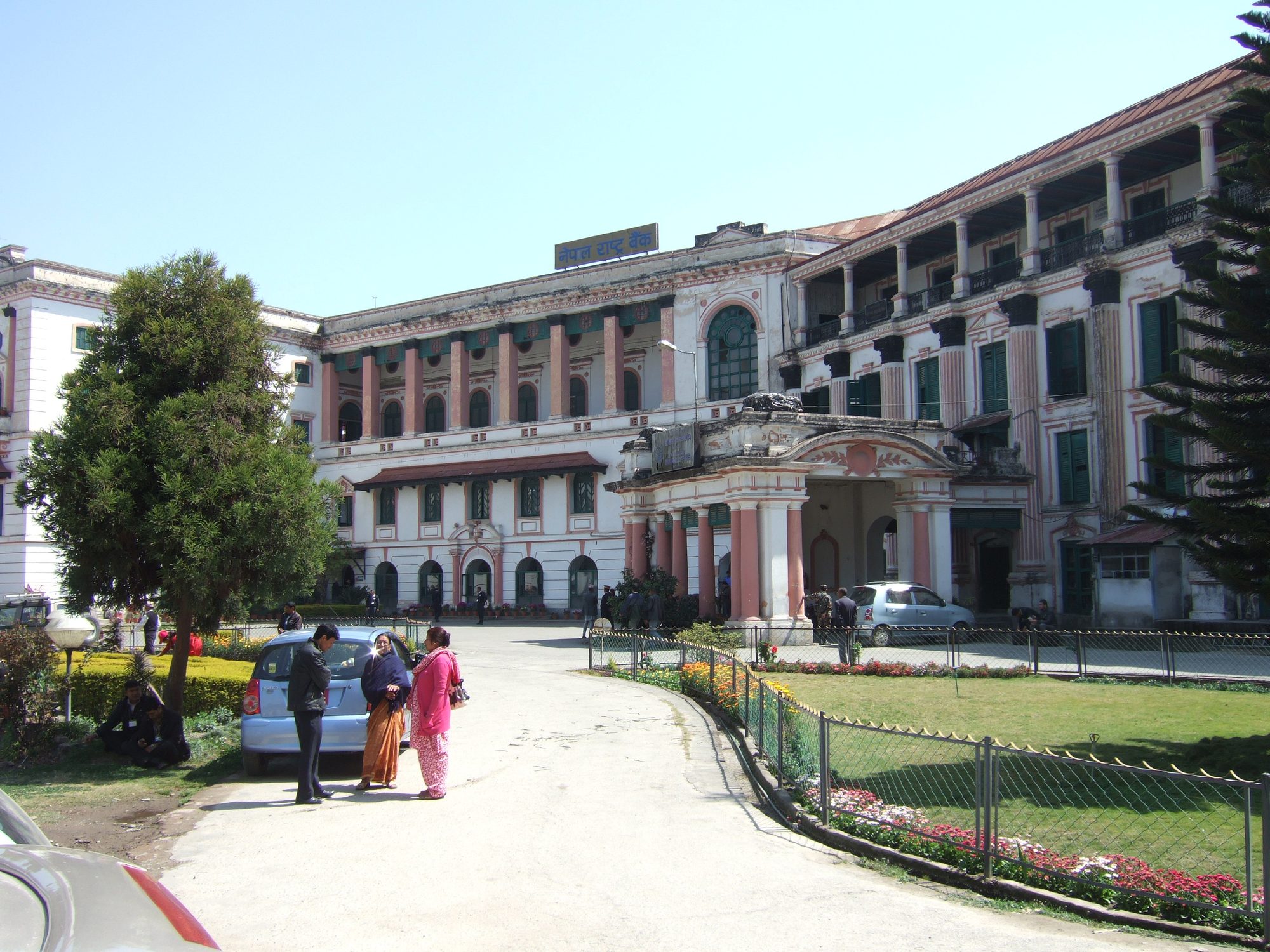
A profit of Rs 410bn sounds like a windfall for a state that lives on tight budgets. The distance between those two numbers is the most useful thing in the accounts of Nepal Rastra Bank for 2025/26, published in November 2026.
Two profits, one bank
Nepal Rastra Bank (NRB), the country's central bank, recorded a net profit of Rs 410bn in the fiscal year 2025/26. That is more than double the Rs 172bn of 2024/25. At the central bank's rate of Rs 149.81 to the dollar, it is about $2.7bn.
The underlying figure is far smaller. Regular net income, before revaluation gains and losses, rose by 3.84% to Rs 83.56bn.
Revaluation explains the difference. NRB earned Rs 254bn from revaluing its foreign exchange holdings, against Rs 45.03bn in 2024/25. Revaluing gold and silver brought Rs 71.71bn, against Rs 46.88bn. Together the two lines come to roughly Rs 326bn, most of the headline profit.
Source: Nepal Rastra Bank, 2025/26 accounts
What the Rs 42bn tells us
After the audit, the board decided on 15 November 2026 to transfer Rs 42bn to the government, about $280m. The revaluation gains went to their own equalisation funds. The government's share comes from operating profit, after the reserves required by the Nepal Rastra Bank Act.
Of that operating profit, Rs 36.50bn was allocated to the open market operation stabilisation fund and Rs 13.56bn to the general reserve fund.
The Rs 410bn is largely an accounting gain. It reflects changes in the value of assets the bank holds, not cash earned from lending or market operations. The Treasury receives a slice of the underlying income and none of the revaluation windfall.
A balance sheet up 45%
The expansion is the larger story. Total assets and liabilities rose by 45.06% to Rs 3.874 trillion, about $25.9bn, in the year to mid-Ashar 2083 in the Nepali calendar, which falls in mid-July 2026. Equity grew by 54.05% to Rs 1.041 trillion, with the reserve fund at Rs 1.036 trillion. Share capital stayed at Rs 5bn.
Investments make up 89.72% of assets. They grew by 46.36% to Rs 3.47 trillion. Cash and bank balances rose by 36.18% to Rs 266.27bn.
On the liability side, deposits from banks and financial institutions, in domestic and foreign currency, jumped by 59.13% to Rs 1.67 trillion. Currency in circulation grew by a much slower 6.87% to Rs 801.62bn.
Source: Nepal Rastra Bank balance sheet, mid-Ashar 2083
Fast-growing deposits from banks and a swelling investment book, set against slow growth in notes, suggest the expansion concerns the financial system's balances with the central bank rather than cash in people's hands.
The quieter lines
Total net operating income grew by 6.48% to Rs 93.92bn, and net interest income by 8.63% to Rs 94.56bn. Operating expenses were Rs 10.35bn. Income from foreign exchange transactions stayed negative at Rs 2.13bn. The core business is steady and modest, and the large forex and gold gains came from revaluation rather than dealing.
The notes in circulation add a footnote. NRB destroyed unfit banknotes worth Rs 765.74bn in the year. It put notes in circulation at Rs 807bn in mid-July 2026, up 6.08% from Rs 761.41bn a year earlier. That differs from the Rs 801.62bn on the balance sheet, which grew 6.87%. The gap may reflect different definitions.
New-note stock stood at Rs 88.94bn, up from Rs 51.52bn. The bank has shortlisted six international security printers.
What to watch
Watch whether the Treasury's share in future years tracks the regular income or the larger headline number. Revaluation gains can reverse if foreign exchange values or gold prices move the other way. Watch also whether the growth in bank deposits at the central bank eases.
How this story was made: researched and written by The Standard’s desk with AI assistance, from the published reporting and official data credited below, and checked against those sources. Our standards.