Nepal floods choke Dashain goat supply as Kathmandu meat prices climb
Blocked highways, a closed Tibetan border route and a state trader sitting out the season have left Kathmandu's festival meat market short and pricier.
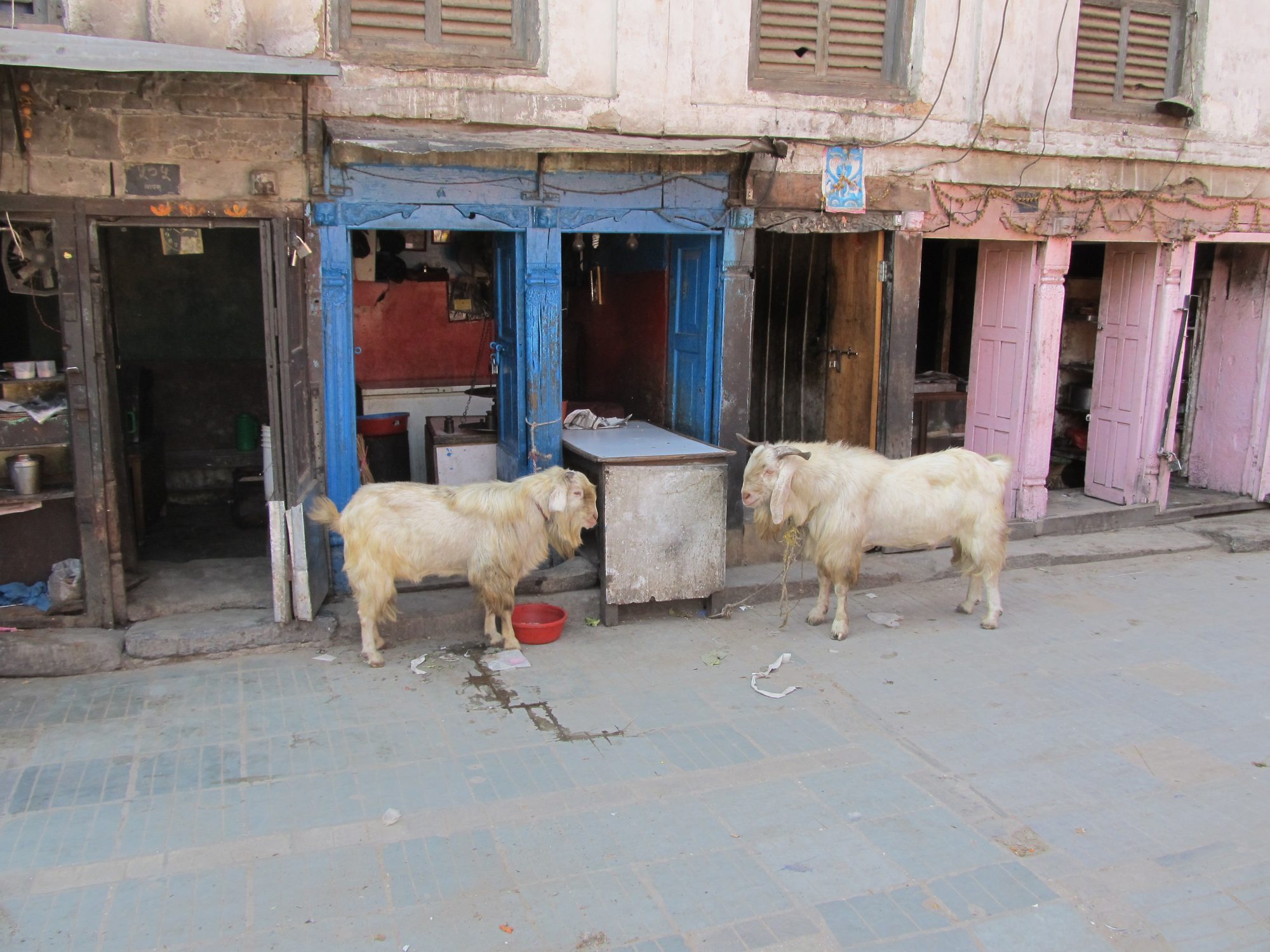
Kalanki, the main entry point for the goats that feed Kathmandu during Dashain, had taken in no fresh animals for a couple of days by 11 October 2026, Jeevan Raj Khatiwada, who chairs the Livestock Buying and Selling Association there, told Onlinekhabar. Goats and chyangra, the Himalayan sheep prized for the festival table, remained scarce at a point in the season when pens are usually full, traders said, according to the outlet.
Because demand for meat peaks during Dashain, the goat trade offers a real-time test of how well the country's roads, border crossings and food institutions hold up under strain.
Floods and landslides caused by persistent rain have cut or clogged the highways that bring livestock into the Valley, so supply is shrinking just as demand peaks, Onlinekhabar reported.
A festival market running short
The numbers point to a smaller, more expensive Dashain. The Valley typically requires 45,000 to 60,000 goats over the festival, and traders expect it to consume only 38,000 to 40,000 in 2026, against 45,000 to 50,000 in 2025, Onlinekhabar reported.
Prices have moved before the festival's peak. Live goats now fetch Rs 850 to 860 per kilogram in Kathmandu, compared with Rs 750 in 2025, Khatiwada said. That is a rise of roughly 13% to 15%.
The jump at the butcher's counter is steeper. A kilogram of goat meat now costs between Rs 1,600 and Rs 1,700, up from a range of Rs 1,300 to 1,400 in 2025, Khatiwada told the outlet.
Source: Onlinekhabar, citing Khatiwada and traders
Farmers are not paid a single going rate. Khatiwada cited purchases at Rs 700 a kilogram alongside deals struck with little or no proper weighing, and said what a farmer receives varies with where the animal is raised and the seller's own situation, Onlinekhabar reported.
Where the roads broke
Kathmandu's festival goats usually come from 35 to 40 districts, among them Makwanpur, Dhading, Rolpa, Rukum, Jajarkot, Salyan and Pyuthan in the western hills, and Sindhuli, Nuwakot and Tehrathum in the east, Onlinekhabar reported.
- 1Farmers in 35 to 40 districts
- 2Highways now disrupted by floods and landslides
- 3Kalanki livestock market, Kathmandu Valley
Source: Onlinekhabar
Those roads are the weak link. Freight routes through Narayangadh, Gajuri and the Kali Gandaki corridor have also been disrupted, compounding the transport problem, said Babu Kaji Shahi, general secretary of the National Meat Traders Association, according to Onlinekhabar. Trucks now need 10 to 12 hours to cover the distance from Hetauda to the capital, and heavy congestion, with no alternative to the Prithvi Highway, has badly slowed deliveries, Khatiwada said. Orders to farmers continue, but road conditions mean consignments arrive in a trickle rather than all together, he added.
In Gorkha district, flooding on the Budhi Gandaki river has stopped traffic in places, said Govinda Prasad Subedi, chairperson of the Nepal Commercial Goat Farmers Federation, the outlet reported. Animals are being loaded in both eastern and western Nepal, he said, but the number reaching Kathmandu will be clear only when they arrive.
Khatiwada expects about 24,000 to 25,000 goats to reach Kalanki over Dashain 2026, Onlinekhabar reported.
The chyangra problem
The chyangra trade depends on the border with Tibet, which makes it especially fragile. The sheep have traditionally come into Nepal through two crossings, Tatopani and Rasuwa, Onlinekhabar reported. A severe disaster has closed the Rasuwa route, and little is expected to move through it, according to the outlet.
Shahi named the Korala crossing in Mustang as the one remaining option, though he said poor roads there were causing trouble as well, and he called the outlook for chyangra highly uncertain, Onlinekhabar reported.
The state steps back
The weather is only half the story. In past festivals, the government-owned Food Management and Trading Company steadied the market by selling goats at subsidised or controlled prices, providing around 20,000 to 25,000 animals a year, Onlinekhabar reported.
This Dashain the state trader is sitting out, so the whole burden of supply falls on private dealers, the outlet reported. Without the company, Shahi said, "the entire demand shifts to the private market, creating unusual pressure," and its absence will feed into higher prices, according to Onlinekhabar.
Shahi placed the remedy squarely with the government. In his view, the handful of goats arriving from villages near the capital cannot replace long-haul supply, and only reopened roads, even rough temporary ones, can keep shortages and prices in check, Onlinekhabar reported.
Who bears the cost
With the state trader absent, Valley households face paying more for meat over the festival, the outlet reported. Shahi said prices could rise further if supply fell short of demand, though how far would depend on roads and market conditions over the two to three days following 11 October 2026, according to Onlinekhabar.
The reported figures suggest the squeeze is sharpest at retail: live-goat prices have risen by about Rs 100 to 110 a kilogram since 2025, while meat prices have climbed by about Rs 300, a gap that butchers, restaurants and caterers buying in bulk will feel most.
What to watch
The first signal is a stakeholder meeting at the Department of Livestock Services on Tuesday 13 October 2026 on the Dashain meat market, supply chains and logistics, Subedi said, Onlinekhabar reported. Representatives of meat traders and goat farmers are also expected to attend, the outlet reported.
The second is arrivals at Kalanki measured against the 24,000 to 25,000 estimate. The third is whether any chyangra can come through Korala before the festival peaks. Beyond Dashain, the episode raises a harder question for policymakers: whether withdrawing the state trader from the festival market makes sense in a year when floods have cut the supply routes.
How this story was made: researched and written by The Standard’s desk with AI assistance, from the published reporting and official data credited below, and checked against those sources. Our standards.
The long view Nepal's LDC graduation



