Five years after the flood, Kathmandu's Melamchi water still runs on a temporary intake
Another monsoon flood cut Melamchi's supply to the capital in July. A permanent headworks is now targeted for 2029, while 28 court cases over the old contract remain open.
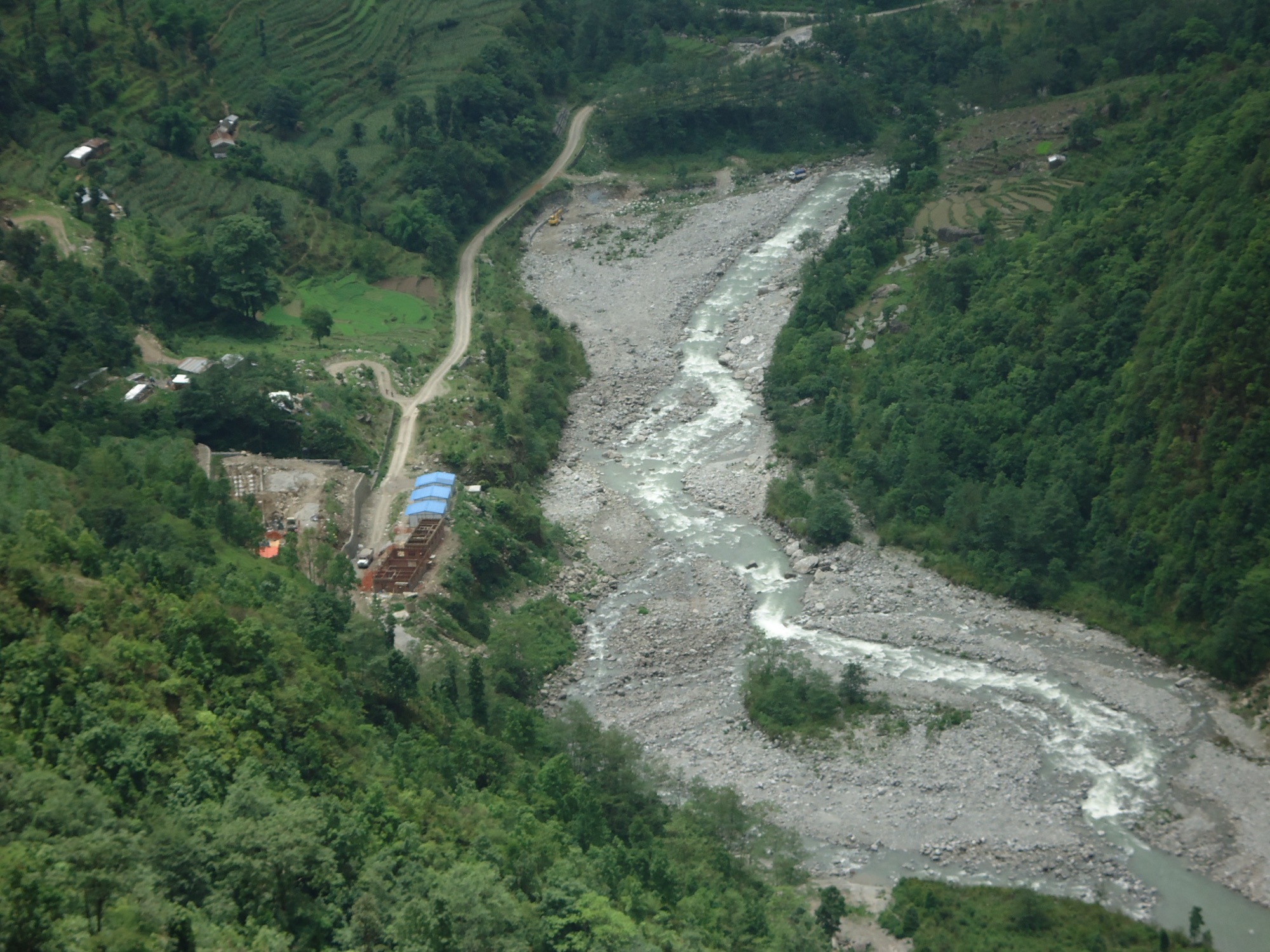
The Melamchi Water Supply Project was meant to end the Kathmandu Valley's chronic water shortage. Five years after a debris flow destroyed its headworks in 2021, it still works only part of the year. On the night of 2 July, heavy rain upstream turned the Melamchi river so muddy that officials stopped diverting it into the 26-kilometre tunnel that carries water to the valley, The Kathmandu Post reported. The flood also damaged the temporary intake dam at the headworks in Helambu, Sindhupalchok.
The project had been supplying about 170m litres a day, according to The Kathmandu Post. Spotlight, reporting on the shutdown a week later, put the suspended daily supply at 180m to 200m litres. Either way, the loss was large for a utility that had been relying on Melamchi to fill its pipes. Kathmandu Upatyaka Khanepani Limited (KUKL), the valley's water utility, said the muddy water had made treatment at its Sundarijal plant too complicated to continue, according to The Annapurna Express, which quoted the utility's spokesperson, Bir Bahadur Chand.
A temporary system that keeps failing
Since 2021 the project has supplied water mainly in the dry season, using temporary structures, The Kathmandu Post reported. Engineers built a back-up diversion from the nearby Ribarma stream for the monsoon months, but that stream also turned turbid on the night of the flood and had to be shut.
The interruption pushed KUKL to look for other sources. It has revived a proposal, five or six years old, to divert water from the Bagmati river in Shivapuri, north of the city, Spotlight reported. A planned 20m-litre reservoir at Arubari has also stalled: its contract was cancelled and the work is being retendered, according to the same report.
The permanent fix, and the legal bill
The government has decided to move the intake to a safer site. When the July flood struck, the final design and report for the new headworks had yet to be completed, according to The Kathmandu Post. Laxmi Prasad Upadhyay, executive director of the Melamchi Water Supply Development Committee, said the permanent design would be finalised by August 2026, Ratopati reported, and set a target of June 2029 for completing construction. The design is being reviewed with Canadian consultants and experts from Pulchowk Campus, and officials are studying whether water from the Yangri and Larke rivers could be added to Melamchi's flow, Ratopati added.
The project is also weighed down by the past. Disputes with the Italian contractor CMC have cost about Rs 320m (roughly $2m) in legal expenses, according to Ratopati and Spotlight. Twenty-eight court cases are pending, including two before an international arbitration tribunal in Singapore. The committee has had four executive directors in a single year, which has hampered long-term planning, Ratopati reported.
The matter reached Parliament's Infrastructure Development Committee in July, where the shutdown and the alternatives were discussed, according to Spotlight.
Why it matters beyond the tap
For households and businesses in the valley, the practical effect is a supply that rises in the dry months and collapses in the wet ones, which is the reverse of what a river scheme is supposed to deliver. For the state, Melamchi shows how a single natural hazard at an exposed intake can leave a large investment idle for months at a time, and why the choice of the new site matters as much as the speed of construction.
What to watch: whether the government publishes and approves the final headworks design, and awards a construction contract in time for the 2029 target; how much water reaches the valley this dry season through the temporary intake; and the outcome of the two arbitration cases in Singapore.
Right of reply: this article draws on published reporting, and The Nepal Standard did not contact the people named for it. Anyone named may send a response to [email protected]; we will publish relevant replies in full or in fair summary, normally within three working days. An arrest, investigation or charge is not a finding of guilt.
How this story was made: researched and written by The Standard’s desk with AI assistance, from the published reporting and official data credited below, and checked against those sources. Our standards.



