Seven Nepali hydropower projects went to Indian developers, and only one is being built
India buys Nepal's power, develops several of its largest plants and decides which projects may sell across the border. Delivery now matters more than awards.
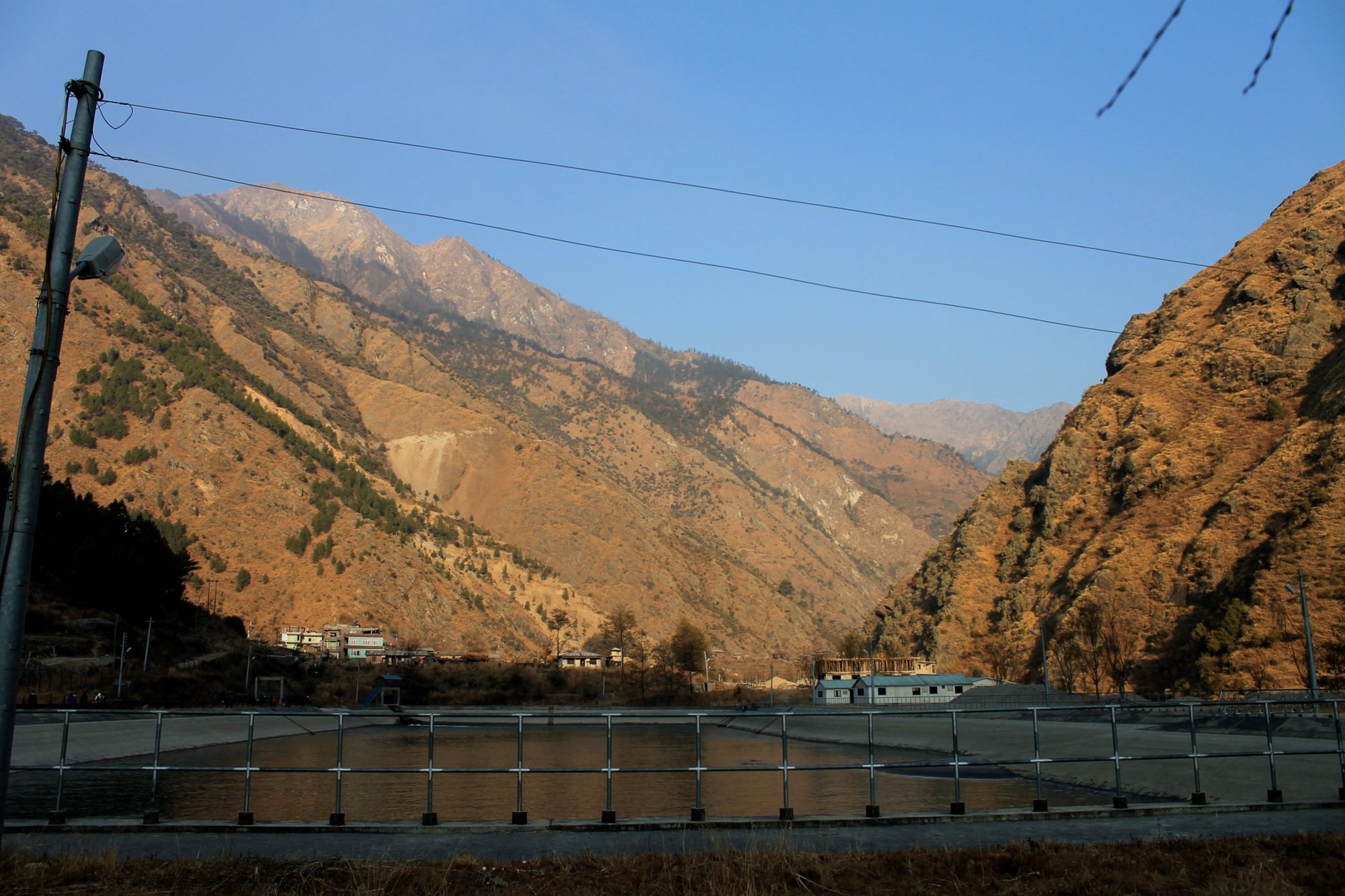
Upper Karnali, a 900MW hydropower project in western Nepal, began life as a survey agreement signed on 24 January 2008. It has waited for construction ever since. In October 2026, the Investment Board Nepal, the state body that approves and oversees large private and foreign projects, finally cleared it to start building. Its long road shows a wider pattern in Nepal's hydropower ambitions.
Indian state-owned and private companies have won seven large projects with a combined capacity of around 4,700MW. Only one is under construction. India is Nepal's principal electricity buyer, a developer of several of its major plants and the authority that decides which Nepali projects may sell across the border. The pace of construction will set when export revenue arrives.
A 10,000MW promise, a thin pipeline
In January 2024, Nepal agreed to export 10,000MW to India over ten years. For India, imports support an effort to decarbonise a grid long dependent on coal. For Nepal, they are meant to bring in revenue and narrow a large trade deficit with its neighbour.
Three of the projects are on the Arun river in Sankhuwasabha district: Arun-III at 900MW, Arun-IV at 695MW and Lower Arun. Indian companies also hold the 900MW Upper Karnali and the 480MW Phukot Karnali. In August 2022, Nepal separately awarded West Seti and Seti River-6, with a combined 1,250MW, to India's state-owned NHPC through a negotiated process.
Source: The Kathmandu Post
Years lost in process
After the Investment Board was created in 2011, it signed a development agreement with India's GMR on 19 September 2014. Financial closure was among several issues that kept Upper Karnali idle for years. Anup Upadhyay, a former energy secretary, says a court case also delayed it. He adds that government agencies failed to complete decisions and procedures on time, so the delays are not only the developers' doing.
The board's 68th meeting, held in October 2026, accepted GMR's financing documents and cleared construction to begin. GMR had shown a positive response to a loan request of INR65bn from India's state-run renewable energy lender, IREDA. Nepal will receive 12% of the power free.
The Arun cluster is further along on paper. The board and SJVN, India's state-owned hydropower company, signed the Arun-III agreement in November 2014. SJVN aims to develop 5,000MW of projects in Nepal by 2030.
India holds the switch
Development is only half the story. In practice, that rules out electricity from projects with Chinese investment.
The effect reaches further. India has not approved exports from projects where Chinese firms won construction contracts through open international tenders.
Hydropower has also been a diplomatic instrument. Before the Gen Z protests of September 2025, Nepali politicians used it to keep both Delhi and Beijing friendly, shifting their focus between the two as circumstances changed.
Transmission, at least, is moving. Power flows over the 400kV Dhalkebar-Muzaffarpur line, rated at 1,000MW. The under-construction Dhalkebar-Sitamarhi line will lift import capacity to 1,400MW and export capacity to 1,650MW.
Exports, data centres and crypto
Nepal already has more electricity than it can use in the wet season. Installed capacity exceeds 3,600MW and monsoon output often tops 3,000MW, against peak domestic demand of about 2,100MW. Most plants are run-of-river, so output surges in the monsoon and falls in winter. According to the Nepal Electricity Authority, exports in 2024/25 were worth Rs 17.46bn, from about 2.37 billion units at roughly Rs 7.43 each.
One commentary arguing for the second route warns that Nepal risks becoming a "banana economy". The 2026/27 budget proposes a Sovereign AI Compute Centre.
The commentary cites an independent study by the consultancy E3, which estimates that a 100MW hyperscale data centre could yield about $3.4m a year in surplus value in 2025, rising to about $6.1m by 2030. Separately, it cites unnamed studies that put a 100MW crypto mining pilot at $80m to $100m, with returns that depend on an assumed Bitcoin price of $60,000. Bhutan mines with hydropower through its sovereign investor, Druk Holding & Investments.
The two paths need not be rivals, but neither removes the need to build the projects already awarded.
What to watch
- Whether Upper Karnali moves from board approval to actual construction.
- When the six projects not yet under construction begin.
- Progress on the Dhalkebar-Sitamarhi line.
- Any change in India's treatment of projects with Chinese contractors, including Tamakoshi.
- Detail on the Sovereign AI Compute Centre.
How this story was made: researched and written by The Standard’s desk with AI assistance, from the published reporting and official data credited below, and checked against those sources. Our standards.
The long view Nepal's hydropower, from load-shedding to exports
The long view Nepal's LDC graduation