Freight trains reach Biratnagar as Nepal's only passenger railway keeps losing money
A direct container service from Kolkata opened a second rail gateway for Nepali importers in July. In Madhesh, the Jaynagar line inches towards Bardibas while its operator runs deficits.
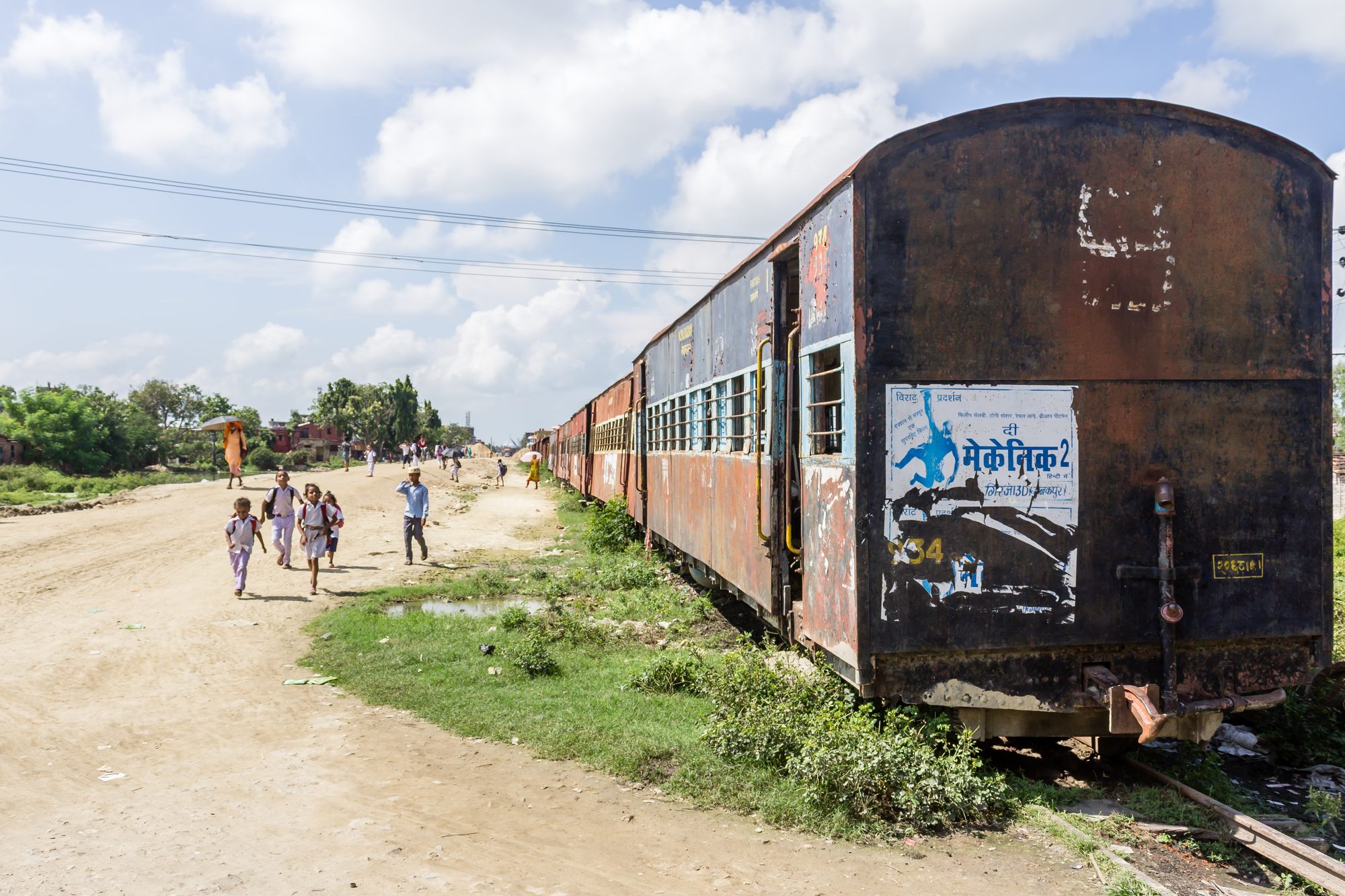
On 20 July a train of 40 containers carrying Australian canola grain rolled into the customs yard at Biratnagar, three days after leaving the port of Kolkata. It was the first direct commercial container freight train from India to Nepal's eastern industrial city, according to Swarajya, and it was operated by the Container Corporation of India. Until then, rail freight into Nepal had been available only through Birgunj, B360 reported.
The service runs over the broad-gauge link between Jogbani in Bihar and Biratnagar, which the prime ministers of India and Nepal inaugurated in June 2023 with Indian funding. It became usable for third-country imports after the two governments amended the rail transit protocol to their transit treaty through a letter of exchange signed in November 2025, Swarajya reported.
A cheaper route for eastern factories
The first consignment carried raw material for edible-oil production, B360 reported. Once the service is fully running, each train can carry up to 45 forty-foot containers, and the journey from Kolkata is expected to take about 24 hours. Umesh Shrestha, chief of the Biratnagar Customs Office, said the arrangement took effect from the day of arrival, according to B360.
Kantipur reported that the service is expected to cut transport costs for industries in eastern Nepal by up to 40%, which would feed directly into production costs.
Passengers in Madhesh, and the bill
Nepal's only passenger railway tells a less encouraging story. Trains run three times a day on a broad-gauge line of about 52 kilometres from Jaynagar in India through Janakpur to Bijalpura in Mahottari, according to Himal Press and Ratopati. Regular services on the first section, from Jaynagar to Kurtha, began on 2 April 2022, The Rising Nepal reported.
The last stretch, about 18 kilometres from Bijalpura to Bardibas, is now moving again. Construction picked up after a long-running compensation dispute in Dhanusha and Mahottari was settled, and the Indian contractor Ircon International has brought back workers and equipment, The Rising Nepal reported in July. The Nepal Railway Company aims to start regular services to Bardibas within two years, according to the same report. The line, the Jogbani-Biratnagar link and the planned Raxaul-Kathmandu route were all reviewed when India and Nepal held their tenth project steering committee and eighth joint working group meetings in Kathmandu on 11 and 12 June, the Indian embassy said.
The operator's finances are weak. Over the five fiscal years from 2019/20 to 2023/24, Nepal Railway Company earned Rs 192.1m and spent Rs 673.7m, a loss of about Rs 481.6m, according to Ratopati, citing the company's own business plan. Ratopati put its monthly income at about Rs 7.5m against expenses of about Rs 12.9m, and its debt at Rs 790.42m. The largest cost is technical staff supplied by India's Konkan Railway Corporation: Ratopati reported payments of about Rs 11.2m a month for 17 Indian workers and maintenance, while Himal Press, in a separate report, counted 23 Indian staff costing Rs 9.4m a month. Both outlets described a company short of permanent managers and accountants.
The two lines show different economics. The freight service earns its keep by moving bulk imports for factories. The passenger line, run largely with contracted technical staff, does not yet cover its costs; Ratopati reported proposals to expand freight, train local personnel and lease 28 acres of land in Raxaul to raise revenue.
What to watch: how many freight trains reach Biratnagar each month now that the service is open; whether the Bijalpura-Bardibas section is finished on the two-year target; and whether Nepal Railway Company adds freight or trains its own staff to replace contracted Indian personnel.
How this story was made: researched and written by The Standard’s desk with AI assistance, from the published reporting and official data credited below, and checked against those sources. Our standards.
The long view Nepal's LDC graduation



