Nepal bank ROE rises to 9.1%, but dividends remain out of reach
Commercial banks lifted return on equity by two points, yet negative retained earnings at several lenders mean better returns may not reach shareholders.
Nepal's commercial banks can point to a stronger set of numbers. Whether shareholders will see cash from it is a separate question.
The average return on equity (ROE), which shows how much profit a bank earns on its shareholders' capital, reached 9.139% in the first quarter of 2026/27, up from 7.043% in the same period of 2025/26. For investors, the gain is real but incomplete.
A recovery built on lower provisions
The improvement follows a difficult year. ROE fell in 2025/26 because banks set aside larger sums against bad loans and struggled to recover them. Provisions come straight out of profit.
This time the pressure eased. Banks reported profits of Rs 19bn (about $125m at the central bank's rate of Rs 152.23 to the dollar), which the former banker Parshuram Kunwar Chhetri attributes mainly to lower loan-loss provisions than a year earlier. Interest income, the core of a bank's business, rose by only about 1%.
Non-interest income, which covers fees and other earnings outside lending, grew faster: up 12.44% to Rs 20.32bn from Rs 18.08bn. Chhetri reads that as a sign economic activity may pick up in coming months. That is his view, and it rests on a single quarter.
Source: Online Khabar
On the reported figures, this looks like a recovery in the cost of risk more than in the earning power of lending. Profit that rises because provisions shrink is welcome, but it is not the same as growing revenue from loans.
Who leads and who lags
The spread between banks is wide. Sanima Bank posted the highest ROE at 15.6%, against 7.68% a year earlier. Everest Bank recorded 14.28%, a little below the 14.51% of the previous year. Nabil Bank stood at 13.99% and Global IME Bank at 13.29%.
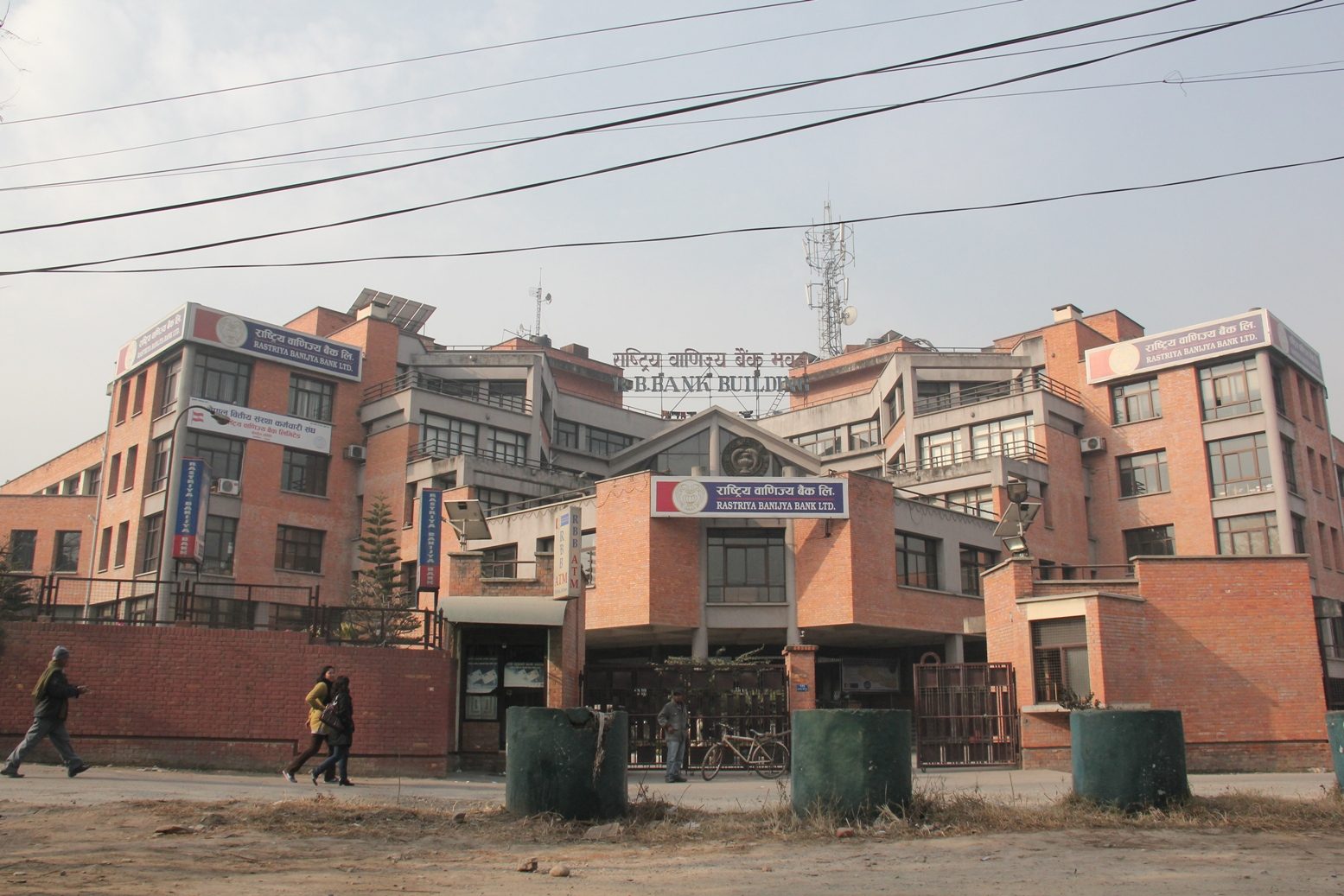
Rastriya Banijya Bank, NMB Bank, Standard Chartered Bank and Prime Commercial Bank also reached double digits. At the bottom, Agricultural Development Bank, which has government investment, managed 1.31%.
- Sanima15.6%
- Everest14.28%
- Nabil13.99%
- Global IME13.29%
- Agricultural Development1.31%
Source: Online Khabar
Why ROE alone misleads
The quarter's data shows the limits of ROE as a guide in a market where many shareholders care most about cash dividends.
Six banks reported negative retained earnings, which makes dividends highly unlikely. They include Nepal Investment Bank, Prabhu Bank, Himalayan Bank, NIC Asia Bank and Citizens Bank. Machhapuchchhre Bank, Nepal Bank and Kumari Bank have positive retained earnings but negative distributable profit. On those positions, these lenders appear unlikely to pay dividends this fiscal year, though no decision has been reported.
Chhetri offers Kumari Bank as an example. Its ROE looks satisfactory, but retained earnings are only about Rs 147.1m, which limits what it could pay out. A high ROE, he says, must be matched by earnings available for distribution.
He also points to capital structure. Banks keep redemption funds against debentures that count as regulatory capital, and the money can become distributable once the bonds mature. Banks with such maturities within 12 months may therefore have more room to pay. Preference shareholders are paid first from retained earnings, and most preference shares in Nepal are non-cumulative, so a missed dividend is not owed later.
On his preliminary reading, around a dozen banks look able to deliver actual returns this fiscal year. He also says bad loans are not currently a major problem, and that ROE would look higher if profit were measured against the previous year's closing equity.
The founders' exit problem
The weak returns of 2025/26 sharpened a quieter grievance. Founding shareholders of banks and financial institutions find it hard to sell, and some have wanted out. They have argued that returns are low while restrictions trap their capital, and have pressed at various times for a right to sell 10 years after a bank's initial public offering.
A better ROE may ease that urgency, but not remove it. If dividends stay thin at a number of banks, the case for flexible exit rules is likely to persist. As analysis, shares that are hard to sell and slow to pay could trade at a discount, though the reported figures offer no way to measure one.
What to watch
- Whether retained earnings turn positive at the six banks now in deficit, and whether distributable profit follows at the other three.
- Whether interest income, up only about 1%, starts to grow faster.
- Whether non-interest income keeps its 12.44% pace.
- Which banks have capital debentures maturing within 12 months, and what their redemption funds hold.
- Any regulatory move on the 10-year exit proposal from founding shareholders.
How this story was made: researched and written by The Standard’s desk with AI assistance, from the published reporting and official data credited below, and checked against those sources. Our standards.